

How to choose a paper carrier bag for different business uses
The intended use is a useful starting point, not a technical guarantee. The contents determine the volume required; their shape and orientation affect the base and gussets; and their weight and the way it is distributed place demands on the paper, folds, glued seams, reinforcements and handles. The four catalogue applications help identify the right product family, but compatibility must be confirmed on the product page.
Paper carrier bags for shops and other retail businesses
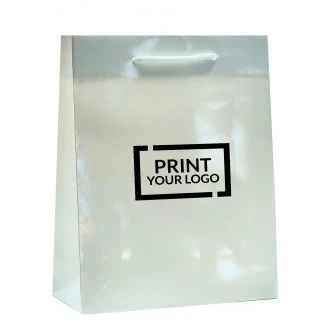
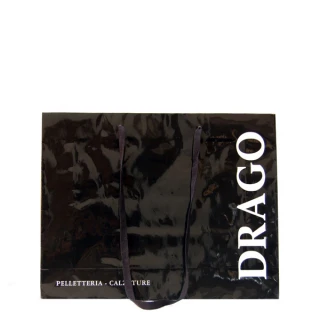
Paper carrier bags for shops and other retail businesses are catalogued as Commercial. They are intended for clothing, accessories, cosmetics, gifts, promotional materials and other customer handovers. A Standard base suits many regularly shaped retail contents, while the choice of handle can prioritise efficient service, grip or presentation. For frequent customer handover, consider ease of use and the proportion between bag and contents; for boutiques and events, paper colour, finish, handle and perceived quality may carry greater weight.
Takeaway bags with a base proportioned to the container
Takeaway styles are handled paper carrier bags for trays, cartons and sealed food containers. Where the shape and dimensions require it, a Wide base provides a broader supporting area; it does not, on its own, guarantee stability, load capacity or suitability for direct food contact. Before ordering, compare the length, width and height of the container with the bag's internal dimensions and allow enough room for the closure and comfortable handling.
Bags for pizza boxes and bottle-carrier formats
Paper bags for pizza boxes, listed as Pizza bag, have an extended base and proportions intended for the box: their internal dimensions and carrying orientation must suit the actual pack. Bottle-carrier formats, listed as Bottle holder, are sized for one or more bottles depending on the product; number, diameter, height, weight distribution, base, bag construction and handle attachments must be assessed together.
Takeaway and Pizza bag styles remain applications of the handled paper carrier bags covered by this page. For specialist guidance on bags for restaurants, takeaway service and food delivery, visit Takeaway Bags. For bread and lightweight bakery goods served over the counter, use Paper Bread Bags.
Paper types, weights and finishes
The paper affects the background colour, perceived stiffness, response to folds, absorbency and print behaviour. Its commercial name must therefore be considered alongside paper weight, bag construction and finish: two bags with a similar natural brown appearance may differ in composition and performance, while a laminated surface calls for a different assessment from an uncoated paper.
- White Kraft – White kraft paper provides a light, visually neutral background for artwork where contrast and colour reproduction are priorities.
- Recycled Kraft – Recycled paper with a natural brown appearance. Recycled content, paper weight, certifications and other properties must be checked on the product page.
- Ribbed Kraft – Brown kraft with a fine linear surface texture. The ribbing affects appearance and feel, but does not by itself establish recycled content, paper weight or load capacity. It is distinct from Recycled Kraft.
- Gloss Laminated – A reflective laminated finish that changes the appearance and surface protection; printing and disposal guidance depend on the product construction.
- Matte Laminated – The catalogue label for a less reflective, matt-laminated finish available on suitable styles; the complete construction must also be considered when determining disposal.
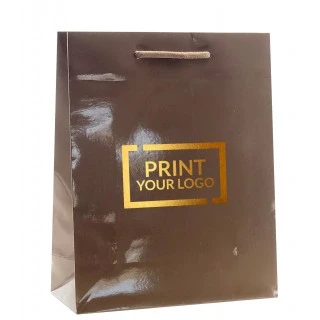
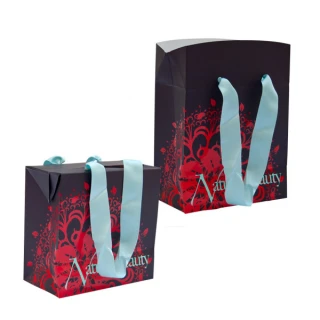
- Luxury – A range that generally groups carrier bags made from heavier papers than those used in economy ranges. Depending on the product, the handles may be flat paper, cord or another type listed in the specification.
“Luxury” does not denote one paper grade, a uniform paper weight or a guaranteed load rating. It identifies a product range; paper, gsm, reinforcements, handles and finishes must be confirmed for the selected carrier bag.
In papermaking, kraft describes paper produced using the sulphate process, which preserves relatively long fibres and supports the mechanical strength of the sheet. The word does not, by itself, establish recycled content, certification, paper weight or carrying strength. Those characteristics must be stated for the individual product.
The range currently published includes products with paper weights from 80 to 210 gsm, with availability varying by style and size. Paper weight (gsm) describes the mass of the paper per unit area and helps buyers compare body and stiffness. Paper weight is not a load rating: actual carrying strength also depends on bag dimensions, base construction, folds, reinforcements, glued seams, handles, weight distribution and any sharp edges or corners on the contents.
Paper bag construction: handles, size, gusset and base
Flat paper, twisted paper, braided, fabric, rope and cord handles
- Flat handles – Flat paper handles are a practical choice for frequent customer handover and efficient counter service.
- Twisted handles – Twisted paper handles provide a rounded grip and are widely used on retail paper carrier bags.
- Braided handles – Add a visible woven texture and a distinctive finish to styles that offer them.
- Fabric – Fabric handles feature on carrier bags intended for a more considered presentation; material and attachment vary by product.
- Rope – Rope handles are available on selected presentation, boutique and event styles, with diameter and attachment defined in the product specification.
- Cord handles – Styles with knotted cord handles are catalogued separately from Rope; cord construction and attachment must be checked on the product page.
Handle type affects grip and appearance, but does not determine load capacity on its own. Before ordering, check the complete construction and select a size with sufficient room, without forcing the sides, gussets or opening.
Standard bases for retail and Wide bases for takeaway
- Standard – The more common base configuration for Commercial carrier bags and regularly shaped retail contents.
- Wide – A broader supporting base for trays, cartons, pizza boxes and takeaway packs.
Base and gusset are related parameters, but they are not interchangeable. A Wide base does not by itself guarantee load capacity, stability, food-contact suitability or compatibility with every container: always compare the product dimensions with the internal dimensions of the bag.
How to assess size, gusset and internal dimensions
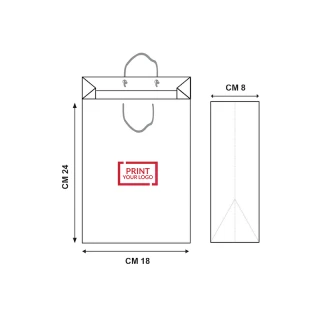
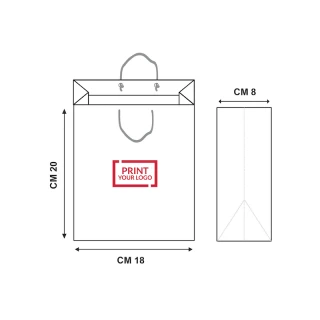
Measure the largest item in the position in which it will be packed. Include its box or wrapping, any protective material, the closure and enough space for comfortable access to the handles. A deeper gusset increases the usable volume, while a suitably proportioned base supports boxes, cartons and several packaged items. For bottles and pizza boxes, choose a Bottle holder or Pizza bag style respectively, then check the number, diameter, height or box dimensions on the product page.
Printing and personalisation methods for paper carrier bags
All-over printing: Custom and Elite ranges
The catalogue option Fully customisable models – The Entire Surface identifies every style in the Custom and Elite ranges, all designed for full-surface personalisation. The artwork is not restricted to a central front logo area: it can extend across the front, back and side gussets, within the printable surface shown on the technical template. This allows the carrier bag to become part of the brand's visual system through solid backgrounds, patterns, text and coordinated imagery.
| Range | Printing method | Customisable surface | Colour specification |
|---|---|---|---|
| Custom | Flexographic printing | Front, back and side gussets, according to the template for the style | One to four spot Pantone® colours or four-colour process (CMYK), depending on the artwork |
| Elite | Offset printing | Front, back and side gussets, according to the template for the style | One to four spot Pantone® colours or four-colour process (CMYK), depending on the artwork |
For both ranges, the artwork may use one to four spot Pantone® colours or four-colour process (CMYK), depending on the project. Colour specifications that cannot be selected in the online configurator are confirmed as part of a bespoke quote.
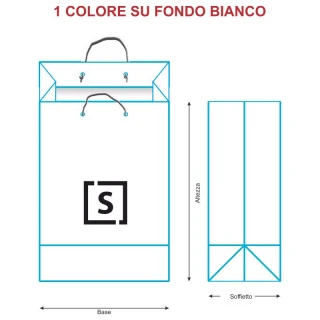
Full-surface personalisation does not mean that there are no production constraints. Folds, glued seams, turn-ins, the base, handle attachment points, bleed and registration tolerances must be allowed for in the artwork file. The design must be prepared on the technical template for the style and checked in the artwork proof before production.
Flexographic printing, screen printing, offset printing and hot foil stamping
The printing method should be selected according to the product, surface, order quantity and artwork. Number of colours, fine detail, paper colour and available print area all matter. A simple logo on brown kraft requires a different assessment from detailed artwork on white paper or a decorative finish on a Luxury carrier bag.
- Flexographic printing – The method used for the Custom range and also available in the specifications shown on relevant product pages.
- Screen printing – Suitable for solid colours and logos that match the available surface and print area.
- Offset printing – The method used for the Elite range and for products prepared for this process.
- Hot foil stamping – Used as a decorative finish on paper bag styles that offer this option.
The printing method that can actually be ordered is the one shown on the product page and in its configurator. The artwork proof allows the composition, proportions and position of the logo or artwork to be checked before production.
Technical criteria for comparing paper carrier bags before ordering
The table summarises the points to compare before ordering. The specification should be assessed as a whole: paper, size, construction, handles and personalisation all contribute to the final result.
| Criterion | What it affects | What to check before ordering |
|---|---|---|
| Bag size and gusset | Usable space, product orientation and ease of packing. | Overall packed dimensions of the largest item and the clearance needed for comfortable handling. |
| Paper type and weight | Body, stiffness, paper colour and surface behaviour. | Product specifications and suitability for the contents and artwork; paper weight is not a load rating. |
| Base, folds and reinforcements | Support for the contents and distribution of stress; the base may be Standard or Wide. | The base required for retail products, trays, cartons or pizza boxes, plus any sharp edges or concentrated loads. |
| Handles and attachment points | Grip, comfort, appearance and transfer of the load into the bag structure. | The intended use and complete construction of the product, not just the handle material. |
| Surface and finish | Contrast, visual result, feel and end-of-life instructions. | The actual paper colour, any lamination and the instructions for the selected product. |
| Print area and method | A central area or full-surface coverage, including the gussets; detail, number of colours and ink coverage. | Custom or Elite range, printing method, artwork template, file requirements, quoted options and artwork proof. |
Common specification mistakes
- Relying on nominal dimensions without checking the packed product – The gusset, closure and shape of the contents can reduce usable space.
- Ignoring the paper colour – Brown, white or coloured paper changes the perceived contrast of the print.
- Confusing Ribbed Kraft with Recycled Kraft – The ribbed texture describes the surface appearance and does not, by itself, establish recycled content.
- Selecting a Wide base without checking the container – A broader base does not guarantee compatibility with every tray, carton or pizza box.
- Assuming one printing method applies to every style – Available print areas, colours and processes vary by product and quantity.
- Interpreting full-surface personalisation as freedom from technical constraints – The artwork must respect the template, folds, glue areas, bleed and registration tolerances.
Food contact, recycling and product-specific claims
A carrier bag used to transport packaged food is not automatically suitable for direct food contact. Takeaway and Pizza bag variants include handled paper bags whose format and base suit particular takeaway packs; they are not a category-wide food-contact declaration. If bread or food will touch the bag, use only a product whose listing or documentation expressly confirms suitability for the intended use. For specialist guidance on bags for restaurants, takeaway service and food delivery, visit Takeaway Bags. For bread and lightweight bakery goods served over the counter, visit Paper Bread Bags.
Recyclability must also be assessed for the complete bag construction, not from the word “paper” alone. Lamination, windows, handles, adhesives, inks and residues may affect how the bag should be sorted. Follow the instructions supplied with the product and the local collection rules where it will be used. Certification, recycled content and other environmental characteristics should be stated only when they are documented for the specific product.
When personalised paper bags make a difference to the brand
A branded paper bag is one of the most visible elements at the point of customer handover. In a shop it completes the presentation of the purchase; while it is being carried, the logo, colours and coordinated artwork continue to identify the business. Bag size and personalisation should therefore suit both the contents and the brand image the retailer or organisation wants to convey.
The most elaborate option is not always the most useful. A straightforward, functional paper bag may work best for frequent counter service, while paper, handles and finish may play a greater role for boutiques, giftware and events. The right choice balances function, visual identity and the conditions in which the bag will actually be used.
Paper bags within a coordinated branded range
Personalised paper bags can be coordinated with the other branded materials used by a business. A boutique may align its carrier bags with custom cardboard boxes; a retailer can carry the same logo and colours across its bags and packaging supplies; trade fairs and corporate events can combine paper bags with promotional products or custom clothing for staff.
A coordinated range works when each item shares recognisable brand cues without losing its practical role. Paper colour, logo size, print position and dimensions can be considered together, then adapted to the properties of each product. For a broader approach, read Promotional products, clothing and packaging: how to create a coordinated branded range.
Paper carrier bags or another solution: where to continue your search
Stay in this category if you need a custom-printed handled paper carrier bag, including styles for takeaway orders, pizza boxes or bottles. If the material changes, or you need specialist guidance for food service or counter use, choose the relevant branch below:
| Main requirement | Right category | How it differs |
|---|---|---|
| Handled paper carrier bags for Commercial, Takeaway, Pizza bag or Bottle holder applications | Paper Bags | This is the specialist focus of this category. |
| Lightweight bags for bread and counter service | Paper Bread Bags | Bakery and counter bags rather than the usual handled retail paper carrier bag. |
| Specialist guidance on bags for restaurants, takeaway service and food delivery | Takeaway Bags | A specialist food-service page; the Takeaway and Pizza bag variants here are the handled paper carrier bags available in this catalogue. |
| Carrier bags made from plastic | Plastic Bags | A different material, thickness and construction from paper. |
| Cotton, non-woven, jute or other textile bags | Tote Bags | The textile hub for reusable bags and material-specific personalisation. |
| Structured bags for grocery shopping and repeated use | Reusable Shopping Bags | Formats and constructions intended for grocery shopping and repeated use. |
Guides to choosing personalised paper bags
For further guidance on bag size, printing and a coordinated branded range, read:
- Carrier bags and paper bags: choosing the right size
- Retail packaging: how to choose the right size
- Logo printing techniques: how to choose
- Promotional products, clothing and packaging: how to create a coordinated branded range
Frequently asked questions about personalised paper bags
Which paper bag should I choose for retail, takeaway, pizza boxes or bottles?
For shops and other retail businesses, choose a style catalogued as Commercial, generally with a Standard base. For trays and packaged takeaway orders, consider a Takeaway style and, where a broader supporting area is needed, a Wide base. Choose a Pizza bag for pizza boxes and a Bottle holder for one or more bottles. Always check the dimensions, base, handles and construction of the individual product before ordering.
Which papers and finishes are available for personalised paper bags?
The range includes White Kraft, Recycled Kraft, Ribbed Kraft, Gloss Laminated, Matte Laminated and Luxury. Ribbed Kraft has a linear surface texture and must not be confused with Recycled Kraft. Luxury generally groups styles made from heavier papers than those used in economy ranges; depending on the product, handles may be flat paper, cord or another type shown in the specification. Luxury does not denote one paper grade or a uniform paper weight.
Which handle type should I choose for a paper carrier bag?
Available options include Flat handles, Twisted handles, Braided handles, Fabric, Rope and Cord handles, including styles with knotted cord handles. Flat paper handles are practical for retail; twisted paper handles provide a rounded grip; braided, fabric, rope and cord handles characterise styles designed for a more distinctive presentation. Handle type alone does not determine load capacity: attachments, paper, base, bag size and weight distribution also matter.
What is the difference between a Standard base and a Wide base?
A Standard base is used mainly for shop carrier bags and Commercial applications. A Wide base provides a broader supporting area for trays, cartons and takeaway packs and is therefore particularly useful for takeaway; Pizza bag styles are proportioned for pizza boxes. Confirm the choice by comparing the contents with the base, gussets and internal dimensions of the individual style.
How do I choose the right bag size and paper weight?
Start with the largest item, measured together with its box or wrapping, and allow enough room to place it in the bag and reach the handles without straining the construction. Paper weight helps compare body and stiffness, but it is not a guaranteed load rating; the structure, base, glued seams, handles and shape of the contents must also be considered.
Which paper bags can be personalised across the full surface?
All styles in the Custom and Elite ranges can be personalised across the front, back and side gussets. The Custom range uses flexographic printing and the Elite range uses offset printing; depending on the artwork, one to four spot Pantone® colours or four-colour process (CMYK) are available. Options not selectable in the configurator are confirmed by quote; folds, glue areas, bleed and registration tolerances are checked against the template and artwork proof.
Which printing method is right for my logo?
It depends on the paper, order quantity, print area, number of colours and level of detail. Depending on the style, flexographic printing, screen printing, offset printing or hot foil stamping may be available. The configurator shows the actual options and the artwork proof allows the result to be checked before production.
What is the difference between paper carrier bags and paper bread bags?
This category mainly contains handled paper carrier bags for retail handover and transport. Paper Bread Bags are products intended for lightweight bakery goods and counter service, with construction and food-use requirements specific to bakery counter service.
Can paper bags be used for food?
Only when the individual product is expressly stated to be suitable for the intended use. Takeaway and Pizza bag variants include handled paper bags for carrying sealed packs, but do not establish suitability for direct food contact. For bread and counter service, visit Paper Bread Bags; for specialist guidance on bags for restaurants, takeaway service and food delivery, visit Takeaway Bags and always check the product specification.
Are paper bags recyclable?
It depends on the complete construction. Paper, lamination, windows, handles, adhesives, inks and residues may change how the bag should be sorted. Follow the product instructions and local collection rules rather than extending environmental characteristics stated for selected products to the whole category.
What is the minimum order quantity and how much do personalised paper bags cost?
There is no minimum order quantity (MOQ) or price that applies to the entire category: both depend on the product, size, personalisation and quantity. The configurator shows the conditions for the selected product, and a free artwork proof is provided before production to check the position of the logo.
Personalise paper bags for your shop or business: compare intended use, paper type, paper weight, base, size, handles and print coverage, then configure a paper carrier bag that suits the contents and your brand identity.