
Retail packaging: how to choose the right size
At a glance
- Packaging size should be proportionate to the product, not to the shop window aesthetic.
- Oversized or undersized bags tend to communicate disorder and weaken perceived value.
- A coordinated packaging system with multiple sizes adapts better to different purchase types.
- Size is decided before material and printing, not afterwards.
Choosing the right packaging size for a retail shop is a decision that directly affects brand perception, the in-store customer experience and the perceived value of the product.
If you are reviewing your shop's packaging for 2026, this guide helps you choose the size that best fits the product, its real-world use and the communication goals of the shop.
Choosing the right packaging for a retail shop is not a purely aesthetic decision. The size of a carrier bag or paper bag affects ease of transport, product protection and the perceived professionalism of the brand. A choice that is not proportionate can reduce the effectiveness of the investment, while a format that matches the purchase communicates care, order and attention to the customer from the very first interaction.
Why packaging size affects retail
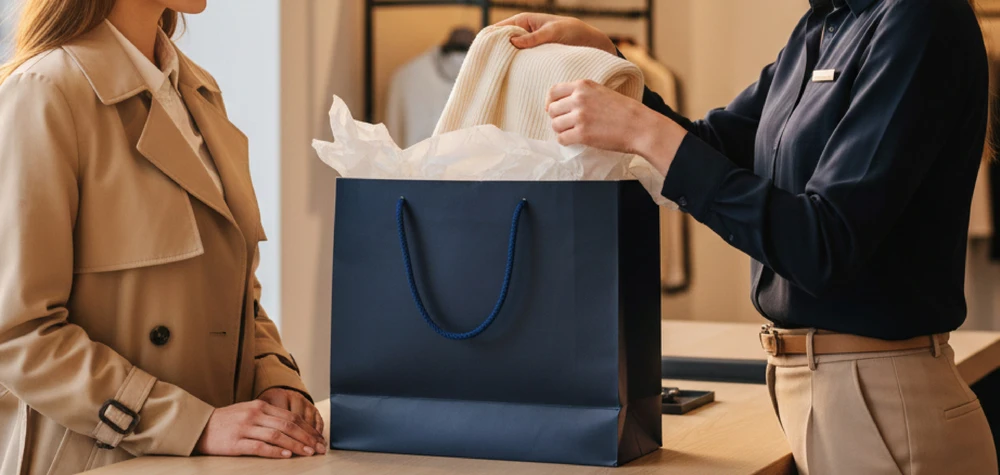
In a physical store, packaging acts as a true silent salesperson. It accompanies the customer outside the shop and continues to communicate the brand even after the purchase, sometimes for days or weeks if the bag is reused.
The right size protects three elements:
- functionality in transport and product protection;
- visual coherence between purchase and container, avoiding mismatches that suggest little care;
- perceived brand value, from the promotional segment to premium positioning.
An oversized bag for a small purchase tends to communicate disorder; an undersized one can damage the contents and create discomfort for the customer. In both cases, the brand message weakens at the most delicate moment of the experience: the moment the customer leaves the shop.
Choosing packaging size based on the products you sell
The first step is to assess the type of products sold and how they are used in everyday situations. Not all products require the same type of container, and a decision based only on shop window aesthetics tends to fall short at the operational moment of handover.
- Clothing and accessories: roomy but proportionate carrier bags with good load capacity and handles strong enough to hold folded garments.
- Gift items and small goods: more compact formats that frame the contents without excess and remain consistent with the price point of the product.
- Food and takeaway: functional bags, easy to carry and suited to the weight, with optional features for water resistance or thermal performance.
At this stage, it is also important to consider reuse frequency: packaging designed to be reused extends brand visibility over time and tends to be perceived as part of the value of the purchase, rather than as an afterthought.

Comparison table: purchase type, size and capacity
| Purchase type | Indicative size | Useful features | When it suits |
|---|---|---|---|
| Accessories, light items | Compact paper bags (e.g. 18×8×24 cm) | Easy handling, contained footprint | Small purchases, perfumery, gift items |
| Folded garments | Medium carrier bags (e.g. 26×13×33 cm) | Proportionate capacity, strong handles | Folded clothing, fashion shops |
| Bulkier purchases | Large carrier bags (e.g. 36×13×41 cm) | Good load capacity, stable base, reinforced handles | Multiple-item purchases, bulky goods |
| Premium or gift purchases | Structured boxes or carrier bags | Refined finish, rigid material or double-layer | Gift packaging, premium segment, presentation boxes |
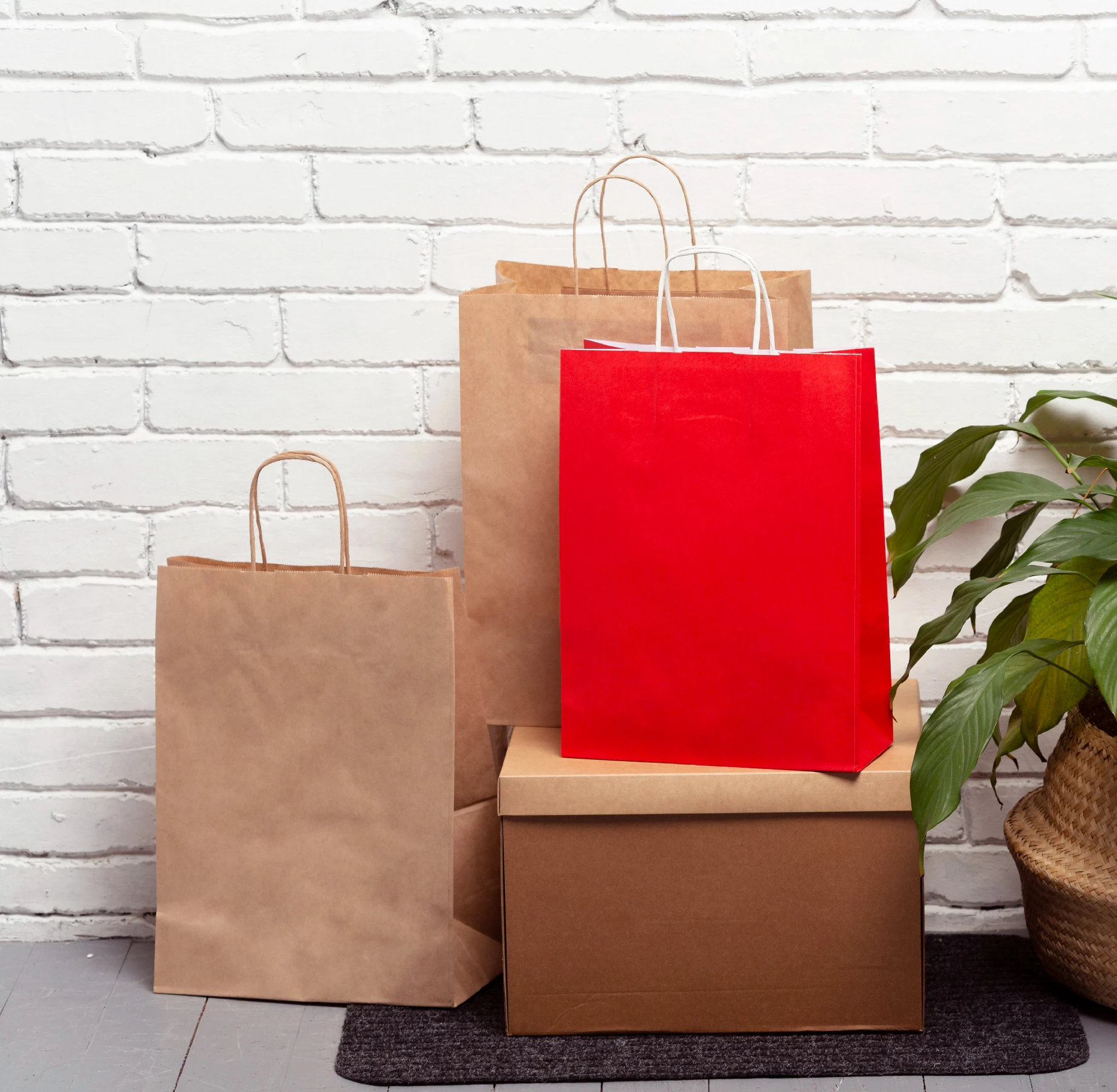
A well-proportioned range of sizes reduces the sense of mismatch and keeps packaging consistent with the type of purchase, even when the average basket varies significantly between customers.
Carrier bags, paper bags or a coordinated packaging system
Many retailers choose a coordinated packaging system, using different sizes depending on the purchase but maintaining the same visual identity: same logo, same colours, same graphic language.
The most common solutions include printed bags in different sizes, printed paper bags for smaller purchases, and custom packaging for the gift segment or for premium purchases that require a more structured finish.
This strategy improves internal organisation in the shop, reduces material waste and gives the customer a consistent and well-designed experience, regardless of the purchase value.
Common mistakes when choosing packaging size
Most recurring mistakes in retail packaging
- Choosing a single size for all purchases: a one-size-fits-all bag forces both container and contents into a compromise, with results that are not always coherent.
- Underestimating real load capacity: thin handles or lightweight materials may give way under bulkier purchases, with an immediate impact on perceived quality.
- Investing in printing first and size last: a refined graphic on a poorly proportioned container does not recover the lost effect.
- Ignoring reuse: a bag designed to be reused becomes a no-cost brand vehicle, but only if the size makes it genuinely practical.
- Not coordinating packaging with the rest of the brand communication: boxes, paper bags and carrier bags should speak the same visual language as the logo, the shop sign and the staff clothing.
How to choose packaging size in 4 steps
When planning a packaging order, a clear sequence helps avoid choosing the size only at the end, when the artwork is already finalised and the room for adjustment is limited.
- Map your shop's real purchase types. Note the recurring transactions by size (small, medium, bulky) and the average weight of the contents. Packaging should be sized on real flows, not on abstract assumptions.
- Define the minimum useful number of sizes. For most shops, two or three coordinated sizes cover almost all cases: a compact paper bag, a medium carrier bag, a large carrier bag. Adding a premium format makes sense when the gift segment is significant.
- Verify load capacity and material strength. Handles, base and stitching (or gluing) need to hold the real weight of the average purchase, with a margin of safety. A bag that gives way at first use cancels in seconds the positive effect of the artwork.
- Align size with brand positioning. A premium shop communicates with structured carrier bags, more substantial materials and refined finishes; a promotional shop may prioritise functional formats and contained unit cost. Size is the first visual lever of positioning.
This sequence reduces the risk of rushed choices and makes the order more consistent over time, especially for shops that refresh packaging seasonally or prepare specific orders for events.
What we have observed since 2006 about retail packaging
In the most successful orders, in shops that order packaging on a continuous basis, the choice of size is rarely made last. It is defined together with the type of items sold and the average basket weight, already at the quotation stage, because that is precisely when the size-capacity-artwork combination delivers the best result. When instead the size is decided only after the artwork, it more often happens that the final packaging looks disproportionate or that the real load capacity falls short of the typical purchase weight.
We see that, in the most curated shops, three or four coordinated sizes are often accepted instead of just one: the compact paper bag for accessories, the medium carrier bag for folded garments, the large carrier bag for multiple-item purchases, and a structured box or carrier bag for the gift segment. The visual outcome remains coherent because the logo is the same and brand colours are preserved, but each container's size is optimised for its purchase type. This approach, applied from the first order, reduces material waste and improves the sense of order at the moment of handover.
Packaging as part of a coherent system
Packaging size is not an isolated choice: it is one of the levers that make a brand's presence coherent across all customer touchpoints. When carrier bags, paper bags, boxes and staff clothing are designed as parts of a consistent brand communication system, packaging becomes the tool that translates the shop's identity into the same visual language, even on different materials and formats.
When orders repeat over time, this approach translates into greater visual continuity for the brand and a more stable perception of quality, both for shop staff and for the end customer. The principle is developed more fully in the pillar Coordinated branded range: promotional products, clothing and packaging, dedicated specifically to how a company can integrate different promotional products, clothing and packaging orders into a single communication system.
Retail packaging at Shop for Shop
Shop for Shop is an Italian company active since 2006, direct supplier of business personalisation for companies, shops and events, with free graphic proof before production, in-house quality control, free shipping in Italy and competitive rates across more than thirty European countries.
Each packaging order is assessed based on the type of products sold, the average basket weight and the positioning of the shop, in order to identify the most suitable combination among printed bags, paper bags and custom packaging, and to ensure a professional, coherent and long-lasting result.
Frequently asked questions about retail packaging
Why is packaging size so important in retail?
Size directly affects product protection, ease of transport and the perceived quality of the brand. A bag proportionate to the purchase communicates order and care, while a format that does not match the contents can reduce perceived quality even when the artwork is well executed.
Is it better to use one packaging size or multiple formats?
A coordinated packaging system with two or three sizes covers most of the real purchase types in a shop. A single size forces both container and contents into a compromise, while a coordinated range adapts better to small, medium and large purchases, while keeping the same visual identity.
Does packaging really affect the perceived value of a product?
Yes. Well-proportioned and well-designed packaging strengthens price perception and the professional credibility of the shop, especially at the moment of leaving the store, when the customer carries the first signal of the brand outside its physical context.
How long should retail packaging last?
It depends on positioning and purchase type: a takeaway bag has a very short life, while a bag designed for a premium purchase can be reused for months. In general, packaging designed to be reused extends brand visibility over time and tends to be perceived as part of the value of the purchase.
Leave a comment