
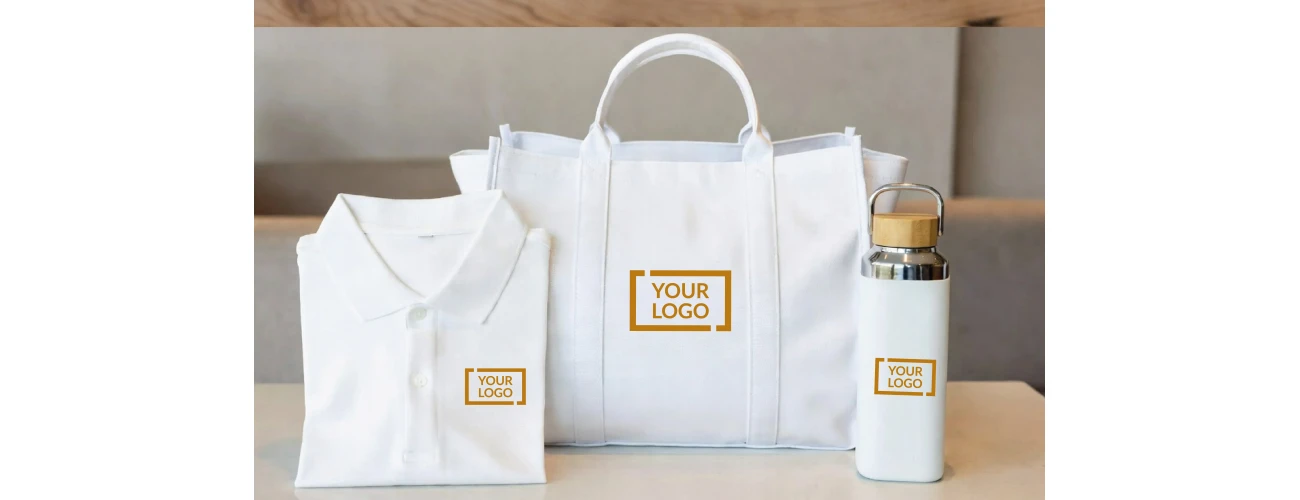
- A coordinated branded range works when promotional products, custom shopping bags, cardboard boxes, packaging supplies and clothing all convey the same brand image in different contexts.
- The system becomes visible in real situations: customer-facing staff, retail environments, trade shows, onboarding kits, dispatches and deliveries.
- You do not need to order everything at once: start with the most visible items and apply a shared logic to materials, colours, logo placement, personalisation techniques and perceived quality.
- When each item is chosen separately, the brand can look fragmented even if the individual products are good.
Which elements should you coordinate in a branded supply?
- Promotional relationships, trade shows and onboarding kits → promotional products
- Retail, delivery and product transport → custom shopping bags
- Protection, presentation and food or premium packaging → customised cardboard boxes
- Sealing, finishing touches and gift presentation → packaging supplies
- Staff, events and team recognition → custom clothing
A customer never experiences your brand through just one object. They experience it through a set of repeated touchpoints: staff, shopping bags, boxes, promotional products, delivery materials, packaging supplies and small details. If these elements do not reinforce each other, the company's image becomes weaker.
We have written this guide because branded supplies are still too often managed as separate categories: first the promotional product, then the clothing, then the packaging. A coordinated branded range, instead, connects these elements and makes them work as parts of the same brand identity.
This becomes especially clear when preparing for a trade show, updating staff clothing, building an onboarding kit or reviewing packaging, retail, delivery and dispatch materials. At those moments, it becomes obvious whether the brand is communicating with one clear direction or through valid but disconnected purchases.
Shop for Shop is an Italian company operating since 2006, a direct supplier of promotional products, custom shopping bags, customised cardboard boxes, packaging supplies and custom clothing with logo for companies, shops, events and e-commerce businesses in Italy, where delivery is free, and in over thirty European countries at competitive rates.
In this guide, we discuss coordinated branded supplies because these categories should not be managed as isolated items, but as parts of a consistent brand communication system: from the garment worn by staff to the shopping bag handed to the customer, from the box that protects the product to the promotional item that stays on a desk.
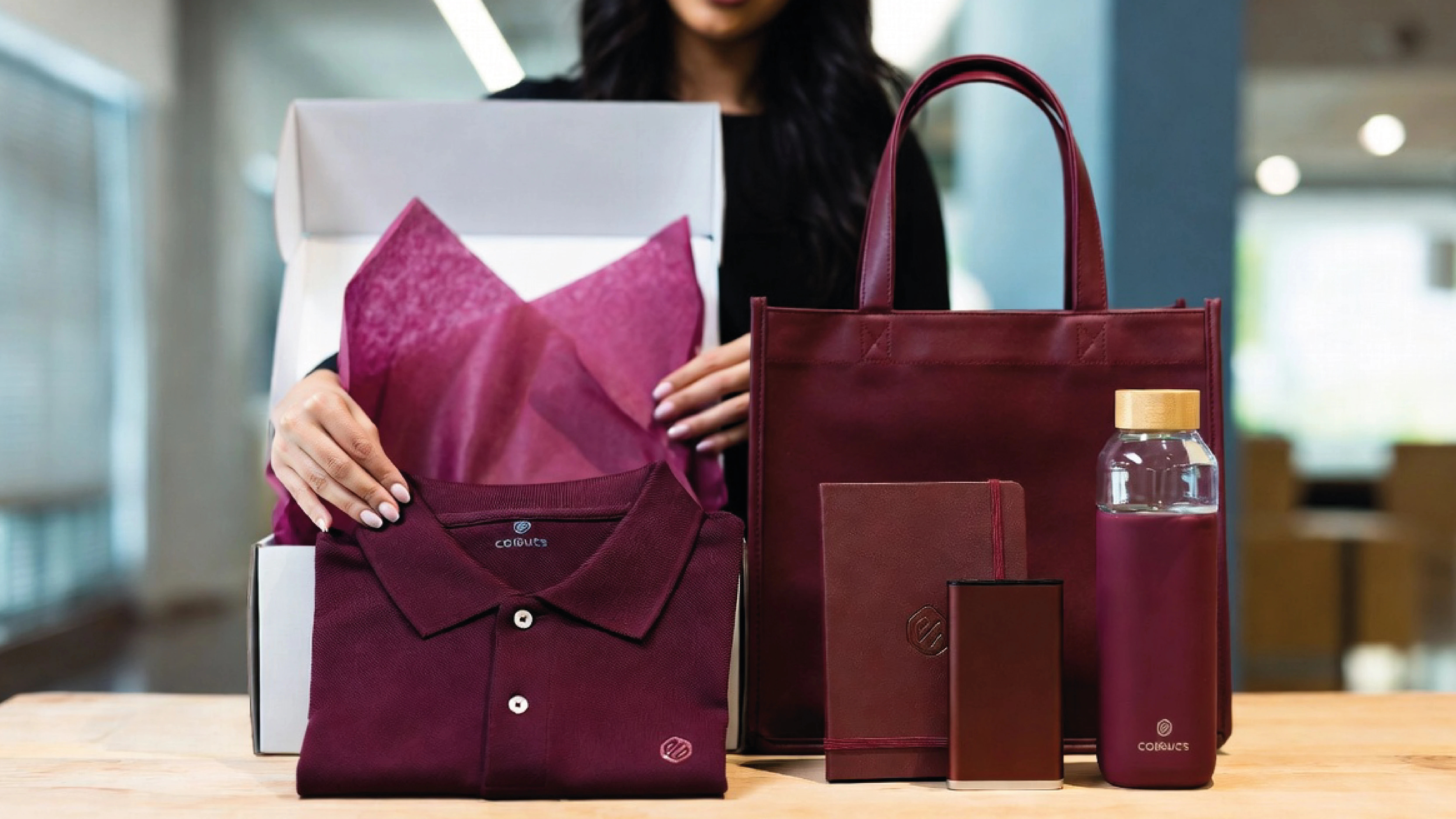
A kraft paper bag, an embroidered polo shirt, a solid board box and a useful promotional product can all work well on their own. But when they share style, tone, personalisation method and perceived quality, the brand becomes more orderly, more recognisable and easier to remember.
A coordinated branded range is not about buying more items. It is about preventing each new order from looking as if it belonged to a different company.
What a coordinated branded range really means
A coordinated branded range is a set of items selected to work with the same visual and functional logic. It does not mean making everything identical. It means making promotional products, clothing, shopping bags, boxes and packaging supplies feel consistent to the customer.
In practical terms, this system can include:
- branded workwear and custom clothing for staff, showrooms, reception areas, shops or trade shows, such as 180 g/m² T-shirts, piqué polo shirts, full-zip sweatshirts, custom shirts, jackets or coordinated accessories;
- promotional products for events, business relationships, onboarding kits or everyday use, such as pens, notebooks, diaries, stainless-steel water bottles, power banks, backpacks, keyrings or desk accessories;
- custom shopping bags for retail, delivery and distribution, such as 120 g/m² kraft paper bags, cotton bags, non-woven bags, jute bags, PP bags or R-PET bags;
- customised cardboard boxes for protection, presentation, pastry products, retail and gift packaging, such as cake boxes, pastry boxes, rigid-style boxes, glued-bottom boxes or made-to-measure boxes;
- packaging supplies to complete the pack with tissue paper, wrapping paper, adhesive labels, branded stickers and gift bags.
The value is not in the number of elements. It is in the continuity the customer perceives when they encounter them at different moments. That continuity is what turns separate orders into a consistent brand communication system.
When the branded range is not working as a system
- Every item looks as if it was bought on its own — the logo is present, but the brand does not feel coordinated.
- Packaging, staff clothing, shopping bags and promotional products speak different visual languages — the customer struggles to recognise a common direction.
- Each new order corrects the previous one — instead of strengthening the system, it creates another inconsistency.
When this happens, the issue is not only visual. It affects perceived reliability, internal order and the overall quality of the brand.
The situations where coordination becomes immediately visible
Brand consistency is measured in real contexts, not in intentions. There are four situations where customers quickly understand whether promotional products, clothing, shopping bags and packaging are working together.
1. Shop, showroom or reception area
When staff wear a coordinated polo shirt or branded shirt, counter materials are well presented and the packaging confirms the same image, the brand immediately feels more solid. A kraft paper bag with twisted handles, a neat box, a custom adhesive label and clothing that suits the retail environment create continuity without making the customer experience feel forced.
2. Trade show or event
At a trade show, the customer sees people, stand materials, giveaways and distributed items at the same time: staff T-shirts, badges, pens, notebooks, power banks, water bottles, promotional shopping bags and printed materials. This is one of the situations where the difference between fragmented purchasing and a coordinated branded range becomes most visible. To organise your investment priorities, you may also find the guide on planning your corporate gifts budget without waste useful.
3. Onboarding kit and new starters
When a new employee receives clothing, promotional products and packaging inside the same kit, their perception of the company starts immediately. A kit with a notebook, pen, stainless-steel bottle, T-shirt, sweatshirt or polo shirt and a coordinated box communicates organisation; a kit built by simply adding unrelated items communicates improvisation.
4. Delivery, takeaway or dispatch
When the brand physically leaves the company, packaging becomes its ambassador. A solid board box, coordinated tissue paper, an adhesive label, a branded sticker, an insert card and a shopping bag that matches the staff appearance all reinforce the same perception. For this aspect, you can also read the guide on packaging and unboxing: how they increase perceived brand value.
The five nodes of a coordinated branded range
The system is not built by choosing one category at a time, but by reading all product families as parts of one brand experience. In the Shop for Shop catalogue, each family covers a specific use case, with dedicated materials, functions and techniques.
Promotional products — usefulness, distribution and frequency of use
Promotional products support business relationships and help the brand remain visible over time. Pens, notebooks, diaries, keyrings, power banks, stainless-steel water bottles, mugs, umbrellas, backpacks and toiletry bags all respond to different contexts: trade shows, onboarding kits, hospitality, office use, travel or everyday distribution. The final result depends on the material, printable surface and technique chosen: screen printing, pad printing, UV digital printing, laser engraving, hot foil stamping, embroidery or DTF for textile items such as drawstring bags and backpacks.
Custom shopping bags — transport, retail and materials
Custom shopping bags accompany the customer outside the shop, event or delivery context. They should be selected according to product weight, frequency of use and setting. Kraft paper bags of 80–90 g/m² may suit lightweight products and high-turnover retail; 120–140 g/m² paper bags with twisted or cord handles are more suitable for medium loads and a more curated image; HDPE/LDPE plastic bags or PP bags respond to higher-resistance needs; cotton, non-woven fabric, jute and R-PET are useful when reuse and continued brand visibility matter.
Customised cardboard boxes — protection, presentation and food packaging
Customised cardboard boxes act as primary containers: they protect, present and organise the product. In the food sector, this may involve high-thickness solid board, cake boxes, pastry boxes and materials suitable for food contact, in line with Regulation (EC) No 1935/2004 and MOCA requirements. In premium packaging, rigid-style boxes, glued-bottom boxes, gloss or matt laminations, offset printing, digital printing, hot foil stamping and finishing processes can all contribute to perceived quality.
Packaging supplies — sealing, finishing touches and gift presentation
Packaging supplies complete the pack with elements that seal, protect internally and improve presentation: coated wrapping paper, ribbed kraft paper, tissue paper, paper, PVC or PP adhesive labels, branded stickers, cotton gift bags or non-woven gift bags. They make the difference between a pack that is simply closed and a pack that already communicates the brand before it is opened.
Custom clothing — staff, events and team recognition
Custom clothing makes the brand visible through people. It can include workwear, custom sportswear and promotional clothing: T-shirts, polo shirts, shirts, vests, sweatshirts, jackets, bodywarmers and accessories. Key fabrics include cotton, polyester and blended materials; the main techniques are embroidery for frequent washing and long-term stability, screen printing for simple logos and medium-to-high runs, and DTG direct-to-garment printing for multicolour graphics on compatible garments.
A coordinated branded range also depends on materials and techniques
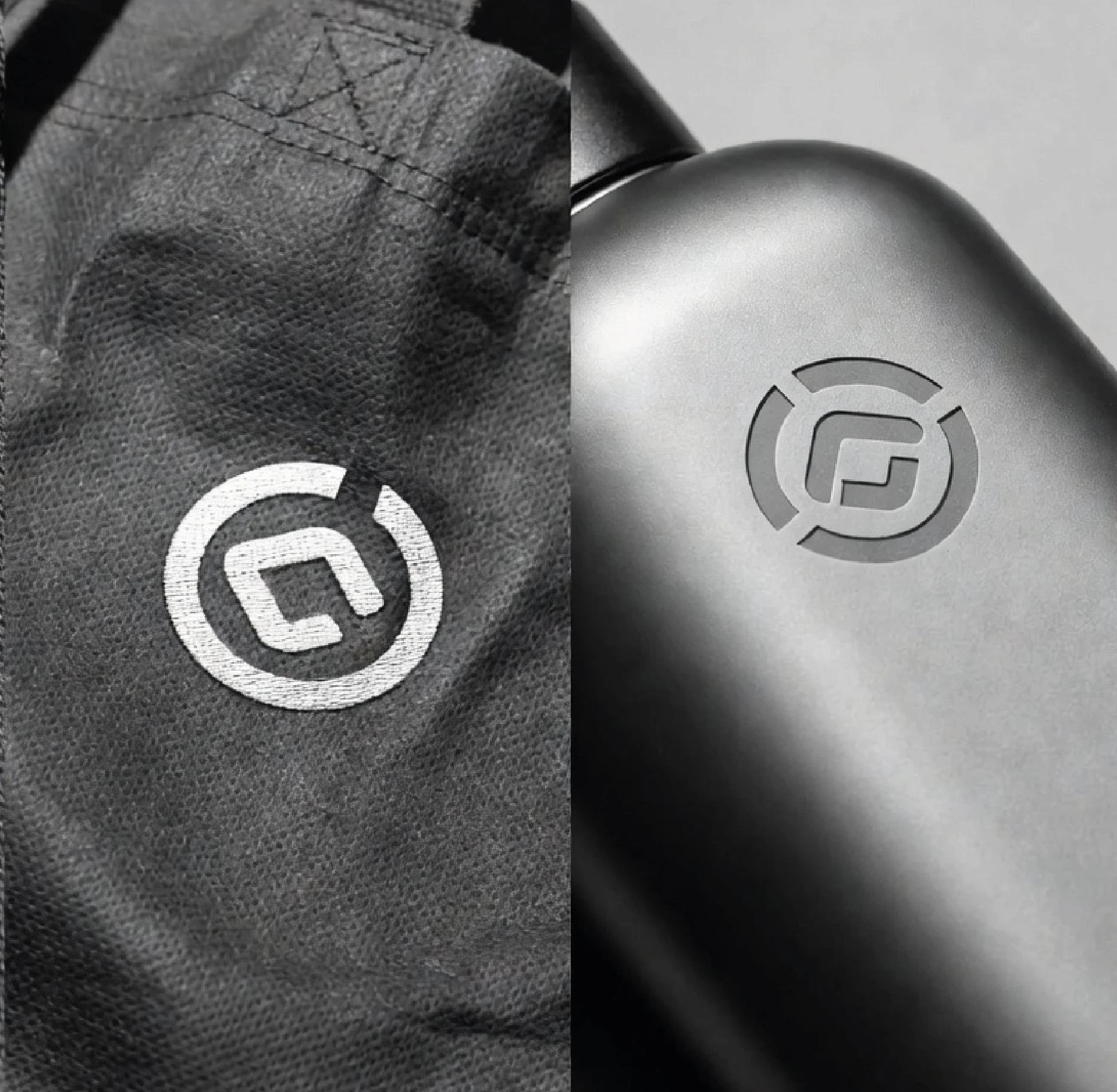
Coordinating a branded range does not mean placing the same logo everywhere. It means choosing supports that are compatible in terms of function, material and personalisation result. A kraft paper bag at the counter, a solid board box for pastry, an adhesive label for sealing, an embroidered polo shirt and a laser-engraved promotional product all communicate different levels of care: the goal is to make them work together without creating contrasts in perceived quality.
Before ordering, it is useful to assess materials, weights, printable surfaces and techniques such as screen printing, flexographic printing, hot foil stamping, digital printing, pad printing, embroidery, laser engraving, UV printing, offset printing, DTG direct-to-garment printing, DTF, letterpress-style printing, varnishes and premium finishes.
For food-related sectors, material suitability, Regulation (EC) No 1935/2004, MOCA requirements and, where relevant, certifications such as ISEGA for cake box board should also be considered. For lines with hi-tech components, RoHS directives may also be relevant.
This technical compatibility is what turns a series of separate orders into a true system.
How to coordinate promotional products, clothing and packaging without ordering everything at once
One of the most common misunderstandings is thinking that a coordinated branded range requires a large, simultaneous project. In reality, the most effective method is often to start with a few key items and make them work together more clearly.
- First level: staff — makes the brand immediately recognisable in direct contact.
- Second level: shopping bags, boxes and packaging supplies — accompany the product and take the same image outside the company.
- Third level: promotional products — extend brand visibility over time, when chosen consistently.
The right logic is not to choose one category first and the others later. It is to define a shared rule for all of them: palette, logo tone, style, perceived quality, materials, printable surfaces and use context.
If you are deciding how much weight to give to different brand supports, you may also find it useful to read branded workwear or promotional products: where to invest for the strongest return.
Three practical examples of a coordinated branded range
1. Trade show or event
Staff wear embroidered T-shirts or polo shirts, the promotional product matches the target audience and the shopping bag confirms the same visual tone. A notebook with pen, a power bank or a stainless-steel water bottle may work well for technical events; summer promotional products, umbrellas or non-woven bags may be more suitable for outdoor events or seasonal campaigns. In this way, contact does not stop at the stand: it continues through the object the visitor takes away.
2. Company onboarding kit
A well-designed kit may include a full-zip sweatshirt or coordinated T-shirt, a useful promotional product such as a notebook, water bottle or desk accessory, and neat packaging with a custom box, internal tissue paper and an adhesive sealing label. Even without expensive solutions, the effect changes significantly when the different elements follow the same brand logic.
3. Retail and delivery
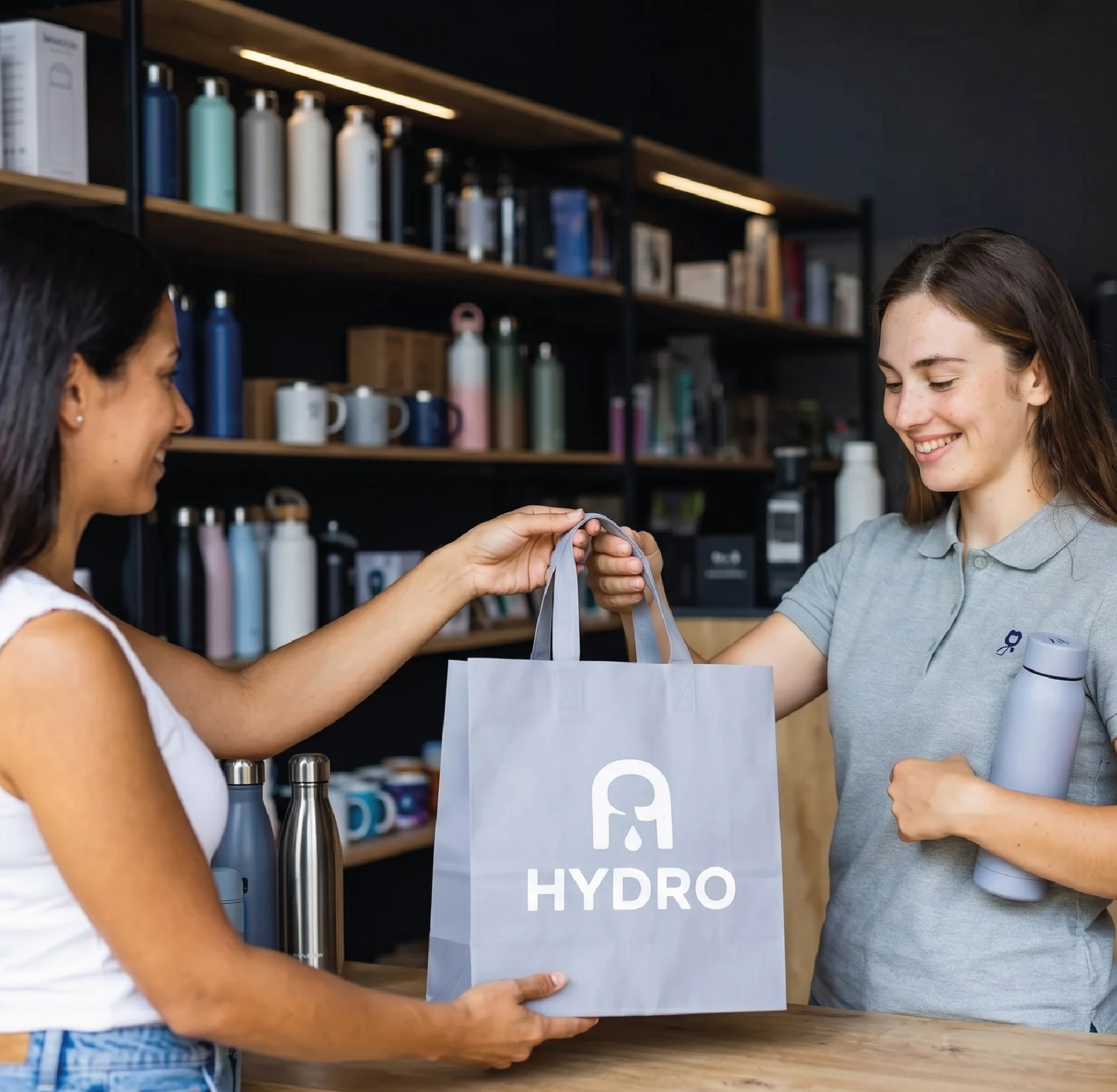
If customer-facing staff wear consistent clothing, the shopping bag is proportionate to the product, the box is neat and the small giveaway does not feel random, the brand appears more continuous. Packaging with a branded sticker, consistent wrapping paper and a shopping bag coordinated with the retail environment creates a stronger experience even in everyday operations. It is a difference customers notice immediately, even when they do not put it into words.
Consistency is not only about the logo
- The same visual tone — not everything identical, but everything recognisable as part of the same brand.
- The same perceived level — materials, weights, supports and finishes should not contradict each other.
- The same narrative function — each element should confirm the idea the company wants to convey.
If even one of these levels breaks, the system loses strength.
Common mistakes when building a coordinated branded range
- Buying by separate categories — each order may be correct on its own, but the overall result remains inconsistent.
- Thinking the logo is enough — if tone, materials and perceived quality change too much, the brand still becomes fragmented.
- Using one item to compensate for the others — a premium promotional product cannot fix uncoordinated staff clothing or anonymous packaging.
- Not linking the choice to the real context — a branded range works when it responds to how the customer actually encounters the brand.
- Confusing boxes with packaging supplies — boxes protect and present the product; paper, labels, stickers and bags complete the finishing touch.
Shop for Shop was founded in 2006 by Salvo Miciluzzo and has its legal and operational base in Ragusa, Italy. Its direct approach to personalisation comes from hands-on management of materials, printing techniques, graphic support and supply continuity over time, working with companies, shops, public and private organisations in Italy and in over thirty European countries.
Experience from Salvo Miciluzzo, founder of Shop for Shop
One of the most underestimated mistakes is looking for consistency only in the graphics. In reality, customers also read the perceived level of materials, finishes and context of use. If the packaging communicates care, but the staff appearance feels improvised, or if the promotional products seem disconnected from the rest of the brand, the system still breaks. Consistency is not only made of logos and colours: it is also made of balance between function, style and perceived quality. What we have observed since 2006 is that companies that build a consistent brand communication system achieve stronger results even with contained budgets, because each order reinforces the previous ones instead of correcting them.
Where to start before your next order
Building a coordinated branded range does not require starting again from zero. Often, it is enough to make a more concrete check on what the customer actually sees.
- What are the three most visible items today?
For example: staff clothing, shopping bags and recurring promotional products; or packaging, labels and gift presentation. - Do they really look as if they belong to the same company?
Place them side by side and observe tone, personalisation, materials, printing technique and perceived level. - Will the next order strengthen the system or interrupt it?
This is the most useful question before buying a new item.
If you want to focus more specifically on staff presence, you can also read branded workwear and visual identity: how to coordinate your staff.
Visual comparison: fragmented purchasing or a coordinated branded range?
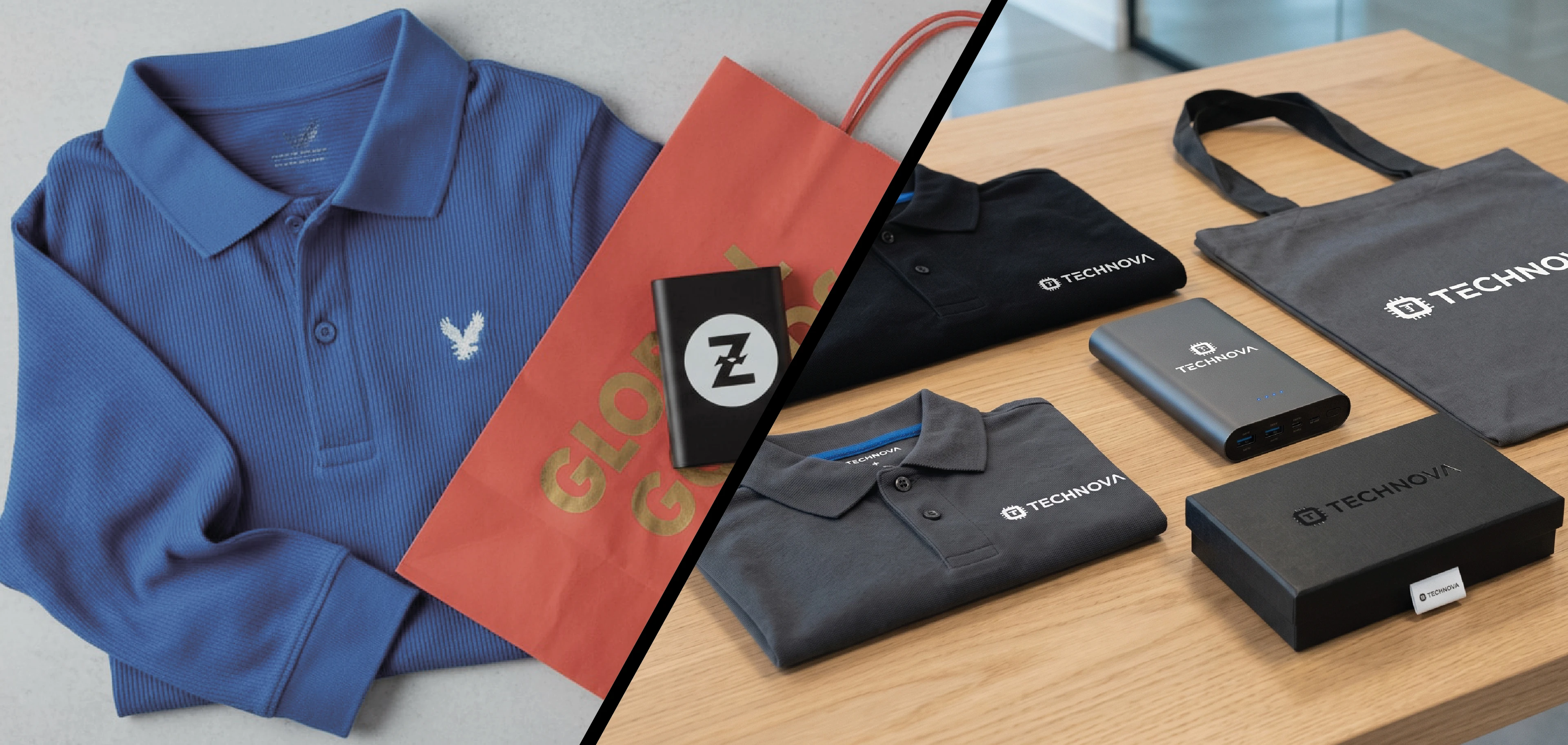
A visual comparison makes the difference between a series of disconnected purchases and a range where each element reinforces the others immediately clear.
Run this check before your next order
Take three real items that currently represent your brand: a staff garment, a piece of packaging and a promotional product already in use. Place them side by side and look at them as if you were an external customer.
Ask yourself whether they really look as if they come from the same company. If the answer is uncertain, you have already identified the first point to correct before adding a new branded supply.
Once this check is clear, it becomes much easier to choose consistent solutions and build a range that makes the brand work as a system, not as a sum of separate purchases.
Frequently asked questions about coordinated branded supplies
Does a coordinated branded range mean buying everything at once?
No. It means designing a shared logic, even if purchases are spread over time according to priorities, budget and use contexts.
Which categories can be part of a coordinated branded range?
A coordinated branded range can include promotional products, custom shopping bags, customised cardboard boxes, packaging supplies and custom clothing. The combination depends on the context: retail, trade show, onboarding kit, dispatch, delivery or promotional activity.
What is the difference between cardboard boxes and packaging supplies?
Customised cardboard boxes mainly contain, protect and present the product: they are the primary container. Packaging supplies complete the pack with elements such as wrapping paper, tissue paper, adhesive labels, branded stickers and gift bags, which provide sealing, internal protection and final presentation.
Do all items need to use exactly the same colours?
No. Consistency does not require absolute rigidity. The important thing is that promotional products, custom shopping bags, customised cardboard boxes, packaging supplies and custom clothing remain recognisable as parts of the same brand.
Which element should you start with?
Start with the most visible element for the customer or the one that currently communicates the most inconsistency. In many cases, this means staff clothing, packaging, shopping bags or recurring promotional products.
Is a coordinated branded range useful only for large companies?
No. It is also useful for small or growing businesses because it helps avoid random orders and builds a more orderly image from the first branded items chosen.
In summary: a branded supply works when promotional products, custom shopping bags, customised cardboard boxes, packaging supplies and custom clothing are not chosen as isolated items, but as parts of a consistent brand communication system.
Your brand, our craft.
Leave a comment