

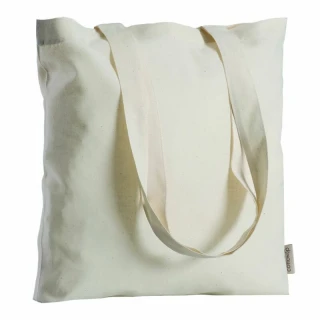
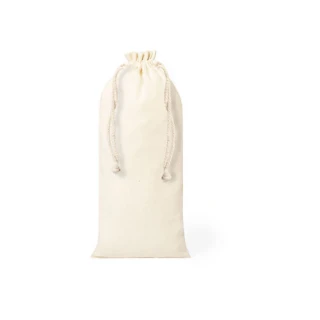
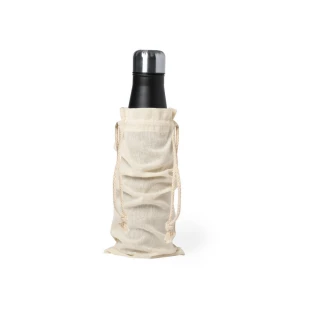
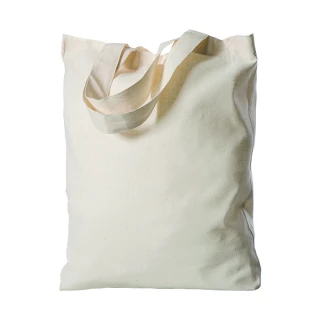
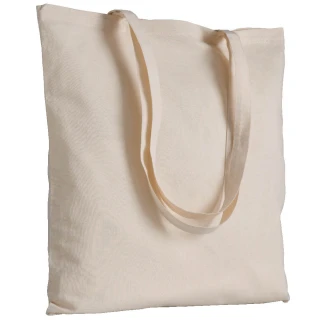
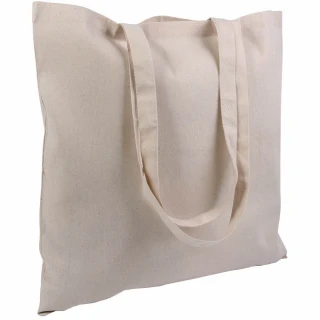

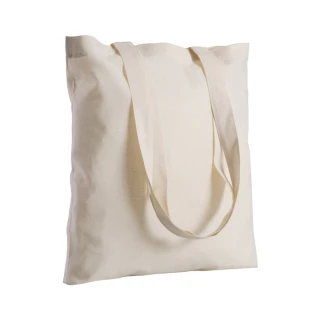
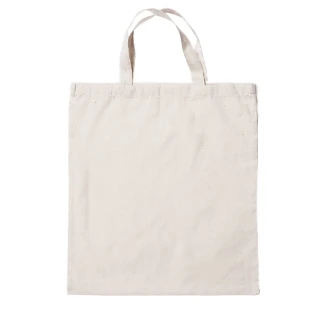

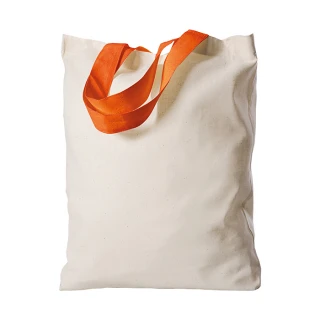
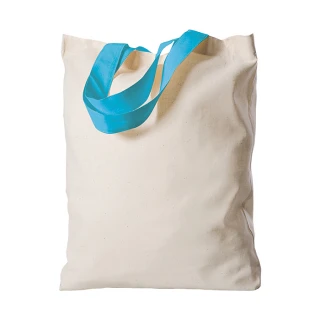
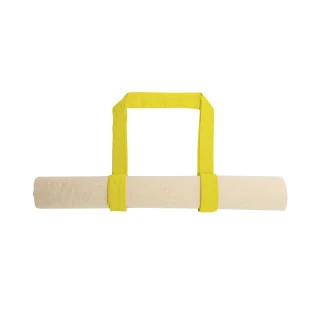
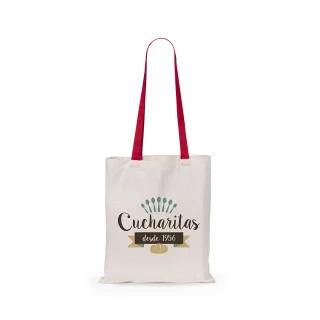
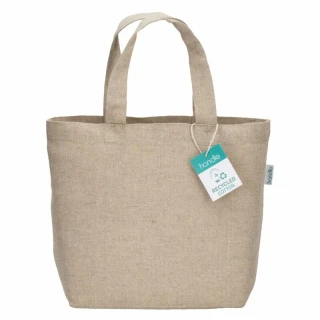

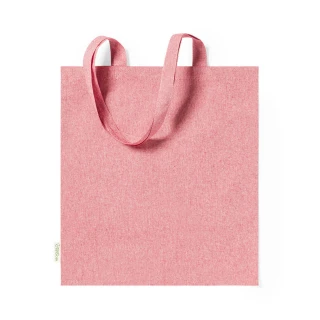
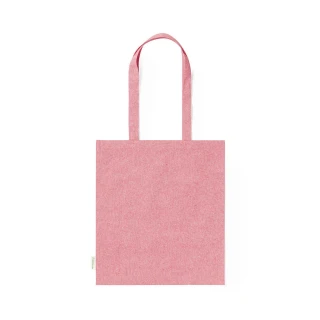
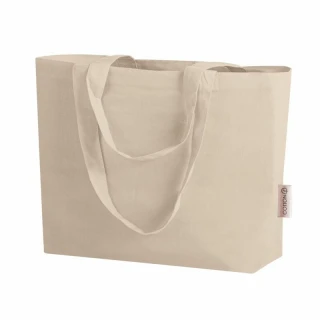
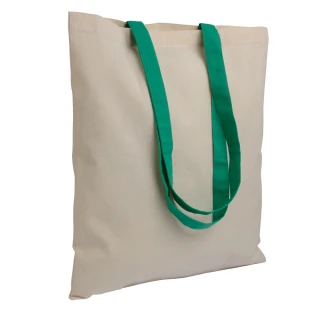
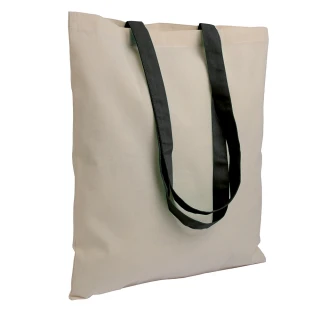
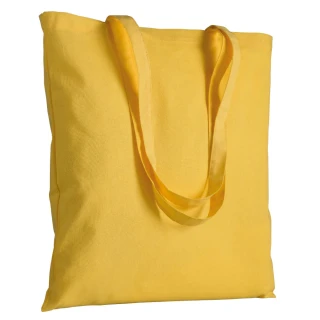
-320x320.webp "Cotton bag with bottom gusset")
-320x320.webp "Cotton bag with bottom gusset")
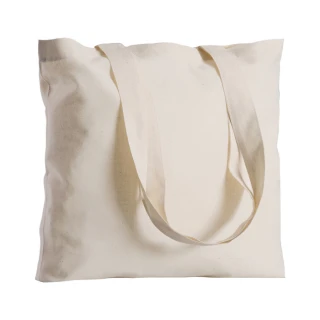
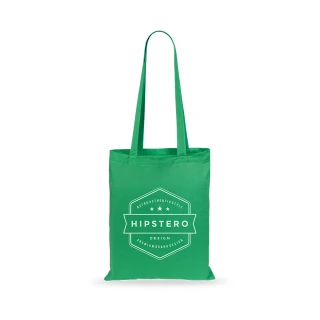
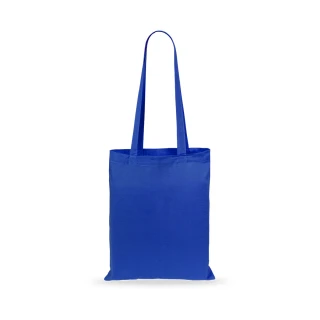
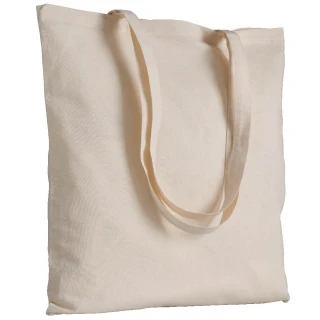
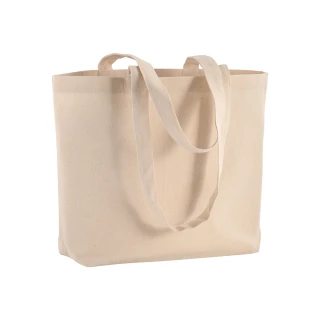
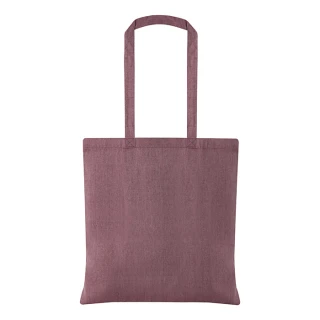
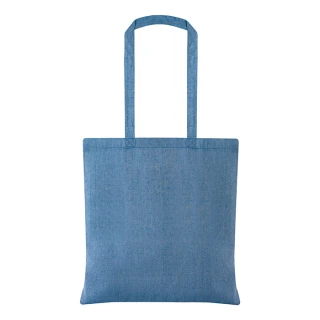
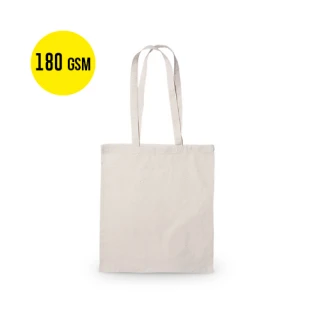
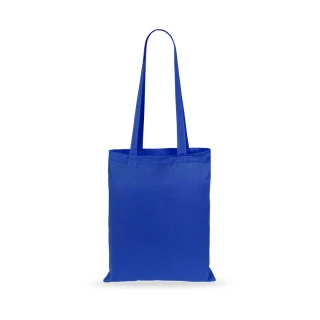
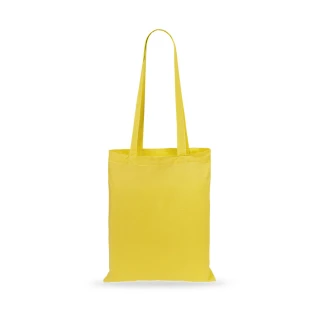
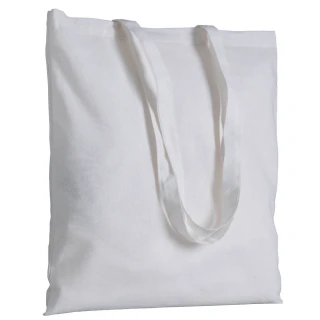
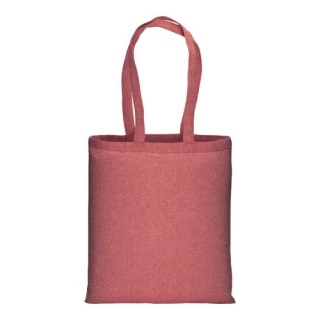

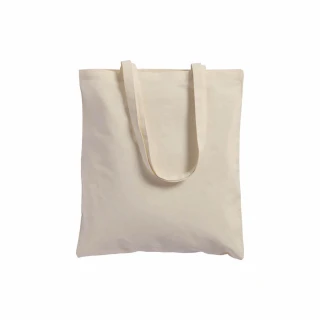
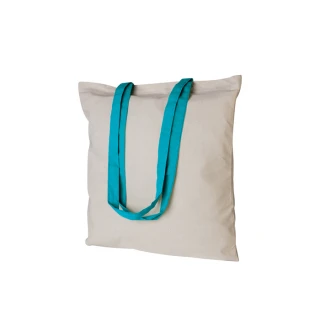
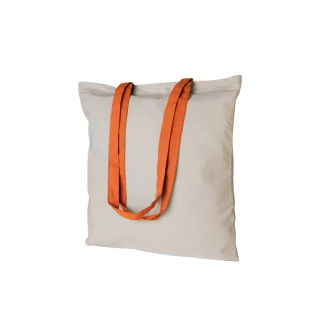
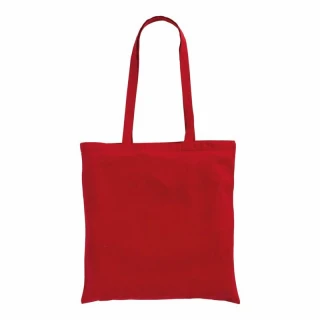
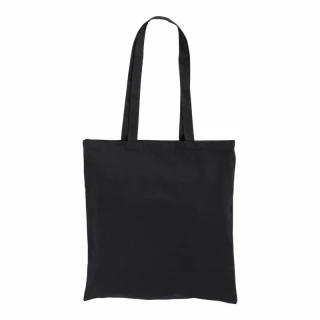
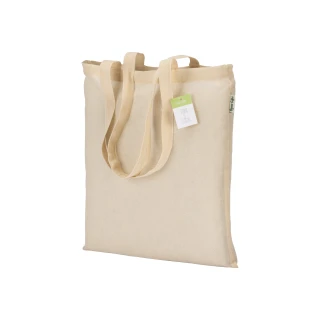
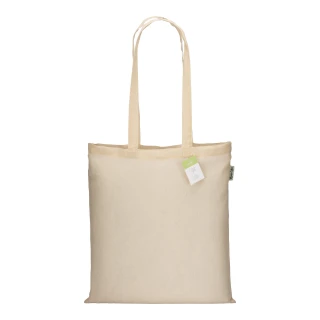
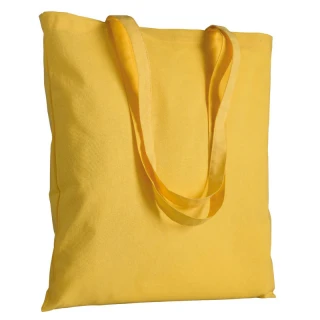
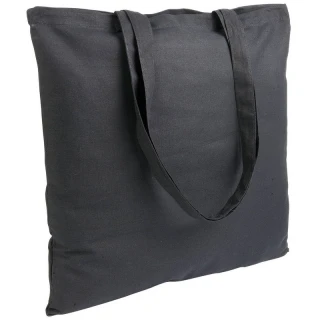
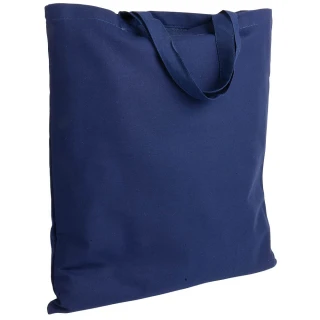

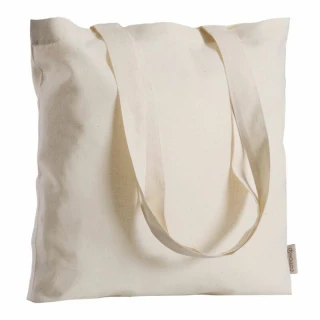
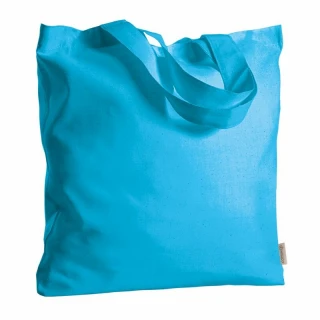
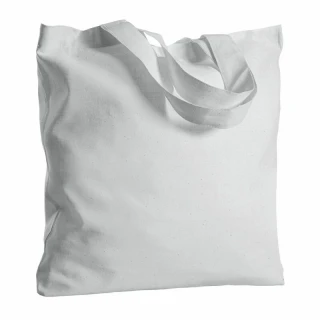
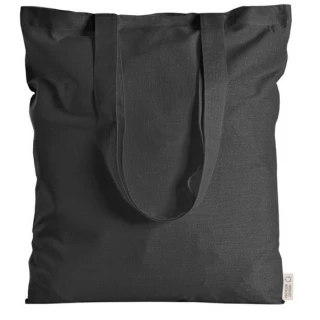
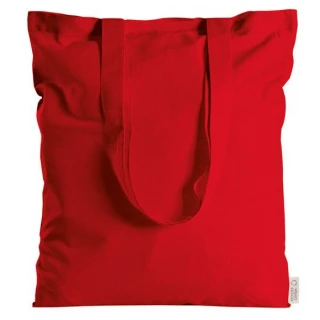
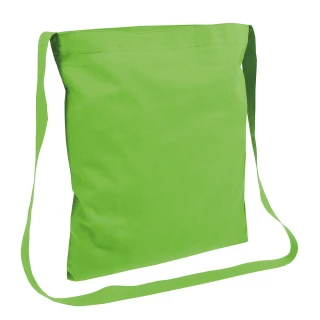
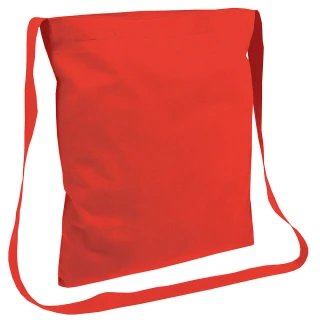
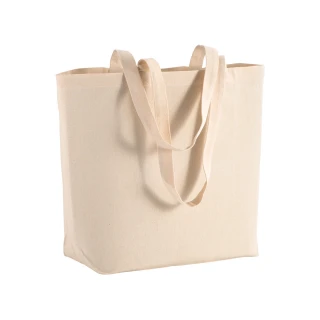
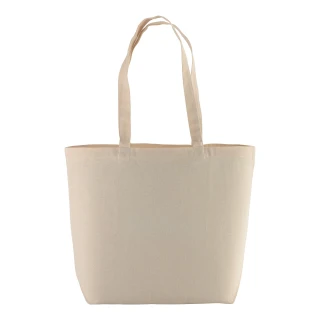
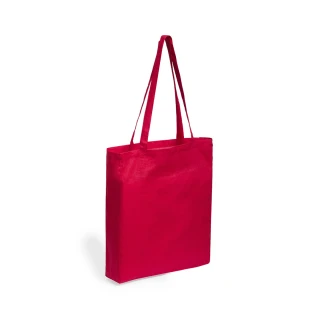
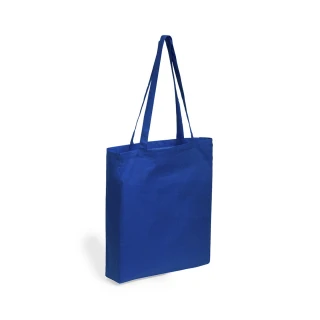
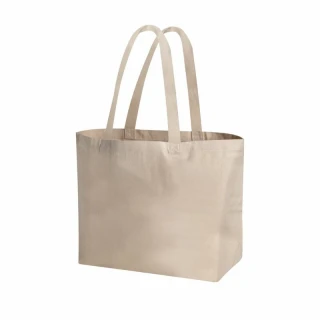
How to choose a cotton tote bag for professional use
The intended use guides the search, but it does not replace checking the product. The same fabric weight can appear on different sizes, compositions and constructions; a bag for documents handed out at a trade show does not answer the same criteria as a bag for bulky purchases, a merchandising model or a bottle carrier. Contents, frequency of use, size, handles and artwork have to be assessed together.
Shops, boutiques, bookshops and e-commerce
In retail the bag has to be proportionate to the items handed over and to the way the customer carries them. Clothing, accessories, cosmetics, books, gift boxes and small or medium-sized products all call for different sizes. Natural, white or coloured fabric affects the contrast of the print; gusset, base and handle length affect usable volume and how the bag is carried.
Trade shows, conferences, events and corporate handouts
Where distribution is concentrated, what counts is quantity, storage space, speed of handover, legibility of the logo and proportion relative to catalogues, documents or promotional items. Lighter models can reduce the weight and bulk of the consignment; more substantial ones can be considered where the bag has to stay with the recipient after the event. The comparison should still be made on the actual product page, without turning fabric weight into an automatic prediction of durability.
Merchandising, gifts and corporate kits
A cotton tote bag can be sold as merchandising, included in a kit or handed over as a useful gift. In these settings the feel and consistency of the fabric, the quality of the stitching, the colour, the print area and consistency with brand positioning all carry weight. The words organic, Fairtrade®, recycled or GRS should be used only where they are documented for the model purchased.
Wine merchants, wineries and bottle packaging
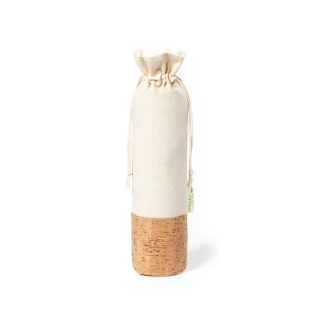
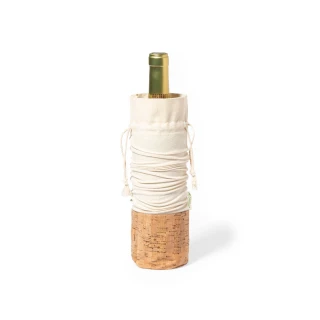
The bottle-carrier filter identifies cotton models intended for one or more bottles. Before ordering, measure diameter and height, take closures and outer packaging into account, and check the base, any dividers, the stitching and the handle construction. A bottle-carrier designation is not a universal load capacity and does not replace checking the product page.
Cotton, natural colour, organic, Fairtrade®, recycled and GRS: how to read the wording
The words used in product titles and descriptions are not interchangeable. For a technically sound choice and for communication you can stand behind, it is worth distinguishing composition, colour, fibre characteristic and certification.
| Wording | What it describes | What to check |
|---|---|---|
| Cotton / 100% cotton | The fibre or declared composition of the body or of the part described by the product. | Actual fibre percentage, any different components, colour, fabric weight and construction. |
| Natural | Appears in the catalogue as a value of the Colour filter and can indicate the undyed appearance of the fabric. | Do not infer organic origin, certifications or recycled content from the word “natural” alone. |
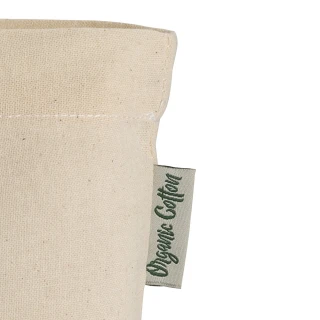
| Organic | A characteristic of the cotton declared by specific models. | The wording, percentage and documentation of the product; do not extend the characteristic to the whole category. |
| Fairtrade® | A supply chain certification referenced by specific products. | That the certification is stated for the model purchased; it is separate from organic. |
| Recycled | The declared presence of recovered fibre, in varying percentages. | The percentage stated and whether a certification accompanies it; recycled is not the same as GRS. |
| GRS | A certification covering recycled materials and their traceability. | That the model declares it; do not extend it to every product containing recycled fibre. |
Fabric weight from 90 to 320 gsm: how to read the range
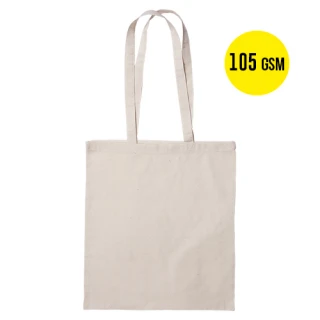
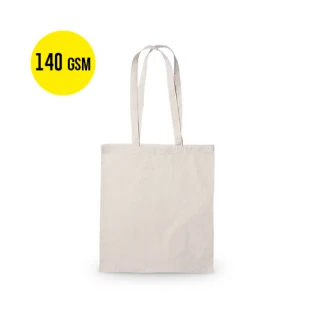
Cotton tote bags are available with fabric weights between 90 and 320 gsm. The figure expresses the mass of one square metre of fabric and serves above all to compare the substance of similar models: with the same composition and construction, a higher fabric weight corresponds to more fabric per unit of surface.
Fabric weight does not, however, establish on its own how much the bag can carry, how long it will last or which activity it best suits. Before ordering, assess composition, size, base or gusset, stitching, handles and how the contents are distributed together. Several products state a maximum load in kilograms on the product page: where that figure matters to you, look for it there rather than inferring it from gsm.
Use the Fabric weight filter to narrow the search, then check on the product page which combinations of dimensions, colours, composition and printing methods are actually available.
Size, base, gusset, handles and stitching
- Actual contents – measure the bulkiest item together with its packaging and consider corners, the number of pieces and their orientation.
- Size – assess width and height together with the base or gusset; recurring formats such as 38 × 42 cm are not a universal standard for the category.
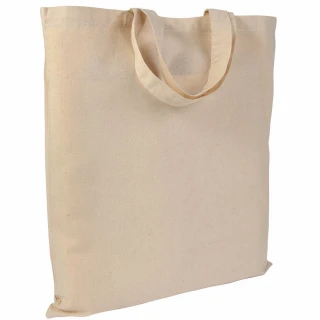
- Gusset or base – increase usable volume and change how the bag stands, but do not on their own demonstrate a higher load capacity.
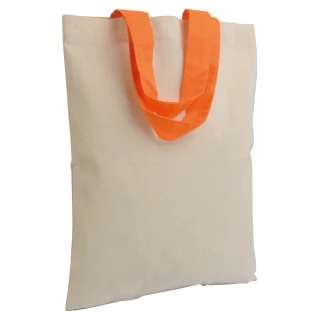
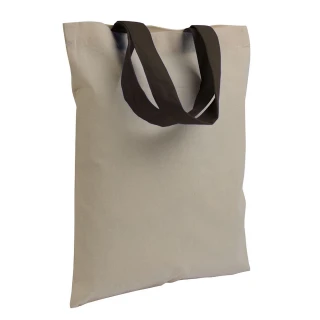
- Short handles – for carrying by hand; check length, width and how they are attached to the body of the bag.
- Long handles – for carrying over the shoulder; consider usable drop, comfort and logo position.
- Stitching and reinforcements – base, edges and handle attachment points should be read as part of the complete construction.
- Fabric colour – natural, white or coloured change contrast, opacity and the perception of the print.
- Print area – folds, gussets, stitching, pockets or accessory components can reduce the space genuinely available for personalisation.
Printing methods for cotton tote bags
The technique has to be chosen on the configured product, not on the word cotton alone. The same family includes light, dark, natural, coloured, organic and recycled fabrics, and different compositions.
| Technique | When it can be considered | What to check on the model |
|---|---|---|
| Screen printing | Flat-colour logos and repeat production on compatible products. | Number of colours, opacity over the background, area, front or back, minimum detail, quantity and file requirements. |
| Digital printing | Multicolour or more detailed artwork on the models that provide for the process. | Fabric type and colour, usable area, process available, rendering of fine detail and compatibility with the quantity. |
| Embroidery | Models and areas sufficiently stable to support the process. | Area, stability of the substrate, stitch count, minimum size, reverse side of the embroidery and interference with stitching or gussets. |
The availability of a technique on one cotton tote bag should not be extended to every fabric weight or variant. The configurator shows the options that actually apply, and the free artwork proof lets you check composition and placement before production.
Plain goods, samples, quantities and quotations
On several models you can choose between plain (unbranded) goods and personalised versions and, where provided, request a sample. Samples are limited to one unit per colour and to products held in stock. Availability, minimum order quantity, price breaks, colours, technique, lead times and price must be checked in the configurator of the product selected.
There is therefore no minimum order quantity or price that applies across the whole category. Size, composition, fabric weight, colour, personalisation and quantity all affect the unit price quoted.
Mistakes to avoid when choosing cotton tote bags
- Turning fabric weight into load capacity – gsm does not indicate how many kilograms the bag can carry.
- Assigning a use automatically to a weight band – the application depends on the complete configuration and on the contents.
- Using “natural” as a synonym for organic – in this catalogue it can describe the colour of the fabric, not a certification.
- Confusing organic and Fairtrade® – these are separate attributes and must appear on the product page for the model.
- Attributing GRS to all recycled cotton – the certification should be stated only for the products that document it.
- Assuming every model is 100% cotton – percentages and accessory materials have to be checked.
- Choosing on the front dimensions alone – gusset, base, handles and the shape of the contents change the usable volume.
- Applying one technique to the whole category – area, colours, process and quantities change from product to product.
- Making generic environmental claims – organic, recycled, sustainable, Fairtrade® and GRS require information referring to the specific supply.
Textile composition, certifications and environmental labelling
The name of the category does not replace the label or the documentation of the product. Where a bag is placed on the EU market and falls within the scope of textile products, fibre names and composition labelling must comply with Regulation (EU) No 1007/2011, where applicable. Body, handles, stitching, inserts and other components may have different compositions; wording such as “100%” or “pure” is subject to the conditions set out in the regulation.
Where the bag is placed on the market as packaging, material identification and disposal information must follow the rules applying in the destination market. Regulation (EU) 2025/40 on packaging and packaging waste applies generally within the European Union, including Ireland and Malta, from 12 August 2026. For Great Britain, Northern Ireland and any other destination market, the applicable textile, packaging and environmental-labelling requirements must be checked separately before supply.
The presence of cotton, organic cotton or recycled cotton does not automatically demonstrate the recyclability, biodegradability, compostability or lower overall impact of the finished bag. Fairtrade® and GRS should be stated only where the model and the documentation for the supply attest to them. For orders placed by public-sector organisations, any requirements set out in the tender documents and the applicable environmental criteria should also be checked.
When a personalised cotton tote bag strengthens a brand
A bag used after the purchase or the event can make a logo, colours and message visible on more than one occasion. Its effect does not depend on the size of the print alone: fabric colour, size, position, handles, folds, stitching and reading distance have to be assessed together. For wide distribution a simple, legible mark may be the priority; for merchandising and retail a more elaborate treatment may be useful, provided it is compatible with the model.
Cotton tote bags as part of a coordinated range
Cotton tote bags can share a logo, colours and design criteria with custom cardboard boxes, packaging supplies, promotional products and custom clothing. Each medium keeps its own materials, areas and techniques, however; consistency comes from adapting the same visual system to the actual characteristics of each product.
Cotton Tote Bags or another category: where to continue your search
Stay in this category if you want to compare models that declare cotton in their composition. If your main criterion is a different material, the ability to fold the bag away or a grocery function, use the category that matches it.
| Main requirement | Correct category | How it differs |
|---|---|---|
| Comparing cotton, non-woven fabric, jute and foldable models | Tote Bags | Category for comparing cotton, non-woven, jute and foldable bags. |
| Models declaring cotton, with different fabric weights, colours, handles and techniques | Cotton Tote Bags | The cotton category covered on this page. |
| Bonded non-woven fabric with heat-sealed, stitched or laminated constructions | Non-Woven Bags | Category dedicated to non-woven materials and their different constructions. |
| A bag designed to fold away after use | Foldable Shopping Bags | Category for bags designed to fold into a compact size after use. |
| Products declaring jute, on its own or with other materials | Jute Bags | Category for jute, with its own fibre, weave and personalisation options. |
| Regular grocery shopping, PP or R-PET bags, trolley formats or a functional comparison of bottle carriers | Reusable Shopping Bags | Category for bags built for regular grocery shopping and repeated carrying. |
| Comparing every family in paper, plastic, textile and other materials | custom shopping bags | Main category for comparing paper, plastic, textile and other shopping-bag materials. |
Guides to cotton tote bags, brand promotion and reusable packaging
These articles cover aspects that complement the technical choice of product: the promotional role of the bag, the visibility of a logo away from the point of sale, the use of the bag in company communication and its relationship with reusable packaging.
- Personalised cotton tote bags: how to choose the right model for your brand – a guide to selecting the model on technical grounds, from contents and fabric weight through to handles and printing method.
- Personalised cotton tote bags: how often and where the logo is seen – an analysis of reuse, legibility at a distance and the settings that determine where the logo is actually seen.
- Personalised cotton tote bags: what they say about your business – a look at the bag as part of brand positioning and at consistency with the rest of the range.
- Sustainable Packaging for Retailers: Practical Ideas and Solutions – a cross-cutting overview of reusable packaging and materials, with environmental characteristics to be checked on the specific configuration purchased.
These guides help define communication objectives and contexts of use. For composition, fabric weight, sizes, techniques available, quantities, certifications and terms of purchase, the individual product page within this category remains what counts.
Frequently asked questions about personalised cotton tote bags
What does the Cotton Tote Bags category include?
The category brings together the models that declare cotton in their composition. Fibre percentage, the presence of other materials, colour, fabric weight, certifications, size, handles and compatible printing methods vary from product to product and must be checked on the relevant product page.
Which fabric weights are available for personalised cotton tote bags?
The filter covers 24 values: 90, 100, 105, 110, 120, 130, 135, 140, 145, 150, 180, 190, 200, 220, 230, 240, 245, 250, 260, 270, 280, 300, 310 and 320 gsm. Not every value is available on every model, size, colour or composition: select the fabric weight and then check the page of the resulting product.
Does a higher fabric weight tell me how many kilograms the bag will hold?
No. Fabric weight measures the mass of the fabric per unit of surface and helps you compare the substance of comparable models, but it is not a guaranteed load capacity. Strength also depends on composition, size, base or gusset, stitching, handles, attachment points, the shape of the contents and how the weight is distributed. Where a maximum load is stated in kilograms, it appears on the individual product page.
What is the difference between natural colour, organic cotton, Fairtrade®, recycled and GRS?
Natural appears in the catalogue as a colour and can describe the undyed appearance of the fabric; it is not a certification. Organic describes a declared characteristic of the cotton, Fairtrade® is a supply chain certification, recycled indicates a declared presence of recovered fibre, and GRS is a certification covering recycled materials and their traceability. Each attribute must be checked on the individual model.
How do I choose size, gusset and handles for a cotton bag?
Measure the contents complete with their packaging and consider the width, height and depth you need. A gusset or base increases the usable volume but does not guarantee a higher load capacity. Short handles are meant for carrying by hand and long handles over the shoulder; length, width, stitching and attachment points must be checked on the model.
Are there cotton tote bags for carrying bottles?
Yes. The bottle-carrier filter identifies models intended for one or more bottles, but on its own it does not establish the number, diameter, height or load capacity. Before ordering, compare your actual bottles against the base, any dividers, the size and the handle construction of the product selected.
Which printing methods are available on cotton tote bags?
Depending on the model, screen printing, digital printing and embroidery may be available. Screen printing can be considered for flat-colour logos and repeat production; digital printing for multicolour or more detailed artwork on the products set up for it; embroidery for areas sufficiently stable to support the process. The number of colours, the usable area, front or back, quantities and file requirements depend on the configurator.
Can cotton tote bags be ordered plain, and can I request a sample?
On several models you can choose between plain (unbranded) and personalised versions and, where provided, request a sample. Samples are limited to one unit per colour and to products held in stock; availability, quantities, price and terms must be checked on the product page selected.
Are cotton tote bags always reusable, eco-friendly or sustainable?
Cotton tote bags can be used more than once, but how long they last and how many times they are reused depend on the model, the load and the conditions of use. Eco-friendly, sustainable, organic, recycled, Fairtrade® and GRS are not valid claims for the category as a whole: composition, certifications, processing, printing, care and end of life must be verified for the specific supply.
What is the minimum order quantity and how much do personalised cotton tote bags cost?
There is no minimum order quantity or price that applies across the whole category. Both depend on the model, composition, fabric weight, size, colour, printing method and quantity. The configurator shows the terms and the quotation for the product selected; a free artwork proof is prepared before production.
When should I choose cotton, non-woven fabric, jute or a foldable bag?
Choose cotton when you want to compare models that declare this fibre and assess their fabric weights, colours, handles and printing methods. Non-woven fabric is a bonded material with its own constructions; jute has a different fibre and weave; foldable bags are defined by their folding structure and small packed size. The Tote Bags category lets you compare all four.
Personalise cotton tote bags for your business, your shop or your event: identify the right model, compare composition, fabric weight, colour, size, gusset, handles and the available personalisation method, check any certifications on the product page and approve the artwork proof before production.