

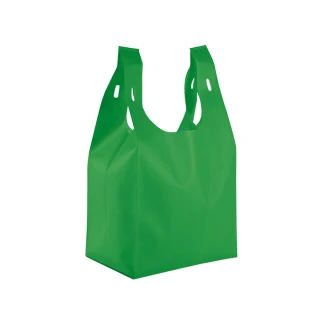
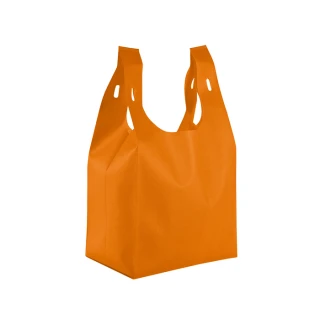
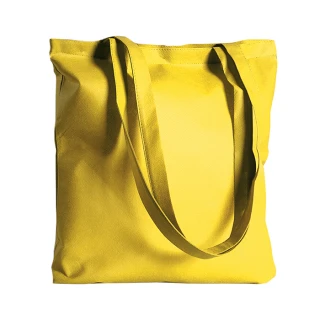
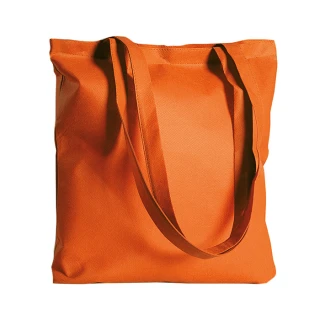
-320x320.webp "Non-woven bag")
-320x320.webp "Non-woven bag")

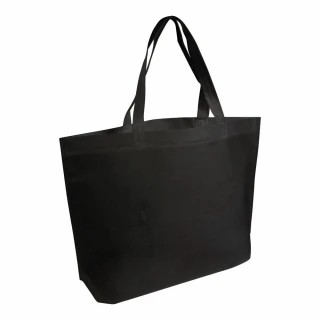
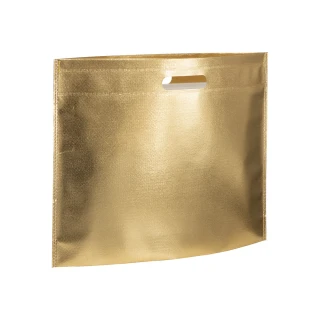
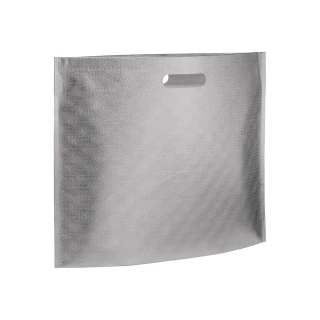
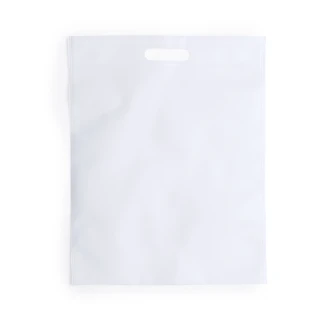
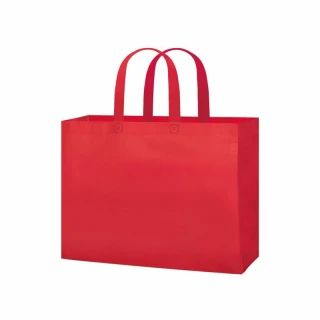
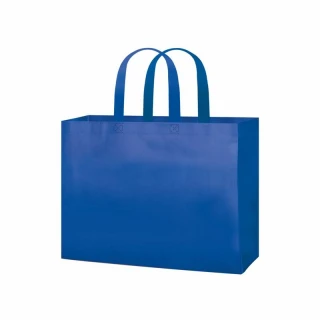
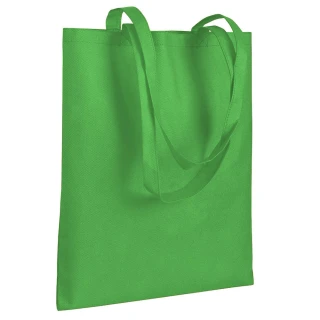
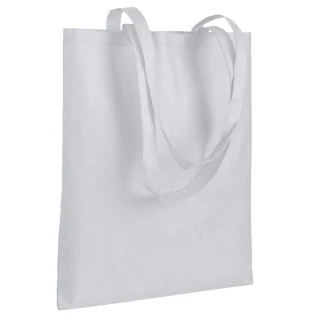
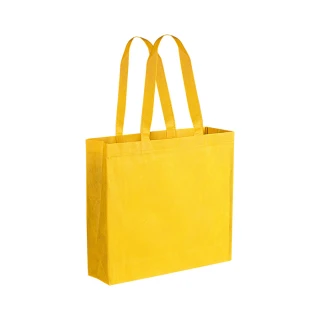
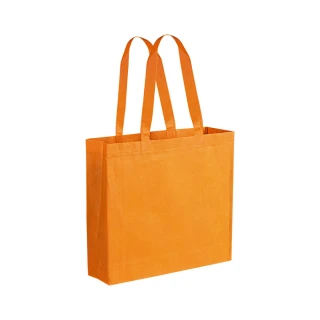
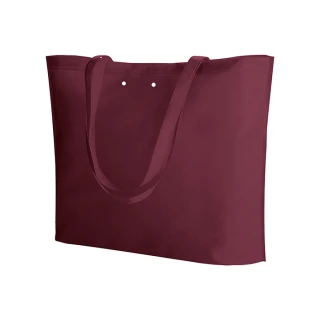
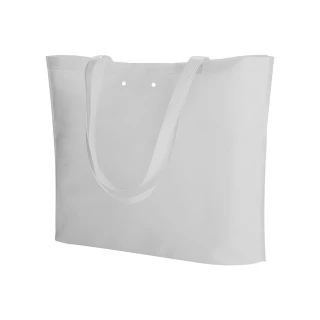
-320x320.webp "Non-woven bag")
-320x320.webp "Non-woven bag")
How to choose a non-woven bag for a professional application
The intended use helps narrow the search, but it does not replace checking the individual product. The same fabric weight may be used across different sizes, joining methods and finishes. A bag for brochures at an exhibition is not selected in the same way as a bottle carrier, pizza carrier or retail bag. Contents, expected use, construction, handles and artwork must be assessed together.
Exhibitions, conferences, events and promotional distribution
For high-volume distribution, consider storage space, speed of hand-out, the size of catalogues or promotional items and logo legibility. A lightweight bag may simplify logistics, while a gusseted, stitched or more structured model may be appropriate where the contents or expected use require it. Compare the actual product rather than treating fabric weight or construction as an automatic prediction of durability.
Shops, retail campaigns, welcome packs and company supplies
For retail and company kits, match the bag to the items being supplied and the way it will be carried. Colour, size, gusset, closure, handles and branding area affect both practicality and logo presentation. Some models may also be offered as plain stock; options, quantities and conditions must be checked in the configurator.
Takeaway, food delivery and pizza transport
The Takeaway and Pizza bag filters identify specific non-woven bags intended to carry closed containers or pizza boxes. Measure the base, width and height of the packaging, check how many boxes or containers are to be carried and verify the orientation, closure, handles, seams or heat-sealed joins. Where the main requirement is food service across more than one material, visit Personalised Takeaway Bags: Non-Woven Bags remains the material-led category, while Takeaway Bags is organised around the catering and delivery function.
Wine merchants, vineyards, events and bottle presentation
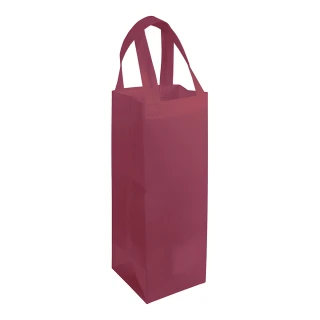
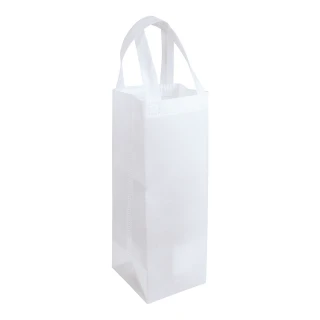
The Bottle holder filter identifies non-woven models intended for one or more bottles. Measure the number, diameter and height of the bottles, including caps and any outer packaging, then check the base, compartments or dividers, overall size and handle construction. The filter label is not a universal load rating and does not confirm direct food-contact suitability.
What is non-woven material and how should construction and composition be read?
Non-woven material is a family of sheet or fabric-like supports formed by bonding or entangling fibres without conventional weaving or knitting. The term describes how the material is formed, not one specific fibre. Composition, percentages, manufacturing process, recycled content and coatings must be confirmed by the product specification or supporting documentation.
| Construction or finish | What it describes | What to check | What it does not prove |
|---|---|---|---|
| Heat-sealed | Parts joined using heat, in the pattern specified by the individual model. | Shape of the joins, base, gussets, handles, reinforcement, size and intended contents. | A universal carrying capacity, lifespan or number of reuses for all heat-sealed bags. |
| Stitched | Seams used in the points specified by the product construction. | Position and construction of seams, edges, base, handle attachment, reinforcement and closure. | Automatic superiority over every heat-sealed model. |
| Laminated or coated | Non-woven material combined with a film or surface coating. | Composition, coated side, rigidity, printable area, components and end-of-life information. | Automatic waterproofing, washability, recyclability or food-contact suitability. |
Some individual products may also specify recycled material, metallic or glitter finishes, zip closures, drawstrings or compatibility with a particular print process. These remain product-level attributes and must not be extended across the category.
Fabric weights from 45 to 120 gsm: how to use the filter without treating it as a load rating
The filter currently includes eight values: 45, 60, 70, 80, 90, 100, 110 and 120 gsm. These are options within the range, not specifications available for every size, colour, construction or model.
| Information | How to interpret it | What it cannot determine |
|---|---|---|
| Fabric weight in gsm | The mass of the declared material per square metre. | Carrying capacity in kilograms, lifespan, overall quality, number of reuses or environmental performance. |
| A lower or higher value | Helps compare the substance of technically compatible models. | That a heavier bag is always stronger or more suitable for every use. |
| The same gsm value | May appear across different sizes, joins, handles and finishes. | Identical performance across heat-sealed, stitched or laminated models. |
The catalogue itself shows why gsm must not be converted into a universal load rating. One heat-sealed 70 gsm model with reinforced short handles states an indicative capacity of 6 kg, while three heat-sealed 80 gsm models state 5 kg. These figures apply only to the individual products that publish them and show that size, construction and handle design must be considered alongside fabric weight.
Non-woven bags or cotton tote bags: boundaries based on the catalogue
The two sister categories overlap in some use cases but are defined by different materials and catalogue filters. The comparison below is based on published range information rather than a claim that one material is universally better.
| Catalogue feature | Non-Woven Bags | Cotton Tote Bags | How to use the distinction |
|---|---|---|---|
| Material criterion | Products that declare a non-woven material in the bag body. | Products that declare cotton in the composition. | Start with the material required for the project, then compare the actual models. |
| Fabric-weight filter | 45 to 120 gsm. | 90 to 320 gsm. | The ranges overlap between 90 and 120 gsm; the number alone does not make different materials equivalent. |
| Use filters | Takeaway, Pizza bag and Bottle holder. | Bottle holder. | Use the filters to locate products for a task, then verify dimensions, construction and documentation. |
| Composition and certification filters | Any recycled content or other material claim is model-specific. | The range includes model-specific organic, Fairtrade®, recycled or GRS claims. | Communicate only the attributes documented for the selected product. |
This comparison defines the search path without assigning a universal hierarchy of strength, durability, print quality or environmental value. Those characteristics depend on the actual configuration.
Size, base, gusset, handles, colour and closures
- Actual contents – measure the largest item with its packaging and account for orientation, edges and the number of pieces.
- Size – compare width and height together with the base or gusset; one dimension alone does not describe usable volume.
- Base and gusset – these affect volume and how the contents sit, but do not guarantee stability or carrying capacity.
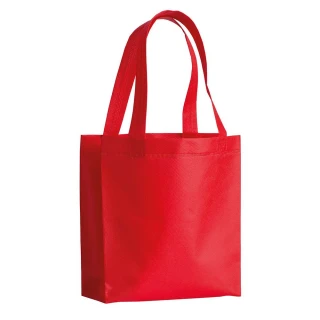
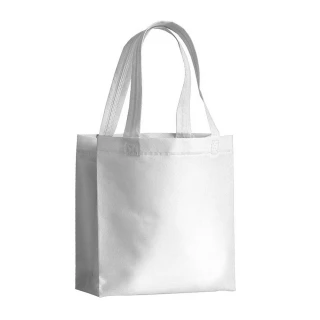
- Short, medium or long handles – these support hand or shoulder carrying; verify the stated length, width and attachment for the model.
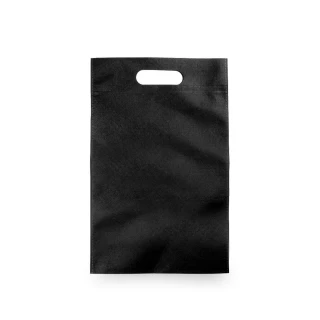
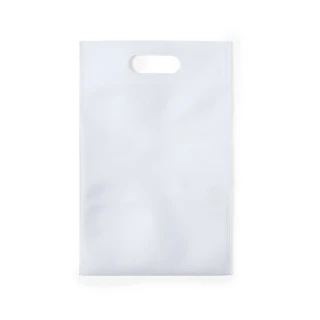
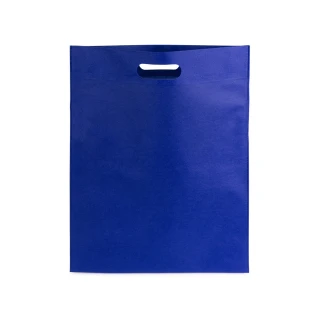
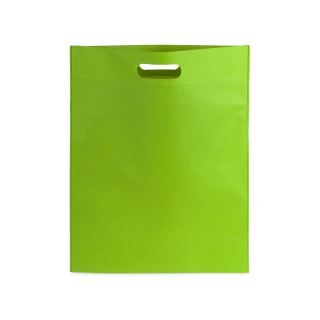
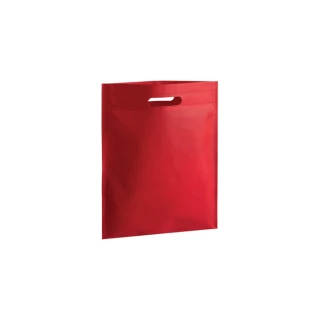
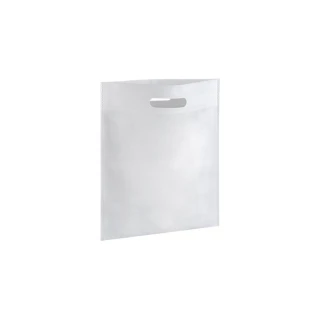
- Die-cut handles – the grip is cut into the body of the bag; check the shape, reinforced edge where present and available print area.
- Integrated punched, reinforced or contrast-colour handles – these are specific model features and must be confirmed on the product page.
- Closures and accessories – zips, drawstrings, pockets or other elements must be attributed only to models that list them.
- Colour and finish – the range includes solid, two-tone, metallic and glitter-effect options on selected models; availability depends on the individual product.
- Branding area – joins, seams, folds, gussets, coatings and accessories may reduce the usable print area.
Printing and personalisation methods for non-woven bags
The printing method must be selected for the configured product rather than from the words “non-woven” alone. Surface finish, colour, fabric weight, lamination, joins and printable area can all affect the available process.
| Method | When it may be available | What to verify on the product |
|---|---|---|
| Screen printing | Flat-colour logos and repeat orders on compatible models. | Number of colours, opacity on the bag colour, print area, front or reverse position, minimum detail, quantity and artwork format. |
| Digital printing | Multicolour or more detailed artwork on products that offer the process. | Type and finish of the non-woven material, background colour, usable area, detail reproduction and interference from joins or folds. |
| Dye sublimation | Only on models whose product specification explicitly confirms compatibility. | Composition, substrate colour, process temperature, print area, size and technical instructions. |
A process listed for one bag must not be extended to all weights or constructions. The configurator shows the available options, while the free artwork proof confirms layout and logo position before production. For a broader overview, read the guide to logo printing techniques and how to choose the right method.
Plain bags, minimum quantities and quotations
Several models may be available as plain, unprinted stock as well as personalised bags. Availability, colours, pack multiples, minimum order quantity, price breaks, print method, lead time and price must be checked on the selected product page and configurator.
There is therefore no single minimum order quantity or price for the whole category. Construction, weight, size, colour, branding method and quantity all affect the unit quotation.
Common mistakes when choosing personalised non-woven bags
- Treating non-woven as one universal composition – the term describes a material structure; fibre or polymer and percentages must be confirmed in the specification.
- Turning gsm into carrying capacity – grams per square metre do not state how many kilograms the bag can carry.
- Assigning fixed performance to heat-sealed, stitched or laminated construction – size, joins, handles, base and contents change the real result.
- Assuming a laminated bag is automatically waterproof or suitable for food – the coating and intended use must be documented for the model.
- Treating Takeaway, Pizza bag and Bottle holder as certification – these are use filters and do not prove load capacity or direct food contact.
- Choosing from front width and height alone – the base, gusset, closure and shape of the contents change usable space.
- Applying one printing method to the whole category – available process, colour count, area and quantity vary by product.
- Confusing Non-Woven Bags with Foldable Shopping Bags – the first category is defined by material; the second by foldable construction and may contain different materials.
- Using broad environmental claims – biodegradable, compostable, recycled, recyclable, eco-friendly and sustainable require evidence for the specific supply.
Composition, labelling and environmental information for European English-speaking markets
The category name does not replace the product label or technical documentation. The body, handles, seams, coatings and other components may contain different materials, and the actual composition must be checked for the selected model.
For products placed on the market in Ireland, Malta and other EU or EEA destinations, Regulation (EU) No 1007/2011 applies where the product falls within its scope. It governs textile fibre names and the labelling or marking of fibre composition. The applicable fibre names, percentages, product components and language requirements must be verified for the destination market.
For products supplied in England, Scotland or Wales, the relevant Great Britain textile-labelling rules must be checked separately. Official UK guidance on textile labelling requires fibre content to be stated and, where a product contains components with different fibre compositions, the composition of each relevant component to be shown. Northern Ireland must be assessed separately according to the product rules applicable to that market.
Where a bag is classified and placed on the market as packaging in an EU destination, material identification, component separation and end-of-life information must reflect the complete configuration. Regulation (EU) 2025/40 on packaging and packaging waste applies generally from 12 August 2026. Requirements for Great Britain, Northern Ireland and other non-EU destinations must be checked under the rules in force in the market where the product is supplied.
Non-woven material, recycled content or lamination does not automatically prove recyclability, biodegradability, compostability or a lower environmental impact. Environmental statements must be supported by the documentation of the specific product and supply. For public-sector orders, the requirements of the relevant tender or procurement specification must also be checked.
How a personalised non-woven bag can support brand visibility
A bag handed out at an exhibition, in a shop or as part of a kit can keep a logo, colour scheme and message visible while it is being carried. Effectiveness does not depend only on print size: the bag colour, format, position, handles, gussets, joins and viewing distance must be considered together. For high-volume distribution, a simple and legible mark may be the most practical approach; for retail or company kits, more detailed artwork may be suitable where the model supports it.
Non-woven bags as part of a coordinated branded supply
Personalised non-woven bags can share logo, colours and design rules with personalised cardboard boxes, packaging supplies, promotional products and personalised clothing. Each support retains its own materials, print areas and technical limits. For planning the range as one system, read the guide to a coordinated range of promotional products, clothing and packaging.
Non-Woven Bags or another category: where should you continue?
Stay in this category when you want to compare products that declare a non-woven material in the body of the bag. Where the main criterion is another fibre, foldability, food service or reusable shopping, continue to the relevant specialist category.
| Main requirement | Correct category | Semantic boundary |
|---|---|---|
| Compare cotton, non-woven, jute and foldable styles | Personalised Tote Bags | Specialist hub for the textile, non-woven and foldable bag branches. |
| Products in non-woven material with different weights, joins, handles and finishes | Non-Woven Bags | This is the specialist subject of the current page. |
| Models that declare cotton in the composition | Personalised Cotton Tote Bags | Cotton composition, weights, colours, documented certifications and compatible decoration methods. |
| A bag designed to fold into a compact format after use | Foldable Shopping Bags | A branch defined by foldable construction rather than one fibre. |
| Products that declare jute, including mixed-material designs | Personalised Jute Bags | Jute fibre, weave, construction and product-specific decoration methods. |
| Catering, takeaway, food delivery and pizza transport across more than one material | Personalised Takeaway Bags | Function-led category for food service; non-woven pizza carriers also remain related to this material branch. |
| Recurring grocery shopping, reusable bags, shopping trolleys or bottle carriers | Personalised Reusable Shopping Bags | Category organised around repeated shopping and carrying functions. |
| Compare paper, plastic, textile and reusable shopping-bag families | Personalised Bags | Main multimaterial category for the broad search intent. |
Essential guide to non-woven material and related advice
For an introduction to the meaning, structure, origins and general uses of the material, start with what non-woven fabric is and how it is made. Product composition, environmental claims, printing options and purchasing conditions must still be checked on the selected bag.
- Carrier bags and paper bags: choosing the right size for retail – practical criteria for matching a bag to the product and point-of-sale service.
- Logo printing techniques: how to choose the right method – a cross-category guide to matching material, artwork and print process.
- Coordinated promotional products, clothing and packaging – guidance on connecting bags with the wider branded range.
These guides support the communication and selection process. The individual product page remains authoritative for construction, weight, dimensions, print methods, quantities, lead times and purchasing conditions.
Frequently asked questions about personalised non-woven bags
What are non-woven bags and what does this category include?
Non-woven bags are made from a sheet or fabric-like material formed without conventional weaving or knitting. This category includes products that declare a non-woven material in the bag body. Fabric weight, fibre or polymer, heat-sealed or stitched construction, any lamination, size, handles, closures and compatible print methods vary by product and must be checked on the individual product page.
What fabric weights are available for personalised non-woven bags?
The filter includes eight values: 45, 60, 70, 80, 90, 100, 110 and 120 gsm. Not every weight is available for every model, size, colour or construction, so select the required value and check the resulting product specification.
Does a higher gsm mean that the bag can carry more weight?
No. GSM measures the mass of the material per square metre and helps compare compatible products, but it is not a guaranteed load rating. Carrying performance also depends on composition, size, base or gusset, joins, seams, handles, attachment points, the shape of the contents and weight distribution. Any capacity stated in kilograms applies only to the individual model that publishes it.
What is the difference between heat-sealed, stitched and laminated non-woven bags?
Heat-sealed describes parts joined using heat; stitched indicates seams in the areas specified by the model; laminated or coated describes non-woven material combined with a film or surface finish. None of these terms alone determines carrying capacity, lifespan, waterproofing or food-contact suitability. The complete product configuration must be checked.
How do I choose the size, gusset and handles of a non-woven bag?
Measure the contents together with their packaging and allow for the width, height and depth required. A base or gusset increases usable volume but does not guarantee a higher load rating. Short, medium or long handles, die-cut handles, integrated punched handles, reinforced handles and contrast-colour handles belong only to models that list them. Their dimensions, joins and attachment points must be checked on the product page.
What do the Takeaway, Pizza bag and Bottle holder filters mean?
They are use filters, not materials or separate categories. Takeaway and Pizza bag identify products intended to carry closed containers or pizza boxes, while Bottle holder identifies models for one or more bottles. Dimensions, base, number and orientation of the containers, any dividers, handles and closure must be checked for the selected product.
Are non-woven bags listed under Takeaway or Pizza bag suitable for direct food contact?
Not automatically. The filter may describe an outer bag intended to carry closed containers or boxes. Direct food contact requires the selected model and configuration to be expressly documented for that use. Material, gsm or lamination alone is not a declaration of food-contact suitability.
Which printing methods are available for personalised non-woven bags?
Depending on the model, screen printing and digital printing may be available. Dye sublimation applies only to products whose specification explicitly confirms compatibility. The number of colours, print area, front or reverse position, substrate finish, quantity and artwork requirements depend on the product page and configurator.
Can I order plain non-woven bags, and what is the minimum order quantity?
Several models may be available as plain, unprinted stock. There is no single minimum order quantity or price for the whole category: availability, pack multiples, price breaks, colours, print method and price depend on the selected product and must be checked on its page and configurator.
Are non-woven bags always reusable, eco-friendly, recyclable or biodegradable?
No. Durability and possible reuse depend on the model, load and conditions of use. Eco-friendly, sustainable, recycled, recyclable, biodegradable and compostable are not category-wide claims. Composition, coatings, components, printing and end-of-life information must be verified for the specific supply.
When should I choose non-woven, cotton, jute or a foldable shopping bag?
Choose Non-Woven Bags when you want to compare products in non-woven material by weight, construction, handles and finish. Cotton Tote Bags are defined by cotton in the composition; Jute Bags have their own fibre and construction; Foldable Shopping Bags are defined by compact folding design rather than one material. The Personalised Tote Bags category compares all four branches.
Personalise non-woven bags for your business, shop or event: identify the intended use, compare fabric weight, construction, size, gusset, handles and available print method, verify composition and product-level claims, then approve the artwork proof before production.