

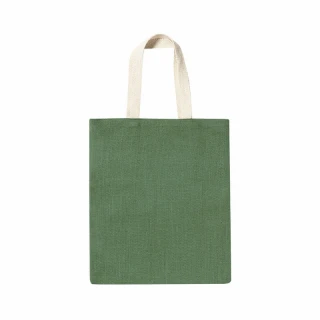
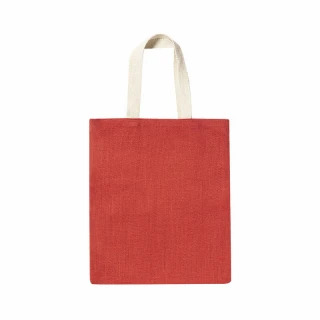
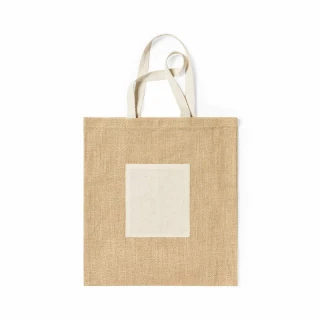
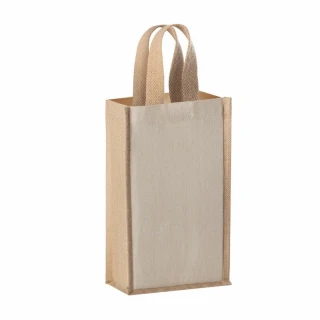

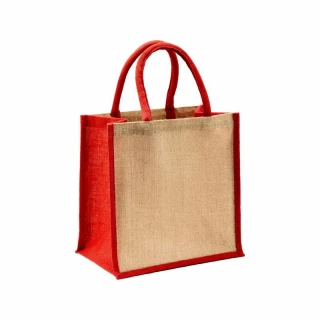
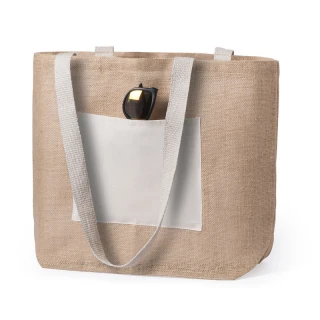

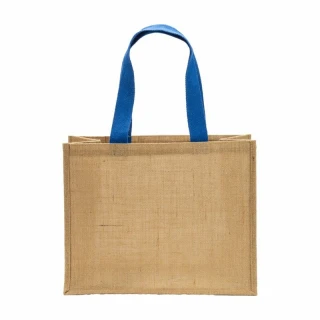
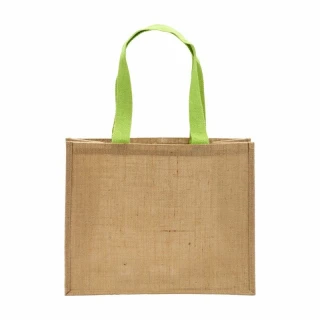
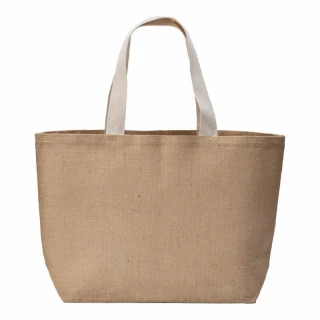
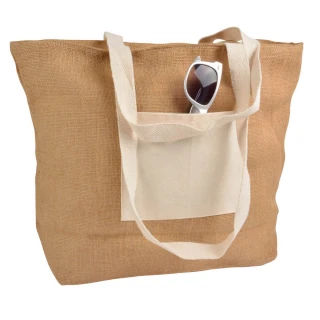
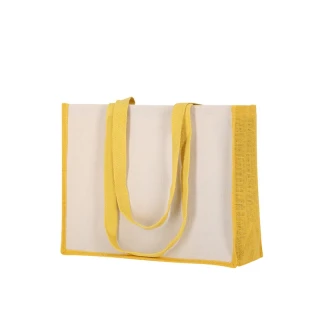
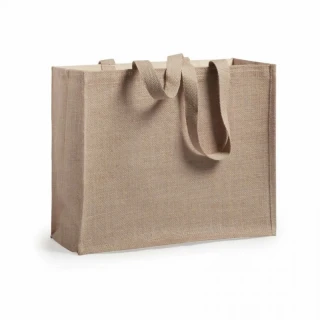
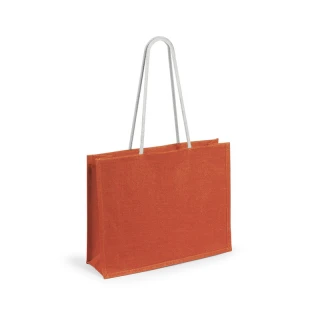

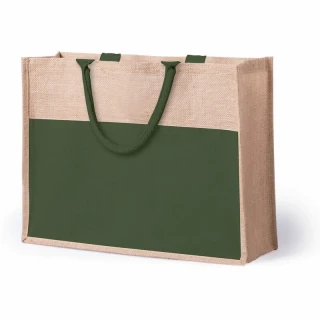
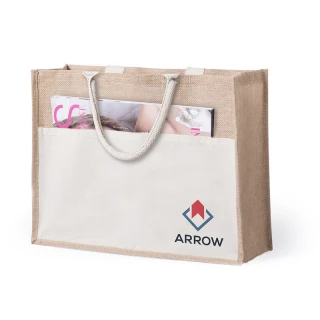
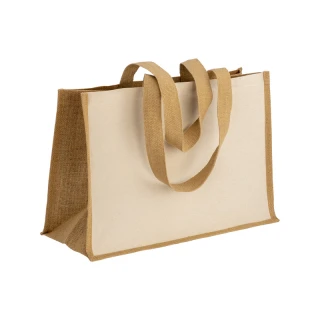
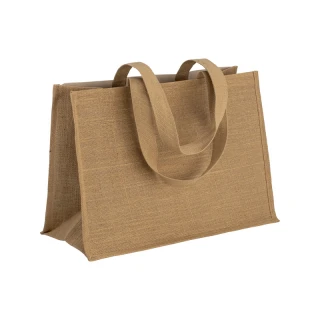
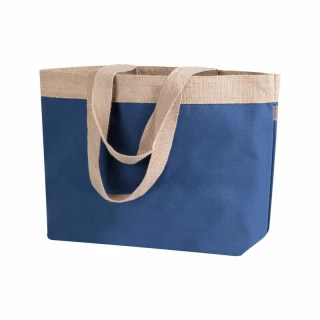
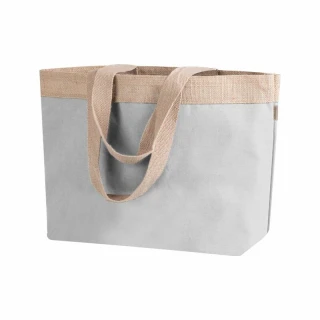
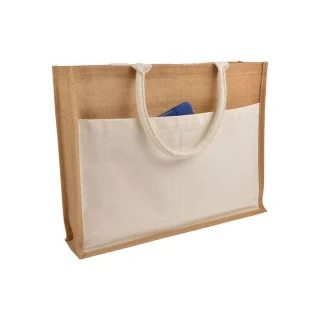

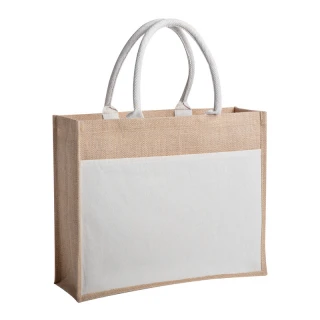
-320x320.webp "Jute bag with side gussets")
-320x320.webp "Jute bag with side gussets")
Choosing a jute bag by professional use case
Each setting tests different things: capacity, protection, comfort in the hand, presentation. The notes below narrow the shortlist; the final decision always rests on the product page.
Wine merchants, breweries and speciality food
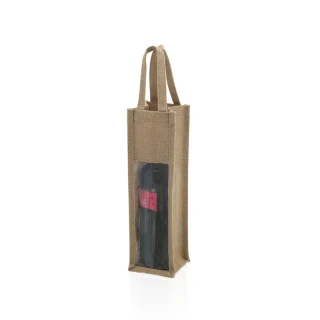
For bottles and food hampers, start from the Bottle bags filter: models built for this purpose state the dimensions, gussets and construction intended for the job, such as the cotton and laminated jute bottle bags with short handles held in the range. Always confirm the bottle count, usable diameter and internal height on the individual product before committing to a supply.
Retail, boutiques and merchandise
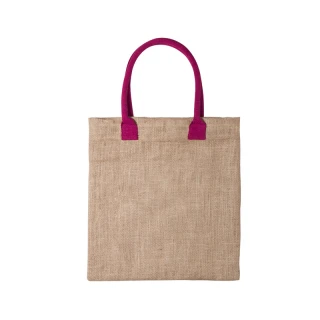
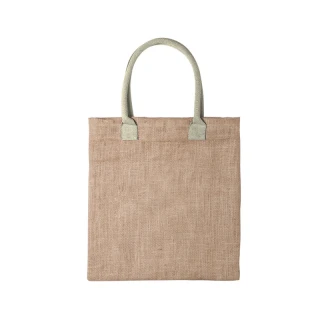
In retail the bag leaves with the purchase and stays in use afterwards. Natural jute and jute-and-cotton models give a distinctive tactile surface for the logo to work on over time; size, colour and handle length should follow the goods you actually hand over and the positioning of the shop.
Grocery shopping, everyday use and the summer season
Several models in the range are offered for the weekly shop or for the beach: generous gussets, waxed linings and long handles suit bulkier loads and carrying over the shoulder. Published dimensions — for example formats around 45 × 35 × 12 cm or 50 × 35 × 22 cm — should be compared with the real contents; suitability for any specific use remains what the product page states.
Trade shows, conferences and hand-outs
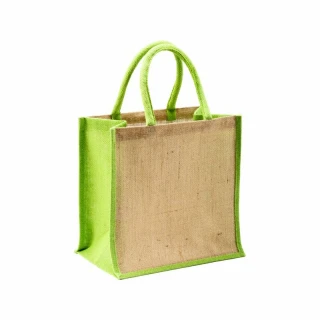
For delegate packs, gifts and hand-outs, weight, bulk and speed of distribution are what matter. Compact formats and mini jute bags with coloured handles and trims allow a neat presentation even for small items, while staying consistent with the rest of the supply.
What jute is and how to read composition and finishes
Jute is a natural, plant-based textile fibre obtained from plants of the Corchorus genus, grown mainly in South Asia; for background on its origins, properties and uses, see the guide Jute: what it is and why it’s perfect for bags. In the range, the fibre appears both in bags made entirely of jute and in builds that combine it with cotton in the handles, pockets, trims or panels: the actual composition of any given product, the proportions and the finishes — waxed linings and laminations included — are those declared on its own page.
The category name describes the boundary of the range, not the characteristics of every item within it: two jute bags can differ in fabric weight, build, colour, handles and treatments. That is why any sensible comparison starts with the filters and ends on the product page.
Builds in the range: natural jute, waxed linings and cotton combinations
| Build | What it means | When to consider it | What to check on the product page |
|---|---|---|---|
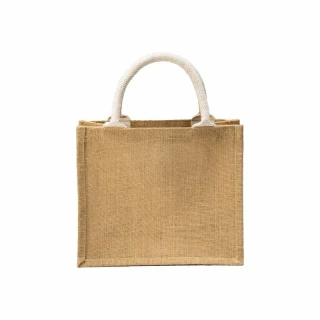
| Natural jute | Jute-fibre body with the weave on show, in natural or coloured tones | Tactile brand presence, gift presentation, merchandise | Fabric weight, size, handles, print area |
| Waxed inner lining | Internal finish that makes cleaning easier and protects the contents | Grocery shopping, everyday use, contents needing protection | Characteristics of the finish and stated conditions of use |
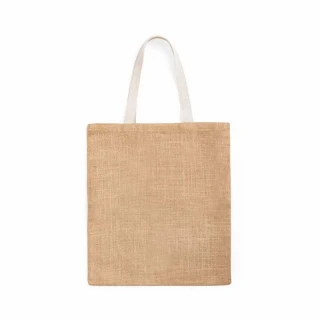
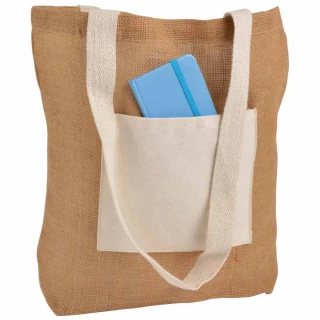
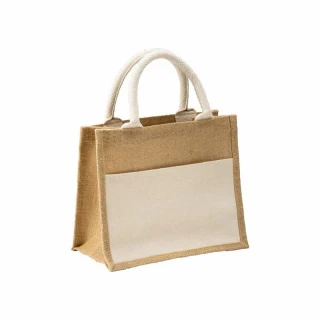
| Jute and cotton | Jute body with cotton handles, pockets, trims or panels, or declared mixed builds | Softer grip, more even branding areas, visual contrast | Composition of each component and overall fabric weight |
The actual strength of any bag depends on the specific model, the quality of the stitching, the type of handle and how the weight is distributed inside it: no build, on its own, constitutes a guaranteed carrying capacity.
Sizes, fabric weights, gussets, handles and closures
Product pages in this category publish specific dimensions and characteristics: from mini bags around 30 × 30 × 19 cm, to gusseted shoppers in the region of 45 × 35 × 12 cm or 50 × 35 × 22 cm, through to bottle bags in dedicated formats such as 20 × 35 × 10 cm. Handles may be short or long, in jute or cotton; some models add an external cotton pocket or a zip closure. Every figure quoted on this page is an example read from published product pages: before ordering, always confirm the dimensions, gussets, fabric weight and features of the model you have selected, as the range can change over time.
Jute bags or cotton tote bags: boundaries based on the range
Cotton components on many models in this category do not make it overlap with Cotton Tote Bags: that category covers bags whose body declares cotton in the composition, while this one holds models built on jute, alone or with cotton parts stated on the page. If you are looking for non-woven substrates instead, see Non-Woven Bags; for models designed to fold away when not in use, see Foldable Shopping Bags.
Branding methods for jute bags
Screen printing covers most requirements: solid-colour logos, lettering and high-contrast artwork reproduce well on the jute weave. Embroidery, on models that allow it, adds relief and a more considered finish suited to presentation pieces. The natural weave is more irregular than a close-woven fabric, so for very fine detail it is worth checking reproduction in advance or choosing models with cotton areas, where the surface is more even. Any other method is available only where the product page states it; in every case the free artwork proof comes before production and allows proportions and placement to be corrected. For a broader view of how substrate, artwork and process interact, see Logo printing techniques: how to choose.
Plain bags, quantities and quotations
On a number of models you can buy the bags plain, without personalisation, or personalised with your own logo, including in small quantities as stated on the product page and in the configurator. Quotations are calculated online by selecting model, quantity, colour and branding method: the price updates in real time, and confirmation always goes through approval of the artwork proof.
Mistakes to avoid when choosing jute bags
- Choosing the model before measuring the contents – size, gusset and handles should be compared against the real item, packaging included, not estimated from memory.
- Treating fabric weight as carrying capacity – g/m² describes the mass of fabric per unit area, not the kilograms a bag will carry: stitching, handles and weight distribution matter too.
- Assuming a branding method is available – screen printing and embroidery are not offered indiscriminately on every model; the product page sets out the real options.
- Placing very fine detail on the natural weave – the irregular surface can reduce legibility: better to check it in the artwork proof or move it to cotton areas.
- Assuming suitability that has not been declared – food contact, heavy loads or intensive use apply only where the product page provides for them.
Composition, labelling and environmental claims
The category name does not replace the label or the product documentation. Where a bag falls within the scope of textile products, fibre names and composition must be handled, where applicable, in accordance with Regulation (EU) No 1007/2011. Body, handles, pockets, stitching, waxed finishes and other components may have different compositions.
Where a bag is qualified and placed on the market as packaging, material identification and disposal information must reflect the actual configuration. Regulation (EU) 2025/40 on packaging and packaging waste applies generally from 12 August 2026: at the date of supply, the function of the product, its components, the documentation and the rules then in force all need to be checked.
If part of the bag or its lining is intended for direct contact with food, the model and the configuration purchased must be expressly documented for that use in accordance with Regulation (EC) No 1935/2004 and the applicable food-contact framework. A waxed lining, a lamination, the Bottle bags filter or use within a food business do not in themselves constitute a declaration of conformity.
Requirements differ by destination market. The references above apply in the European Union. For Great Britain, check the corresponding UK requirements. For Northern Ireland, check which EU requirements apply under the Windsor Framework, together with any relevant UK arrangements. The natural origin of jute does not in itself demonstrate recyclability, compostability or a lower overall impact for the finished bag, particularly where finishes, laminations or additional components are involved. Follow the product information and your local collection rules; for supplies to public bodies, check the requirements of the specific tender and any applicable environmental criteria.
When a personalised jute bag strengthens the brand
The jute weave is recognisable on sight and communicates material substance and care in presentation: for delicatessens, wine merchants, boutiques and brands built on a tangible, crafted image, the bag becomes an advertising medium that keeps circulating after the handover. The logo should be sized against the real print area of the model and checked in the artwork proof: that is where legibility on the material is decided, not in the artwork file beforehand.
Jute bags and a coordinated supply
Jute bags can share a logo, colours and design rules with custom cardboard boxes, packaging supplies, promotional products and custom clothing. Each medium keeps its own materials, print areas and techniques: consistency comes from adapting the same visual system to each product, not from repeating the mark identically. To plan the whole set, see the guide to creating a coordinated branded range.
Jute Bags or another category: where to continue looking
Stay in this category if you want to compare models whose body is specified as jute, on its own or together with other materials stated on the product page. If the deciding factor is a different material, a foldable build, the weekly shop or a comparison across the whole textile branch, use the matching specialist node.
| Main requirement | Right category | Semantic boundary |
|---|---|---|
| Compare cotton, non-woven, jute and foldable models | Tote Bags | Specialist hub for materials and builds across the textile branch. |
| Models whose body is specified as jute, including waxed linings or cotton components | Jute Bags | The specialist subject of this page: composition, finishes, sizes, handles and techniques are checked product by product. |
| Models declaring cotton in the composition | Cotton Tote Bags | Node defined by the fibre, with its own fabric weights, certifications and techniques. |
| Models in non-woven substrate, including fixed-structure builds | Non-Woven Bags | Node defined by the substrate, with its own weights, seams and finishes. |
| A bag designed to fold away after use, with a small footprint | Foldable Shopping Bags | Node defined by the foldable build, whatever the fibre used. |
| Regular grocery shopping, structured bags, trolley models or bottle-carrying use | Reusable Shopping Bags | Node organised around shopping and repeated transport, rather than material. |
| Compare every family in paper, plastic, textile and other materials | custom shopping bags | Multi-material parent covering the general intent. |
Further reading to support the choice
For commercial specifications, environmental claims, available techniques and purchasing conditions, the product page for the selected bag remains authoritative.
- Jute: what it is and why it’s perfect for bags – the reference read on the material: where the fibre comes from, what it does well and why it is used for promotional bags.
- Carrier bags and paper bags: choosing the right size – criteria for sizing the bag against the contents and the service.
- Logo printing techniques: how to choose – cross-cutting overview of how substrate, artwork and process fit together.
- Promotional products, clothing and packaging: how to create a coordinated branded range – criteria for connecting the bag to the brand's other media.
Frequently asked questions about personalised jute bags
What are personalised jute bags and what does the category include?
They are textile bags whose body declares jute in the composition, on its own or combined with other materials stated on the product page, and which can be branded with your logo. The category includes shoppers with and without gussets, models with a waxed inner lining, coloured versions, cotton combinations, bottle bags, mini bags and models with a zip closure or external pocket: features, dimensions and actual composition vary by product and must be checked on the relevant page.
What is jute, and is it the same as hessian or burlap?
Jute is a natural, plant-based textile fibre obtained from plants of the Corchorus genus. Hessian is the coarse woven fabric commonly made from that fibre, and burlap is the equivalent term in North American usage, so the words are related but not interchangeable: jute names the fibre, hessian and burlap name the cloth. In promotional bags the material is chosen for its recognisable weave and the tactile impression it gives, though what any given model delivers depends on the build, fabric weight and finishes stated on its page.
What is the difference between natural jute, a waxed lining and jute and cotton builds?
Natural jute refers to a fibre body with the weave on show, in natural or coloured tones. A waxed lining is an internal finish that makes the bag easier to wipe down and gives the contents more protection. Jute and cotton builds involve cotton handles, pockets, trims or panels found on a number of models, or mixed constructions declared on the page. No description on its own establishes carrying capacity, durability or suitability for a given use: the individual product specification governs that.
Are waxed-lined jute bags suitable for grocery shopping and food contact?
A number of waxed-lined models are offered for the weekly shop and everyday use, because the finish makes cleaning easier and protects the contents. Suitability for direct contact with food is not a property of the category: it applies only where the product page declares it, and loose food still requires appropriate primary packaging.
Which branding methods are available on jute bags?
Screen printing is the reference method for solid-colour logos and high-contrast artwork; embroidery, on models that allow it, works by laying down thread and gives a considered finish even against the visible weave. The natural jute weave is more irregular than a close-woven fabric, so fine lines and small details can lose legibility: it is worth simplifying the artwork, checking reproduction in the free proof, or choosing models with cotton areas where the surface is more even. Other methods are available only where the product page states them.
Does the colour Natural mean the bag is organic, eco-friendly or untreated?
No. "Natural" can describe the colour or the appearance of the surface and is not a certification, nor does it demonstrate that the bag is organic, untreated, recyclable, biodegradable or compostable. Composition, finishes, laminations, certifications and environmental claims must appear on the product page and in the documentation for the model you select.
What sizes, gussets and handles are available?
The range covers a variety of formats, from mini bags around 30 × 30 × 19 cm to gusseted shoppers in the region of 45 × 35 × 12 cm or 50 × 35 × 22 cm, through to bottle bags in dedicated formats. Handles may be short or long, in jute or cotton; some models add an external pocket or a zip closure. The dimensions quoted here are examples read from published product pages: before ordering, always confirm the figures for the model you have selected.
Are there jute bottle bags for wine merchants and breweries?
Yes: the Bottle bags filter groups together the models intended for bottles, such as the cotton and laminated jute bottle bags with short handles and side gussets held in the range. The number of bottles provided for, the usable diameter, the internal height and the handle construction vary by product and should be checked on the page before ordering.
Can jute bags be ordered plain and in small quantities?
On a number of models you can buy the bags plain, without personalisation, or personalised with your own logo, including in small quantities as stated on the product page and in the configurator. Quotations are calculated online and update in real time according to the model, quantity, colour and branding method selected.
Are jute bags automatically eco-friendly, recyclable or biodegradable?
No. Jute is a fibre of natural origin, but the environmental profile of the finished bag depends on the whole configuration: finishes, laminations, components in other materials and end-of-life conditions. Environmental claims are governed by the product page and its documentation; for disposal, follow your local collection rules.
When should you choose jute, cotton, non-woven or a foldable bag?
Jute suits situations where the tactile, natural weave is part of the message, as with wine merchants, speciality food and boutiques. Cotton offers more even surfaces for printing and a wide choice of fabric weights. Non-woven covers high-volume distribution using non-woven substrates. Foldable models prioritise compactness and portability when the bag is not in use. The final comparison should always be made on the pages of the shortlisted products.
Personalise jute bags for your business, your shop or your event: identify the intended use, compare the build, size, gusset, handles and available branding method, check composition and declarations on the product page, and approve the artwork proof before production.