
In brief
- Choose branded workwear when staff are visible and need to communicate organisation, role and reliability.
- Choose promotional products when the goal is to spread the brand to customers, visitors and business contacts.
- Combine both solutions if you want to build a more consistent brand presence across shop, event, office and after-sales touchpoints.
- Assess materials, usage and printing technique before unit price: a useful item or a frequently worn garment works for the brand much longer.
Choosing between branded workwear and promotional products is one of the most common decisions when planning a promotional investment.
The dilemma typically arises when the budget needs to cover several different objectives at once: making staff more recognisable, increasing brand visibility, preparing for a trade show, improving the perception of a retail space or creating a more polished image in everyday operations.
The right question is not just “what costs less?”, but which tool works best in the actual context where the brand is seen. A custom polo worn every day by staff plays a different role from a pen, a water bottle or a tote bag handed out to customers and visitors.
This is why the choice should start from concrete items, real use cases and message duration, rather than from a simple opposition between garments and promotional items.
Before choosing: what is your main objective?
The real difference between branded workwear and promotional products is not the price, but the role they play in brand communication.
- Strengthening staff professionalism and recognisability → choose custom clothing.
- Increasing brand exposure to customers and the public → choose promotional products.
- Building a more coordinated image → combine garments, promotional items and customer-facing materials within a single visual logic.
Clarifying this from the outset reduces the risk of ordering items that look attractive but serve no real purpose, or workwear that does not match the operational context.

When branded workwear strengthens the brand
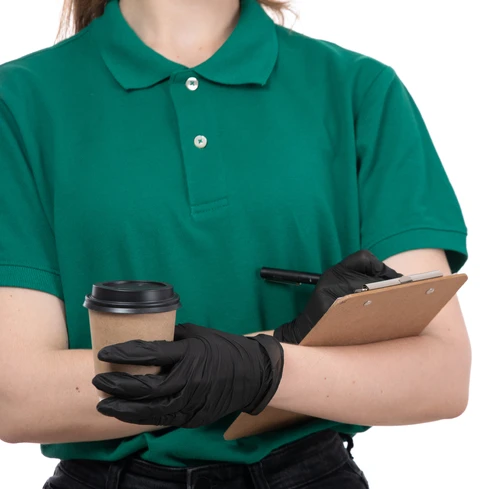
Branded workwear is not just a promotional support. Coordinated uniforms, t-shirts, polos, sweatshirts, aprons and jackets help make staff recognisable and convey a more polished image of the company.
In a shop, at a trade fair, in a workshop, in a warehouse or in a customer-facing service activity, the custom garment is seen the moment the customer comes into contact with the service. For this reason it primarily works on the perception of professionalism, reliability and organisation.
From a practical perspective, the material should be chosen according to use: a 150 g/m² cotton t-shirt can be suitable for lighter or seasonal activities, whereas a 200 g/m² piqué polo often delivers a more structured perception. For sweatshirts and heavier garments, fit, season, expected wash cycles and the role of the wearer also matter.
Personalisation techniques vary depending on fabric and desired result: screen printing, embroidery, DTF and direct-to-garment digital printing can suit different needs in terms of finish, quantity and graphic detail.
When promotional products are the right choice
Promotional products are more suitable when the main goal is to increase external brand visibility and reach a large number of contacts.
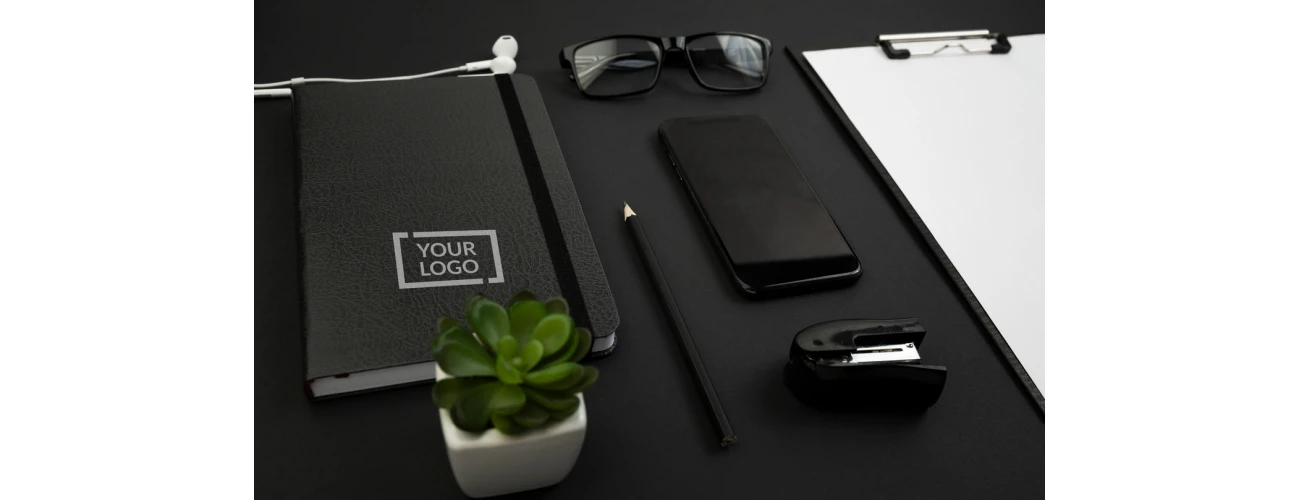
Everyday objects such as pens, notebooks, water bottles, office accessories, keyrings or custom shopping bags can become part of people’s routines and circulate across different contexts: desks, bags, cars, trade fairs, shops and daily commutes.
Their main strength is reach. A useful promotional item keeps being seen well after the first contact with the company. The choice, however, has to remain practical: an item that is rarely used, fragile or disconnected from the audience risks becoming a cost rather than an investment.
Here too the personalisation technique should be chosen based on the surface: pad printing, laser engraving, UV printing and screen printing deliver different results on plastic, metal, paper, fabric or rigid promotional materials.

Practical comparison: workwear or promotional products?
To guide the choice, it helps to compare workwear and promotional products in terms of function, message duration and context of use.
| Criterion | Branded workwear | Promotional products |
|---|---|---|
| Main goal | Recognisability, organisation and staff professionalism | Visibility, reach, brand recall |
| Ideal context | Shops, trade fairs, customer service, warehouses, hospitality, services | Events, promotional campaigns, welcome kits, offices, retail |
| Message duration | Recurring, tied to staff usage | Distributed, tied to the usefulness of the item |
| Risk to avoid | Choosing fabrics not suited to role, season or wash cycles | Choosing items that are little used or disconnected from the audience |
When it makes sense to invest in branded workwear
Branded workwear is often the most effective choice when the brand is represented by visible people: shop assistants, receptionists, technicians, promoters, front-of-house staff, trade fair teams or operational crews.
In these cases the custom garment does more than display a logo. It helps distinguish roles, brings order to the staff’s presence and contributes to a perception of reliability.
- When staff work in direct contact with customers or visitors.
- When it is important to immediately identify who is part of the team.
- When the company wants to communicate continuity, organisation and consistency.
- When the garment will be worn frequently and not only on a single occasion.
When it makes sense to invest in promotional products
Promotional products are more suitable when the company wants to reach people beyond its physical space: prospective customers, event attendees, trade fair visitors, employees in onboarding, commercial partners or retail audiences.
A water bottle, a pen, a notebook or a tote bag work better when they have a clear use. The more an item enters everyday life, the more occasions in which the brand is seen without any forced exposure.
- When the goal is to distribute the brand to a wider audience.
- When the item is useful in the context where it is given out.
- When a tangible reminder is needed after a trade fair, event or shop visit.
- When the item can be reused over time.
Common mistakes when choosing between workwear and promotional products
- Choosing only on the basis of unit price, without considering real use, durability and context.
- Ordering generic promotional items that do not address a real need of the audience.
- Buying workwear without assessing fit, season, wash cycles and the role of the staff.
- Using printing techniques that are not suited to the material or to the level of detail of the logo.
The most effective solution: combining workwear and promotional products
In many cases the best choice is not exclusive. Branded workwear strengthens the brand presence at the point of contact, while promotional products extend brand visibility beyond the company.
A team wearing coordinated polos at a trade fair, for instance, communicates organisation and recognisability. If at the end of the meeting they also hand out a useful item — a tote bag, a notebook or a water bottle — the contact continues even after the event.
The same applies to shops, hotels, restaurants, service businesses and companies with sales departments: custom garments and promotional items can work together, provided that colours, logo, materials and message are consistent.
From a single choice to a consistent brand communication system
Workwear and promotional products should not be managed as isolated purchases. When colours, logo, materials and personalisation techniques are aligned, every element contributes to the same consistent brand communication system.
This system can include custom clothing, promotional products, shopping bags, customised cardboard boxes and packaging supplies, with different levels of exposure and usefulness. The goal is not to use everything all the time, but to choose what is needed in the right context.
Shop for Shop is an Italian company active since 2006 and a direct supplier of custom solutions for businesses, retailers and events. We support clients in selecting garments, promotional products and coordinated materials, with clear online quoting, technical artwork verification, free pre-production graphic proof and free shipping in Italy.
What we have observed since 2006 on workwear and promotional product orders
With B2B orders, the outcome is stronger when the choice starts from real use. Workwear works better when the wearer finds it suited to their role and to the season. A promotional item works better when the recipient actually uses it. For this reason, before placing an order, it is worth assessing recipients, context, material and personalisation technique, rather than choosing only the cheapest or most eye-catching item in the catalogue.
Where to start in practical terms
If you need to decide where to invest now, start with three operational questions:
-
Is your staff often visible to customers or visitors?
Start with coordinated garments such as t-shirts, polos, sweatshirts, aprons or light uniforms, choosing fabrics and personalisation according to use. -
Do you want to increase external brand exposure?
Start with useful promotional items such as pens, tote bags, water bottles, notebooks or office accessories. -
Do you want a more consistent image across multiple touchpoints?
Combine workwear and promotional products in a coordinated order, keeping colours, logo and graphic style aligned.
This way the initial choice becomes simpler: first define the goal, then choose product, material, printing technique and quantity.
Why choose Shop for Shop
Shop for Shop supports businesses, organisations and professionals in selecting branded workwear and promotional products, helping to put together orders that are coherent, functional and can be repeated over time.
The online configurator helps clients navigate products, quantities and personalisation options, while the technical support team assists in checking artwork files, logo placement and the most suitable technique for the chosen material.
Frequently asked questions
Is it better to invest in branded workwear or promotional products?
It depends on the objective: branded workwear strengthens staff recognisability, organisation and reliability, while promotional products increase brand exposure to customers and external contacts.
When does it make sense to choose branded workwear?
It makes sense when staff are in contact with customers, visitors or the public and need to communicate professionalism, role and visual consistency on an ongoing basis.
When does it make sense to choose promotional products?
It makes sense when the goal is to distribute the brand to a wider audience through useful items such as pens, tote bags, water bottles, notebooks or office accessories.
Does it make sense to combine workwear and promotional products in the same project?
Yes, because workwear and promotional products work on different moments of the brand contact: the former reinforces staff presence, the latter extends visibility after the meeting.
In summary: branded workwear and promotional products are not rigid alternatives. They are complementary tools that work best when chosen on the basis of objective, context of use, material and brand consistency.
Leave a comment