
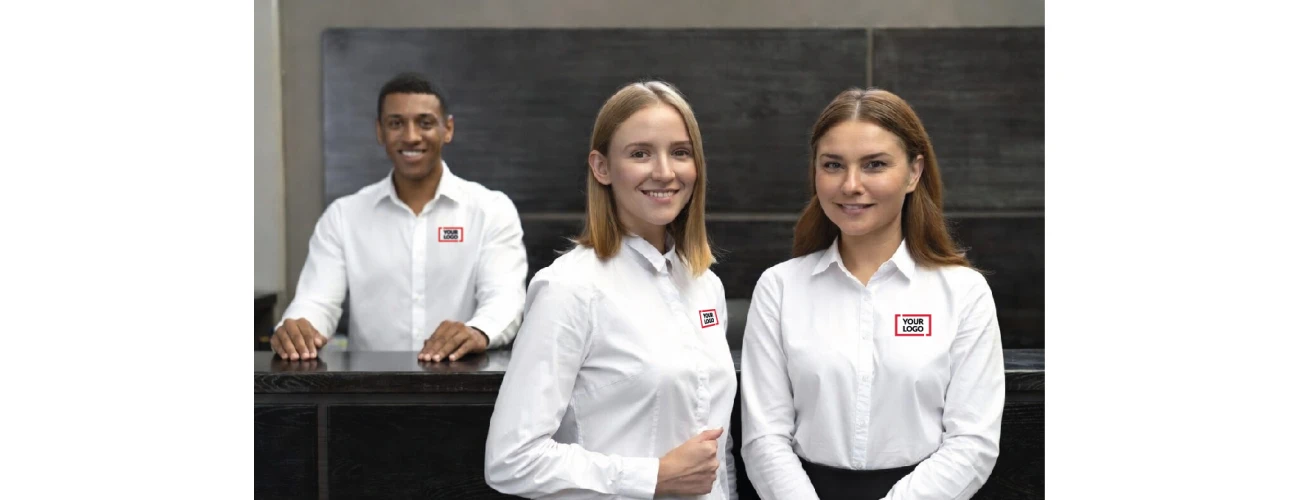
- A visually coordinated team communicates order, reliability and brand identity before any direct interaction takes place.
- Visual consistency does not mean rigid uniformity: it means choosing garments, colours and personalisation methods that speak the same brand language.
- Polo shirts, t-shirts, sweatshirts, shirts or aprons should be selected according to real working contexts, not just appearance.
- A well-coordinated team makes your brand more recognisable and reduces any sense of inconsistency or improvisation.
When a customer meets your team — in a shop, showroom, reception area, trade fair or event — your workwear communicates something before a single word is spoken.
That is why visual consistency across your team should not be treated as a purely aesthetic issue. What your staff wear helps define how organised, reliable, recognisable and aligned your brand appears at every customer touchpoint.
This issue often comes up when businesses need to choose personalised garments for shops, showrooms, trade fairs, receptions, hospitality settings or customer-facing roles. In these cases, it is not enough to decide whether to use a polo shirt, a t-shirt or a branded sweatshirt: you need to understand whether the overall look your customer sees actually reflects a consistent brand image.

A team wearing polo shirts, t-shirts, sweatshirts, shirts or aprons chosen with one shared logic communicates order, identity and visual continuity. A team wearing disconnected garments, even if each item is good on its own, can instead suggest fragmentation and a lack of overall direction.
The difference rarely comes down to one isolated detail. It lies in the overall impression customers form in just a few seconds when they associate your staff with your business image.
Why visual consistency across staff shapes brand perception
Branded workwear is not just a practical support tool. In many settings, it becomes a visible part of brand identity, alongside packaging, interior presentation, signage and digital communication.
When staff look visually coordinated, customers tend to perceive:
- internal organisation – the business looks more structured and deliberate in the way it presents itself
- reliability – staff appear to be part of a recognisable system
- professionalism – every person contributes to the same company image
- brand continuity – the transition between environment, people and communication feels more natural
When workwear is inconsistent, even a good service can appear less structured than it actually is.
Signs your workwear is not supporting your brand properly
- Different garments worn by colleagues in the same setting – there is no immediate visual recognition.
- A logo is present but not coherent – personalisation exists, but it does not genuinely strengthen the brand.
- Unaligned colours, styles or materials – the result suggests disorganisation rather than identity.
- Garments chosen without considering the role – the team image feels inconsistent even if the individual products are good.
If customers cannot immediately recognise who belongs to your team, or if the team looks visually inconsistent, your workwear is not working in favour of your brand.
The three elements that truly create visual consistency
Consistency does not depend on a single garment or on the logo alone. It depends on the combination of choices that shape your company workwear system.
1. Colours aligned with your brand identity
Colour is one of the most immediate elements customers notice. It should reflect the tone of your brand and the way you want the business to be perceived, without rigidly copying every graphic detail of the logo.
A well-managed colour palette helps staff appear as part of the same system. A colour chosen at random, by contrast, can weaken the impact of personalisation even when the garment itself is high quality.
2. The right personalisation method for the garment and the context
Embroidery, screen printing, digital printing and other techniques do not create the same visual effect. The method you choose should match the garment type, the real use case and the level of formality your brand wants to project.
A personalised polo shirt for reception or showroom use, for example, may require a cleaner and longer-lasting finish. A personalised t-shirt for events, promotions or trade fairs may prioritise visibility, impact and simplicity. When reviewing these options, it can also be useful to compare the solutions available in the custom clothing section according to the working environment, garment type and the level of formality required. To explore when it makes sense to invest in more structured and durable garments, you can also read our guide on personalised work uniforms: when quality is worth the investment.
3. Garment styles and materials matched to real use
A front-of-house team, a showroom team, an operational department, an exhibition team or a hospitality business do not have the same needs. Visual consistency works best when garments respond to the real working context while still remaining recognisable as part of the same visual family.
To explore how to choose fabrics for everyday use, you can also read our guide on materials for personalised clothing: comfort and durability.

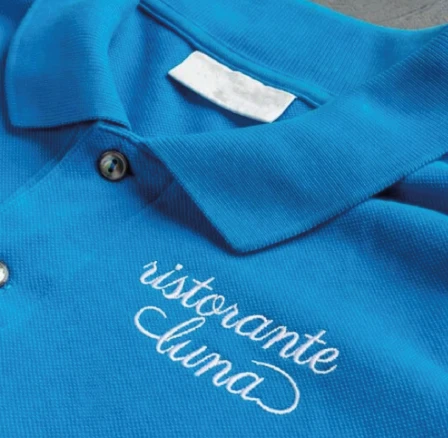
Practical examples: which garment works best in each context
To avoid an overly abstract approach, it is best to start from real use cases. Coordinated workwear works best when each garment is chosen according to who wears it, where it is used and what image it needs to project. At this stage, it can be useful to compare fabrics, models and options in the custom clothing section, helping you connect company image with everyday use more effectively.
- Reception and front office – polished polo shirts, personalised shirts or other smarter garments with discreet and easy-to-read personalisation.
- Retail floor staff – coordinated t-shirts or polo shirts that are easy to recognise and aligned with the store's colours and style.
- Trade fairs and events – t-shirts, polo shirts or sweatshirts that make the team visible even at a distance in busy environments.
- Team building and sports events – technical tops, tracksuits, team kits or gilets help make teams, staff and participants recognisable in dynamic settings; for these cases, it is more coherent to evaluate custom sportswear.
- Warehouse or operational roles – more durable and practical garments, often closer to the logic of personalised workwear, but still aligned with the wider visual identity.
- Food service and hospitality – aprons, shirts or practical garments that combine image, order and function.
This approach helps avoid a common mistake: choosing exactly the same garment for everyone, even when roles and environments clearly require different solutions.
Visual consistency does not mean total uniformity
One of the most common mistakes is assuming that consistency means forcing everyone to wear exactly the same garment. It does not.
Different roles may require different garments — polo shirts, t-shirts, sweatshirts, shirts, gilets or aprons — as long as they share recognisable elements such as palette, styling and personalisation. What matters is system consistency, not the rigid repetition of one single product.
How to build a coherent visual family
- Front-of-house and customer-facing roles – garments that look more polished and are immediately recognisable.
- Operational and warehouse roles – more practical and resistant materials, but visually aligned with the brand.
- Events and external presence – garments that remain easy to read in mixed environments, where recognition matters even more.
The system works when customers recognise the business regardless of the role of the person standing in front of them.
The most common mistakes when building a branded workwear system
- Choosing garments without considering the use context – an unsuitable model is immediately noticeable and is often worn less naturally.
- Adding personalisation without a shared visual logic – logo placement, technique and colours vary from one garment to another.
- Looking only at the unit cost of each garment – without considering durability, visual performance and brand continuity.
- Treating each department as a separate island – the business appears fragmented rather than recognisable.
- Ignoring fit and wearability – even a well-personalised garment loses impact if staff do not wear it comfortably or confidently.
What we have observed since 2006 about branded workwear for staff
One of the most underestimated aspects of branded workwear supplies is logo placement. It is often positioned where it has "always been placed", without asking whether that position is actually readable in the real context of use. In the most successful orders, today, the thinking shifts upstream: before deciding where to personalise a garment, it is worth asking how it will really be seen by customers, at what distance, in which environment — and which part of the brand should be made most recognisable at each touchpoint. This step, apparently small, is what separates a coordinated team that works from one customers cannot tell apart.
How to choose the right branded clothing for each staff role
Before placing an order, it is worth stopping to ask a few practical questions. These help prevent mismatched purchases and make it easier to build a coordinated system that truly works in day-to-day operations.
- How do you want customers to perceive your team?
More formal, more technical, more welcoming or more dynamic? - In which real settings will the garments be used?
Retail floor, reception, showroom, event, support desk or operational roles? - Should staff look uniform or simply recognisable as part of the same business?
This difference has a direct impact on garment choice. - Which garments do you actually need?
Polo shirts, t-shirts, sweatshirts, shirts, aprons or a combination of different solutions? - Should personalisation be subtle or more visible?
That depends on the context, reading distance and the kind of relationship you want to create with customers.
Answering these questions helps define not only which garments to order, but also which business image you want to make visible every day through your team.
Branded clothing and visual consistency: related reading
This topic also connects with other areas already covered on the blog. For further reading, you may also find these useful:
- Personalised work uniforms: when quality is worth the investment
- Materials for personalised clothing: comfort and durability
Visual consistency across staff works best when garment quality, comfort, personalisation method and brand identity are treated as parts of one single project.
Visual comparison: coordinated team or inconsistent team image?

A visual comparison helps show the difference immediately between a team that appears improvised and a team that communicates order, recognition and continuity with the brand.
Where to start before your next order
Before choosing new garments, observe your team in a real situation: reception, retail floor, showroom or event. Ask yourself whether colours, garment styles and personalisation really create a coherent image across people, roles and brand identity.
This simple check helps you understand whether your workwear is strengthening your brand or fragmenting it. If you want to start from a practical base, you can explore the custom clothing section to compare polo shirts, t-shirts, sweatshirts and other options according to your staff context.
Branded workwear delivers more when it is planned alongside the other elements of communication — packaging, shoppers, corporate gifts and promotional materials — within a consistent brand communication system. To explore this approach in greater depth, you can also read our guide to the coordinated branded range of promotional products, clothing and packaging, where each item is treated not in isolation but as part of a wider brand communication project.
Frequently asked questions about branded clothing and visual consistency
Does every staff member need to wear exactly the same garment?
No. In many cases, it is more effective to build a coherent visual family, with different garments coordinated through colours, style and personalisation.
Is adding a logo enough to make the team look professional?
No. The logo matters, but it is not enough on its own. The final impression also depends on the garment model, colour, context and overall consistency.
Is coordinated branded clothing only useful in retail?
No. It can be useful in any context where staff represent the brand directly: events, trade fairs, reception areas, showrooms, support roles and customer-facing professional environments.
In summary: using workwear as a branding tool means making your team more recognisable, your business image more consistent and your brand perception stronger in everyday customer interactions.
Leave a comment