
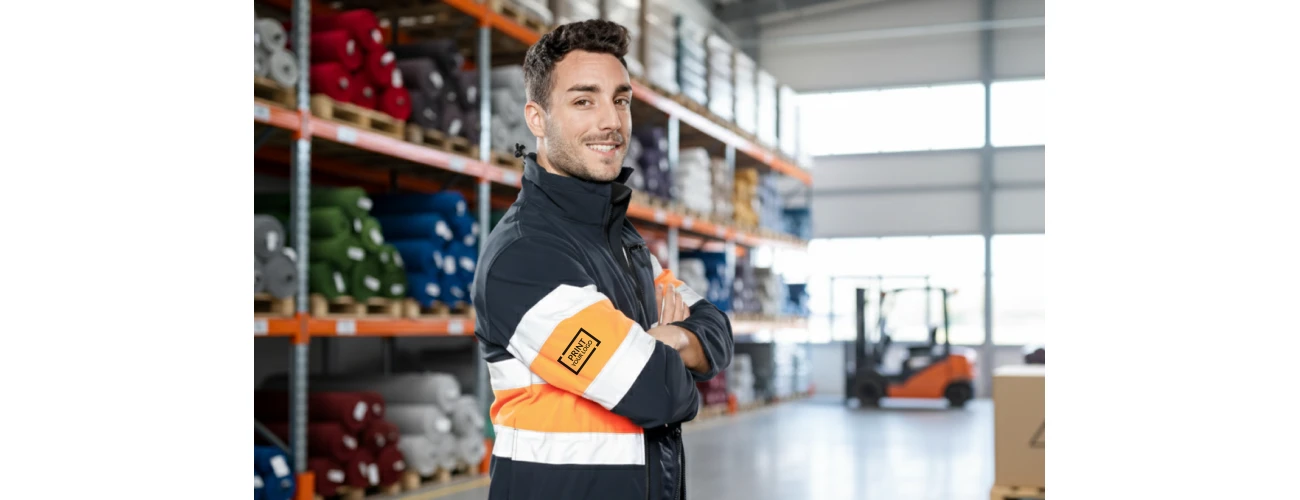
Choosing the right materials for customised corporate clothing means finding the correct balance between comfort, durability and long-term performance.
If you are planning customised clothing orders for 2026, this guide will help you avoid unsuitable choices and invest in garments genuinely suited to everyday professional use.
At a glance
- Cotton between 150 and 200 gsm for indoor use and front-of-house roles, where comfort and aesthetic finish matter.
- Blended and technical fabrics between 200 and 260 gsm for dynamic activities, retail and active roles.
- Sweatshirts between 280 and 320 gsm for cold environments, warehouse and outdoor.
- Material should be chosen based on the garment's actual use, not on unit price.
The selection of materials for customised corporate clothing is one of the most underestimated yet decisive aspects. An unsuitable fabric can compromise comfort, fit and longevity, turning company garments into a recurring expense.
Conversely, an informed choice of materials improves the wearer's experience and strengthens the perception of professionalism associated with your brand.
Why comfort and durability must go together
A comfortable material is worn more willingly, while a durable material reduces replacements and repeat orders. In corporate clothing, comfort and durability are not alternatives but complementary requirements: a garment that feels good but does not withstand washing is replaced too often; a hard-wearing but uncomfortable garment is left aside by staff.
Why material choice truly makes a difference in corporate clothing
Customised clothing is not merely an aesthetic decision. Materials directly affect:
- comfort during daily wear;
- resistance to frequent washing;
- long-term hold of the customisation, whether screen printing, direct-to-garment printing (DTG), DTF transfer or embroidery.
A garment that feels uncomfortable or deteriorates quickly is worn less often and replaced sooner, increasing overall costs and reducing brand visibility.
Natural materials: breathability, comfort and weight
Natural fabrics such as cotton are valued for their softness and breathability. They are well suited to indoor environments, prolonged wear and direct skin contact. When the garment also needs to communicate attention to sustainability, GOTS-certified organic cotton can be considered, where available for the chosen model.
The fabric weight directly influences comfort and durability. For cotton intended for T-shirts and polo shirts, the reference thresholds are:
- 150 gsm: lightweight and breathable, suitable for indoor environments, summer events and non-intensive use.
- 180 gsm: balance between comfort and durability for everyday staff wear.
- 190–200 gsm: more structured fabric, suitable for retail and front-of-house contexts where the garment is exposed to intensive use and frequent washing.
High-quality cotton maintains its shape and colour even after several washes. For polo shirts, a piqué structure adds body and dimensional stability compared to plain knit.
Technical and blended materials: durability and operational performance
Technical or blended fabrics combine natural and synthetic fibres to provide greater mechanical resistance, dimensional stability and long-term durability. They are the preferred choice when the garment needs to withstand movement, abrasion, perspiration and repeated washing over time.
When the order concerns teams, gyms, tournaments or team-building activities, the choice of technical fabrics becomes even more important: custom sportswear needs to support movement, breathability and logo continuity without compromising comfort during training sessions, events or dynamic activities.
Reference weights for these garments:
- 200–220 gsm: suitable for operational polo shirts and dynamic environments where structure is needed without bulk.
- 240–260 gsm: more structured fabrics for frequent use and active retail or light logistics roles.
- 280–320 gsm: sweatshirts and heavier garments for warehouse settings, cold-season wear or outdoor environments.
These fabrics maintain performance even under intensive use and reduce garment wear over time.
Comparative table: materials, comfort and durability
| Material | Comfort | Durability | Recommended use |
|---|---|---|---|
| Cotton 150 gsm | Very high | Medium | Indoor environments, summer events, light use |
| Cotton 180–200 gsm | High | Good | Retail, front-of-house, customer-facing staff |
| Technical blend 220–260 gsm | Good | High | Dynamic activities, operational polos, active retail |
| Sweatshirt 280–320 gsm | Good | Very high | Warehouse, outdoor, cold-season wear |
Matching weight and material to the garment's real use reduces repeat orders, improves comfort and protects your corporate image over time.
Wrong material, hidden cost
Choosing an unsuitable material may appear to save money initially, but in the medium term it results in more frequent replacements, reduced longevity of the customisation and a less polished staff image. Evaluating materials purely on unit price often leads to higher overall costs.
Common mistakes when choosing materials
- Cotton too lightweight for intensive use: loses shape and colour after several washes and forces early reorders.
- Fabric not compatible with the chosen customisation technique: print cracks or fades and the logo becomes less legible.
- Over-specified technical fabric: higher unit cost for uses that do not justify it.
- One single weight for all roles: the same choice for retail staff, warehouse and front-of-house often does not work well in any of the three contexts.
Key questions to ask before choosing the material
- How many hours per day is the garment worn? More comfort for prolonged wear.
- How many washes per month are expected? Greater durability for intensive use.
- Does the logo need to last over time? Material and customisation technique should be chosen together: cotton is often suitable for direct-to-garment printing (DTG), blended fabrics can be handled with techniques such as screen printing or DTF depending on the garment and design, while embroidery is particularly suitable for medium-to-heavy fabrics.
- Does the garment represent your brand in front of customers? Balance between visual finish and functionality, with 180–200 gsm as a comfort zone.
- How many different roles will the same order need to dress? It is often preferable to differentiate weight and material by role rather than seeking a single compromise.
Answering these questions enables you to select coherent materials and avoid garments that are underused or prematurely replaced.
How to choose the material in 4 steps
If you need to plan a customised clothing order now, a clear sequence helps you avoid skipping steps and avoid choosing the material as an afterthought, when the decision has effectively already been made.
- Define the garment's actual use. Internal staff, event, front-of-house, retail, warehouse or outdoor: the first decision is to understand where and how the garment will be worn. For everyday indoor use, choose cotton between 150 and 200 gsm; for dynamic or outdoor work, consider technical blends between 220 and 260 gsm; for cold environments or warehouse, sweatshirts between 280 and 320 gsm.
- Assess frequency of wear and washing. The more the garment is worn and washed, the more dimensional stability and mechanical resistance of the fabric matter. A garment intended for a single event may accept a lighter weight; a daily-wear retail staff garment requires more structured fabrics and weights.
- Match material and customisation technique. Screen printing, direct-to-garment printing (DTG), DTF transfer and embroidery behave differently depending on the fabric. Choosing material and technique together, already at the quotation stage, avoids inconsistent outcomes that only become apparent after the first order.
- Connect the garment to the corporate image. Material, weight and aesthetic finish must be consistent with how the company wants to present itself: more technical for operational roles, more refined for front-of-house roles, more representative for customer-facing uniforms.
This sequence reduces errors and makes the investment more effective, especially in repeat orders over time.
What we have observed since 2006 about customised corporate clothing orders
In the most successful orders, in companies that buy customised clothing on an ongoing basis, the starting point is almost always a simple but explicit distinction: the roles wearing the garment are not all the same and do not have the same use of the fabric. A warehouse role is not the same as a checkout role, front-of-house is not the kitchen, and a summer event is not a winter service shift.
When this distinction is made upstream, material choice follows naturally: light cotton where breathability matters, blended fabric where structure matters, heavier sweatshirt where warmth matters. When instead a single compromise is sought for everyone, the garment risks being unsuitable across several contexts and being replaced earlier than expected. The simplest way to avoid this is to clarify the garment's real use before choosing the weight, not after.
Material selection within a coordinated strategy
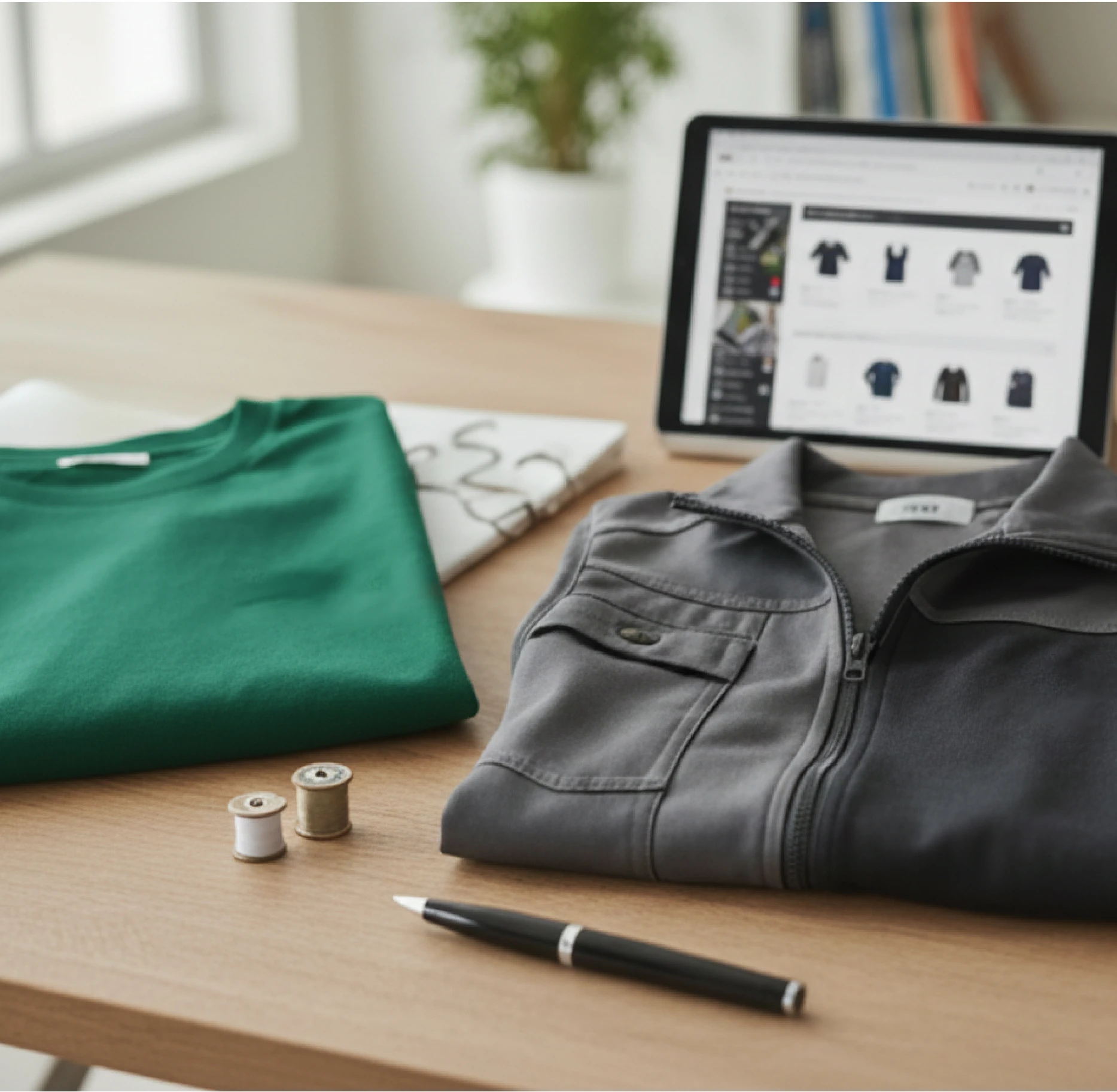

Materials for corporate clothing perform best when integrated into a coherent branding strategy, in which garments, promotional products and packaging speak the same language and contribute to the same consistent brand communication system.
- Custom work uniforms: when investing in quality makes sense
- Printing techniques for logos: how to choose the right option
- Coordinated branded range: clothing, promotional products and packaging
Customised corporate clothing by Shop for Shop
Shop for Shop is an Italian company active since 2006, direct supplier of custom clothing for businesses, retail and events, with preliminary graphic proof, internal quality control and competitive shipping across more than thirty European countries.
Each garment is selected to ensure comfort, durability and consistent quality over time, with solutions suitable for every professional environment: from retail front-of-house roles to more operational contexts requiring custom workwear with technical fabrics and more structured weights.
Frequently asked questions about materials for customised corporate clothing
What is the most comfortable material for corporate clothing?
High-quality cotton is among the most comfortable materials thanks to its breathability and softness, particularly for prolonged wear. When the garment also needs to communicate attention to sustainability, GOTS-certified organic cotton can be considered, where available for the chosen model.
Which materials are most resistant to frequent washing?
Technical or blended fabrics, which combine natural and synthetic fibres, provide greater mechanical resistance and dimensional stability over time, and are often preferred for operational polo shirts, retail staff garments and dynamic environments.
Do materials influence the quality of personalisation?
Yes, material choice affects the longevity of print or embroidery. Cotton is often suitable for direct-to-garment printing (DTG), blended fabrics can be handled with techniques such as screen printing or DTF depending on the garment and design, while embroidery is particularly suitable for medium-to-heavy fabrics. For this reason, material and technique should be evaluated together before production.
Which weight should I choose for staff T-shirts?
For light indoor use the 150 gsm weight is a valid choice, while for staff in customer-facing roles and retail it is preferable to move up to 180–200 gsm, as the garment better withstands daily wear and repeated washing.
Leave a comment