
At a glance
- Screen printing for medium-to-high runs on fabric and paper, where solid colours and durability matter.
- Digital printing for multicolour logos or fine details, also suitable for smaller runs.
- Laser engraving for premium products in metal, wood or bamboo, where durability is required.
- UV printing for rigid surfaces, tech gadgets and modern products with vibrant colours.
Choosing the right printing technique for your logo is a decision that directly affects the final quality, long-term durability and perceived value of your brand.
If you are planning customised promotional products, workwear or packaging for 2026, this guide will help you avoid common mistakes and choose the technique that best fits the product, its real-world use and your communication goals.
Choosing the correct logo printing technique is one of the most underestimated steps in business personalisation, and yet it directly affects the final result. A technique that does not match the material or the intended use of the product can compromise visual quality, reduce the durability of the personalisation and reduce the effectiveness of the investment.
Understanding the main personalisation methods helps you make an informed decision, improve the quality of the result and calibrate your budget against the real-world use of the product.
Why the printing technique affects the final result
Each material reacts differently to personalisation. A technique that performs well on fabric may not deliver the same results on metal, plastic or rigid surfaces; a logo subjected to repeated washing on a t-shirt may show clearer signs of wear when applied to a surface exposed to continuous friction.
The right choice protects three elements:
- the long-term durability of the personalisation;
- consistent visual quality aligned with the original logo and its colour perception;
- alignment with brand positioning, from promotional segment to premium gifts.
For this reason, printing techniques should not be selected solely on initial cost: a choice driven only by unit price often leads to early replacements or to a perceived quality below expectations.
Main printing techniques for promotional products, clothing and packaging
Available printing methods vary depending on the material and intended use. A structured overview of the most common solutions is also available in the dedicated printing techniques section.
Screen printing
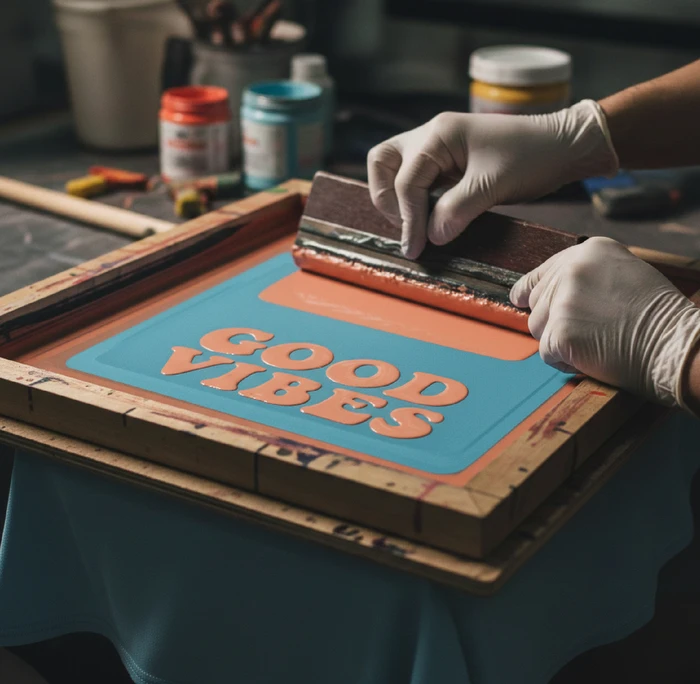
Screen printing is ideal for medium-to-high production runs and for designs with solid colours and simple geometries. It delivers strong, opaque colours and good long-term resistance, especially on custom clothing and printed bags in fabric or paper.
Practical example: cotton t-shirts at 150 g/m² or 180 g/m² intended for event staff, or paper bags for a high-rotation retail point, retain solid colours and good logo clarity even after repeated use and washing. For textile garments, in addition to traditional screen printing, direct-to-garment (DTG) can be considered when the logo requires gradients or fine details on small runs, and DTF (Direct to Film) for textile gadgets such as drawstring bags, backpacks and fabric bags, where heat transfer offers good adhesion even on irregular surfaces.
Digital printing
Digital printing is the most suitable choice for complex, multicolour or gradient artwork. It enables faithful detail reproduction and is suitable for small-to-medium production runs and for flexible personalisation where each item can vary.
For custom sportswear, the technique should always be assessed on the actual garment: technical tops, tracksuits, team kits and gilets may require different solutions depending on fabric, logo placement, washing frequency and artwork complexity.
Practical example: logos with gradients, photographic elements or multicolour graphics on promotional t-shirts, notebooks or small-batch gadgets allow accurate detail reproduction without the colour limits typical of more traditional techniques.
Laser engraving
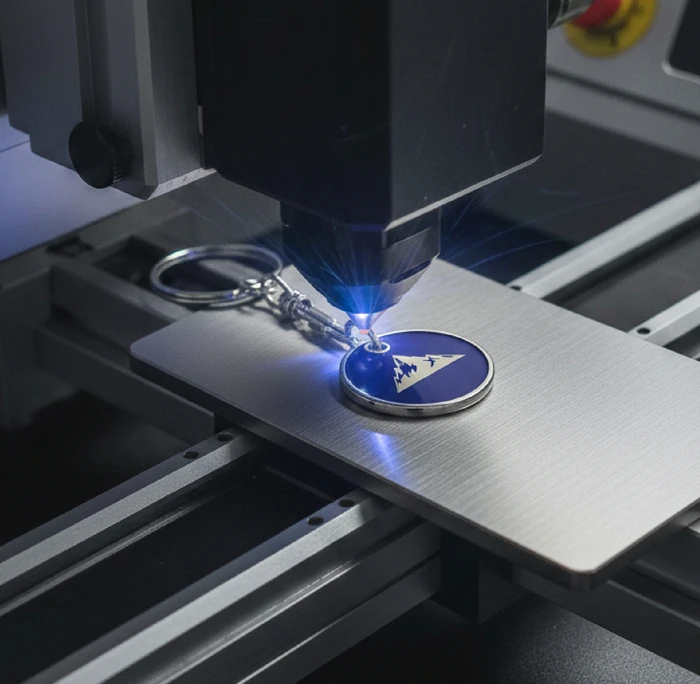
Laser engraving is a refined and permanent technique, suitable for rigid materials such as metal, wood, bamboo and cork. It is commonly used for promotional products in the mid-to-high range, where the durability of the personalisation is an essential requirement and the logo should retain the same quality even with prolonged use.
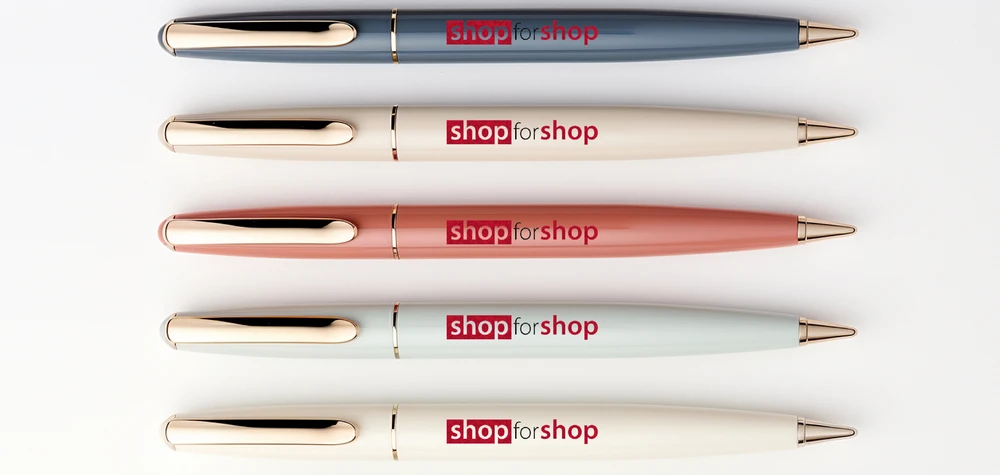
Practical example: metal pens, keyrings, bamboo or cork accessories with engraved logos retain a clear definition even with prolonged use, and communicate a more refined brand positioning compared with surface printing.
UV printing
UV printing is designed for rigid surfaces and modern products. It delivers vibrant colours and sharp detail, making it particularly suitable for tech accessories and contemporary promotional products.
Practical example: power banks, USB drives, wireless charging stations or tech gadgets with rigid surfaces benefit from UV printing for colour brightness and logo precision, which remains legible even on small components.
Embroidery and hot stamping
In some cases, more specific techniques can also be considered. Embroidery is suitable for corporate clothing such as polo shirts, sweatshirts, caps and jackets, when a more tactile finish and a professional appearance are required, in line with the quality apparel segment. Hot stamping, on the other hand, is useful on bags, boxes and packaging when an elegant, often metallic or premium finish is needed, in line with the positioning of a brand that gives attention to the unboxing experience.
Comparison table: technique, materials, finish and use case
| Technique | Typical materials | Finish | When to choose it |
|---|---|---|---|
| Screen printing | Cotton, paper, natural fabrics | Solid colours, long-term durability | Medium-to-high runs, staff clothing, high-rotation bags |
| Digital printing (incl. DTG) | Cotton, paper, mixed fabrics | Faithful multicolour, detail and gradients | Small-to-medium runs, complex logos, specific events |
| Laser engraving | Metal, wood, bamboo, cork | Permanent, refined, monochrome | Premium products, corporate gifts, durable accessories |
| UV printing | Plastic, metal, rigid surfaces | Vibrant colours, sharp detail | Tech gadgets, modern products, smooth-surface items |
| Embroidery | Polo shirts, sweatshirts, caps, jackets | Tactile finish, professional, premium perception | Corporate clothing, staff, uniforms, garments for continuous use |
| Hot stamping | Paper, bags, boxes, packaging | Elegant finish, often metallic or premium | Curated packaging, gift boxes, distinctive bags and boxes |
Matching the right technique to the material and the real-world use of the product helps avoid reprints, visual disappointment and a perceived quality below expectations.
Common mistakes when choosing a printing technique
Most recurring mistakes in business personalisation
- Choosing solely on unit price: the cheapest technique is not always the best fit for the product and its real-world use.
- Ignoring the real use of the product: the same logo behaves very differently on a staff t-shirt and on a tech gadget for a trade show.
- Using complex techniques on short-life products: laser engraving on a gadget intended for a single trade show can be an investment that is not proportionate to the actual use.
- Overlooking the substrate: the material (fabric, paper, plastic, metal, wood) determines the most suitable technique more than the artwork itself.
- Forcing a single technique across all gadgets in the same order: a coordinated range may require different techniques for each item, while keeping visual coherence and adapting the finish to the material.
How to choose the printing technique in 4 steps
When planning a customised order, a clear sequence helps avoid choosing the technique only at the end, when other decisions are already made and there is little room for adjustment.
- Define the material of the product to be personalised. Natural fabric, technical fabric, paper, plastic, metal, wood, bamboo: the substrate is the first criterion. Not all techniques work on all materials, and the consistency between substrate and technique is the basis of a long-lasting result.
- Assess the real use of the product and the required durability. A gadget intended for a single trade show has very different needs from a staff uniform worn every day. For daily use and frequent washing, screen printing and laser engraving often offer the best resistance; for occasional or single-event use, digital printing and UV printing are often more than sufficient.
- Consider the complexity of the logo. Monochrome logos with clean geometries adapt well to screen printing or laser engraving. Multicolour logos with gradients or photographic elements often require digital printing or UV printing to maintain colour fidelity.
- Align the choice with brand positioning. For large-scale promotional orders, the priority is often visual reach and unit cost; for corporate gifts and premium products, the priority shifts towards perceived quality and the durability of the personalisation. The printing technique should be chosen in line with the message the brand wants to convey.
This sequence reduces the risk of rushed choices and makes the order more consistent over time, especially when working with repeat orders that renew season after season.
What we have observed since 2006 about logo printing techniques
In the most successful orders, in companies that order promotional products, clothing or customised packaging on a continuous basis, the printing technique is rarely chosen last. It is assessed together with the product and the substrate, already at the quotation stage, because that is precisely when the technique-material-use combination delivers the best result. When instead the technique is decided only after the item has been chosen, it more often happens that the logo does not look as expected, or the durability of the personalisation is not proportionate to the cost.
We see that, in the most curated orders, different techniques within the same coordinated range are often accepted: screen printing on staff garments, laser engraving on premium pens, UV printing on tech gadgets, digital printing on promotional packaging. The visual outcome remains coherent because the logo is the same and brand colours are preserved, but the finish of each item is optimised for its material and use. This approach, applied from the first request, reduces the risk of reprints and keeps the order consistent over time.
Printing techniques as part of a coherent system
The printing technique for a logo is not an isolated choice: it is one of the levers that make a brand's presence coherent across all of a company's customised products. When clothing, promotional products and packaging are designed as parts of a consistent brand communication system, the printing technique becomes the tool that translates the logo into the same visual language, even on very different materials and substrates.
When orders repeat over time, this approach translates into greater visual continuity for the brand and a more stable perception of quality, both for internal staff and for end customers. The principle is developed more fully in the pillar Coordinated branded range: promotional products, clothing and packaging, dedicated specifically to how a company can integrate different promotional products, clothing and packaging orders into a single communication system.
Logo printing techniques at Shop for Shop
Shop for Shop is an Italian company active since 2006, direct supplier of business personalisation for companies, shops and events, with free graphic proof before production, in-house quality control, free shipping in Italy and competitive rates across more than thirty European countries.
Each personalisation project is assessed based on the material, intended use and communication objectives, in order to identify the most suitable technique among screen printing, digital printing, laser engraving, UV printing, embroidery and hot stamping, and to ensure a professional, coherent and long-lasting result.
Frequently asked questions about logo printing techniques
Which printing technique is the most durable?
Laser engraving is among the most durable techniques, as it modifies the material in depth and retains its appearance longer than many surface prints. Screen printing also offers strong resistance on textiles, especially for monochrome logos with solid colours and for garments subject to frequent washing.
Which technique is best for complex logos?
Digital printing is often the most suitable choice for multicolour logos, gradients or fine details, thanks to its precision and colour fidelity. For textile garments, direct-to-garment (DTG) achieves the same level of detail directly on fabric, even on small runs.
Does the printing technique affect brand perception?
Yes. A technique that suits the substrate enhances the logo and communicates quality, attention to detail and professionalism; a technique that does not match the material or the use of the product can instead suggest a rushed choice and reduce the perceived quality of the brand.
Which technique works best for small runs?
For small-to-medium runs, digital printing is often the most balanced choice, because it does not require the preparation of a screen or matrix for each colour and maintains a good level of detail even on limited quantities. On rigid gadgets and tech items, UV printing offers similar advantages in terms of flexibility on small batches.
Leave a comment