






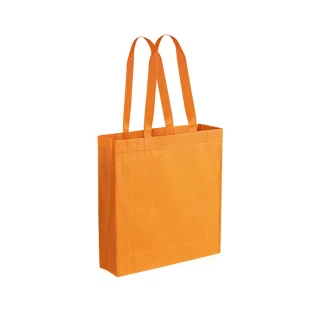
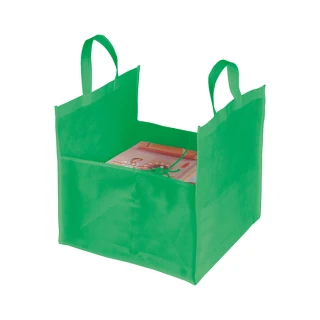
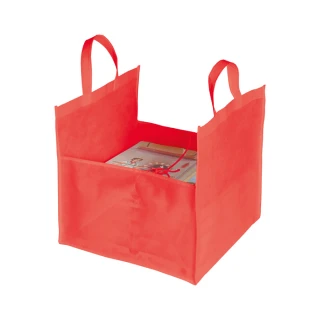
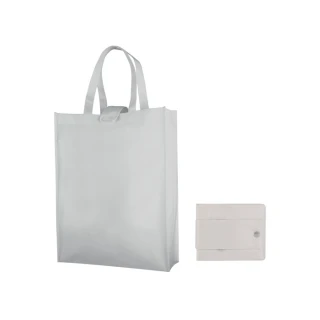
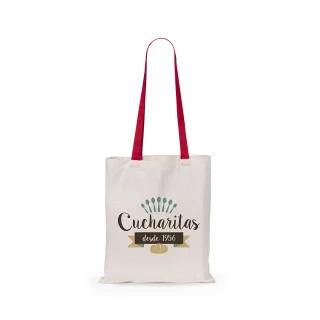
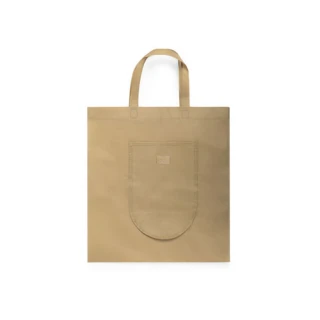




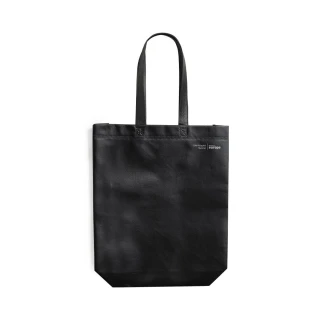
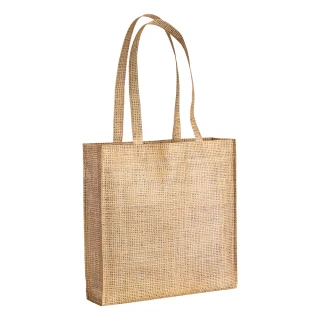
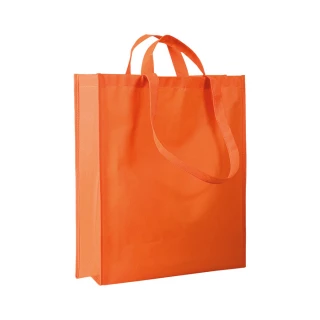

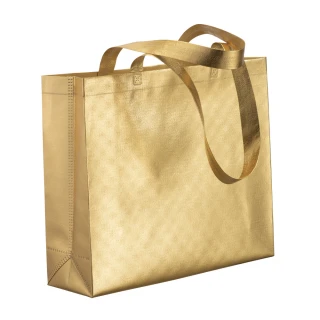


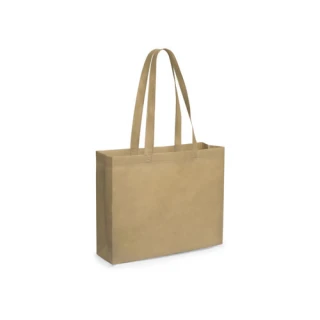
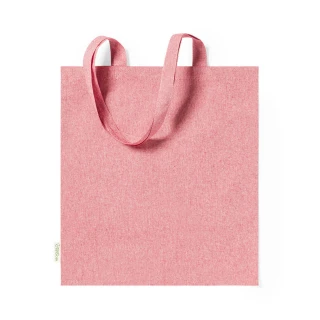
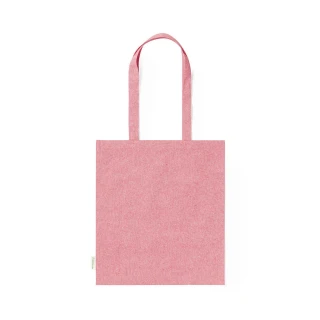
How to choose a tote bag for your business and distribution method
Intended use helps to narrow the search, but it does not replace product verification. The contents determine the size and usable volume; frequency of use and distribution method influence the required construction; the logo and artwork must suit the surface, stitching, folds and branding area. This category identifies the appropriate product family, while the definitive specifications remain those shown on the product page and configurator.
Retail, boutiques, merchandise and e-commerce
At the point of sale, the bag must match both the products supplied and the way customers will carry them. For clothing, accessories, cosmetics, books, promotional literature and packaged products, check the real dimensions, any gusset, handle length, base shape and available logo area. Cotton, non-woven and jute models may answer different needs, but no material is automatically suitable for every load, frequency of use or retail sector.
Trade fairs, conferences and events
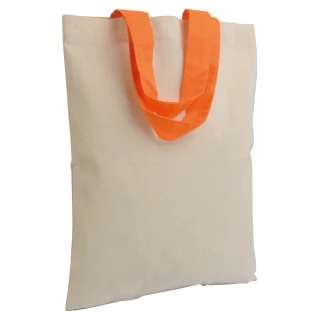
For concentrated distribution, key considerations include storage volume, speed of hand-out, size in relation to catalogues or promotional products, logo legibility and the quantity required. A lighter bag may simplify high-volume logistics, while a more structured construction may be preferred when the bag is intended to remain in use after the event. Compare Non-Woven Bags, Cotton Tote Bags and Foldable Shopping Bags using the actual product information rather than assuming durability from the material name or gsm.
Wine merchants, vineyards and bottle sales
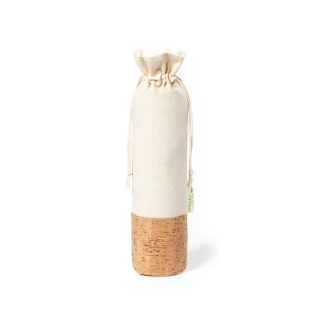
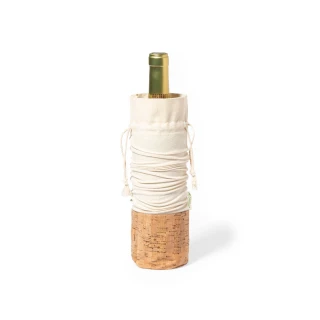
The Bottle holder filter covers models in cotton, non-woven and jute. Before ordering, measure the diameter and height of the bottles, then check the stated bottle count, the base, any internal slots or separators stated on the product page, handle construction and how the load is distributed. For paper alternatives or bottle carriers organised around grocery shopping, see Paper Bags and Reusable Shopping Bags.
Takeaway, food delivery and pizza transport
The Takeaway and Pizza bag filters identify specific non-woven models in the current range. Measure the base, width, height and number of packages, then consider orientation, closure, heat, condensation, journey time and carrying method. Where the principal search intent is food service, including paper alternatives and non-woven pizza carriers, use Takeaway Bags: Tote Bags retain the material-and-construction perspective, while Takeaway Bags are organised around the restaurant and delivery function.
Loyalty programmes, employee packs and mobile use
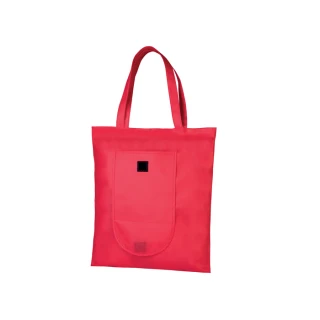
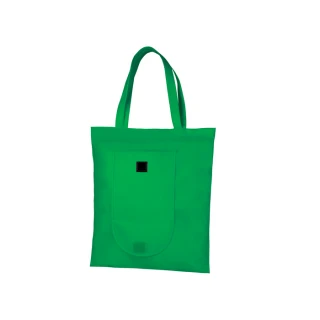
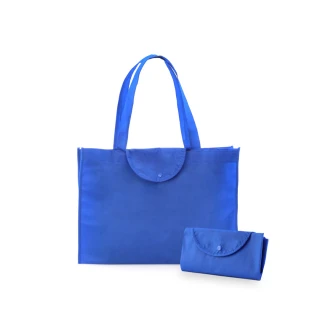
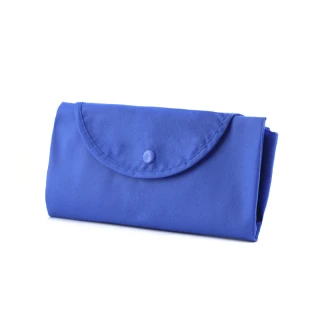
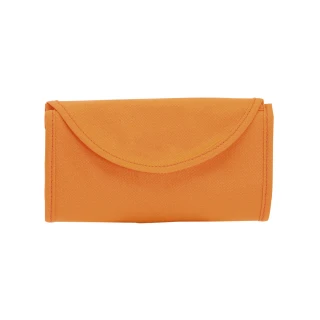
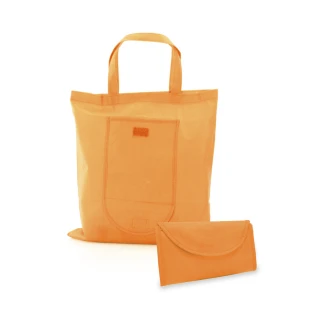
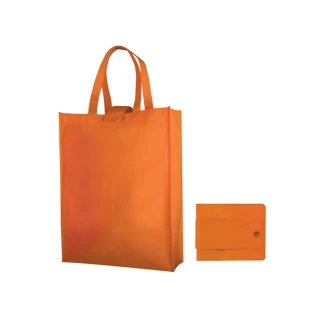
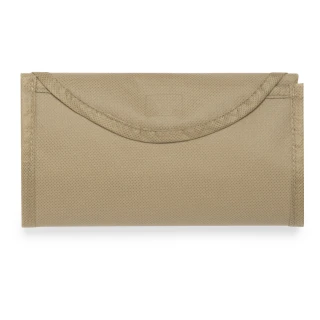
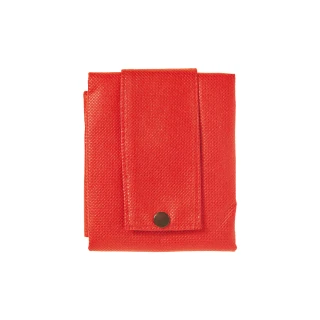
Where minimum bulk after use is the priority, Foldable Shopping Bags allow comparison between compact models using different materials and closure systems. Open and folded dimensions, ease of packing, logo position, pouch and accessories must be read on the product page. The word foldable does not guarantee a uniform reuse frequency, carrying capacity or lifespan.
Comparing cotton, non-woven, jute and foldable shopping bags
The four families answer the same broad need for carrying and branding, but they are defined by different criteria. The table helps buyers follow the correct specialist path without treating material names as universal performance claims.
| Family | Defining criterion | What to check | Specialist category |
|---|---|---|---|
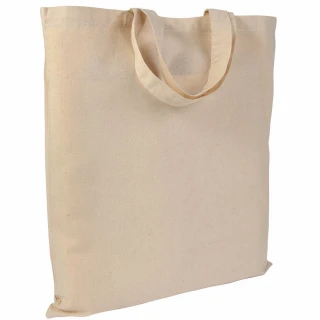
| Cotton | Cotton is declared within the composition of the model. | Fibre percentages, gsm, colour, size, gusset, handles, stitching, documented certifications and available branding method. | Cotton Tote Bags |
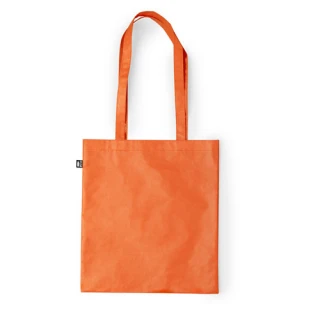
| Non-woven | A bonded non-woven substrate with variable construction and finish. | Gsm, heat sealing or stitching, lamination where present, base, gusset, handles, closure and branding area. | Non-Woven Bags |
| Foldable | A construction designed to reduce bulk after use. | Material, open and folded dimensions, pouch or closure, handles, stitching, logo position and folding method. | Foldable Shopping Bags |
| Jute | Jute is declared within the composition, including mixed constructions. | Composition, gsm when stated, lamination or panels, size, gussets, base, handles, any stated internal features and available branding method. | Jute Bags |
Use filter: Takeaway, Pizza bag and Bottle holder
The Use filter connects several product families without changing their semantic boundary. A product appearing under a use label describes the intended catalogue application, but does not replace verification of the purchased configuration.
| Use | Families in the current range | Checks before ordering |
|---|---|---|
| Takeaway | Non-Woven Bags. | Closed-container dimensions and orientation, base, handles, closure, temperature, condensation and journey time. |
| Pizza bag | Non-Woven Bags. | Actual pizza-box dimensions, stated box count, flat carrying position, closure, joins and carrying method. |
| Bottle holder | Cotton Tote Bags, Non-Woven Bags and Jute Bags. | Bottle count, diameter and height, base, any internal slots or separators stated on the product page, handles and load distribution. |
These labels do not certify carrying capacity, water resistance or direct food-contact suitability. Where a regulated property is required, check the product declaration and supporting documentation for the selected configuration.
Material Weight from 45 to 320 gsm: using the filter without treating gsm as a load rating
The filter currently exposes 28 individual values: 45, 60, 70, 80, 90, 100, 105, 110, 120, 130, 135, 140, 145, 150, 180, 190, 200, 220, 230, 240, 245, 250, 260, 270, 280, 300, 310 and 320 gsm. These are options present within the range, not a continuous scale and not specifications available for every material or model.
| Information | How to interpret it | What it does not prove |
|---|---|---|
| Material weight in gsm | Mass per unit area for the substrate stated by the product. | Carrying capacity, lifespan, number of uses, overall quality or environmental performance. |
| A lower or higher value | Helps narrow the range and compare the feel or substance of technically compatible products. | That a heavier bag is always stronger, or that a lighter bag is automatically unsuitable. |
| The same gsm | May appear across different materials, dimensions and constructions. | Identical performance: the base, gussets, stitching, heat seals, handles and load distribution may differ. |
Use the filter after identifying the material and construction, then verify the product page. Two bags with the same gsm can differ in dimensions, joins, handles and intended use, and one bag may include several materials or components.
Size, base, gusset, handles and closure
- Real contents – measure the largest item together with its packaging, including orientation, sharp edges and number of units.
- Usable volume – assess width, height and base or gusset together; one dimension does not describe capacity.
- Base and stability – for boxes, bottles or several packages, check the support area and base shape.
- Handles – compare length, width, material and attachment method for hand or shoulder carrying, without inferring capacity from handle style alone.
- Joins – stitching, heat sealing and reinforcements are part of the model’s construction, not a guarantee in isolation.
- Closure or folding system – check zips, drawcords, pouches, elastic straps or other systems only where shown for the product.
- Branding area – account for seams, folds, pockets, lamination and accessories before sizing the logo.
Branding methods for personalised tote bags
The branding method must be chosen for the individual model, not solely from the material family name. The same family can include natural, coloured, laminated, mixed or non-woven surfaces with different branding behaviour.
| Method | When it may be considered | What to verify |
|---|---|---|
| Screen printing | Spot-colour logos and repeat production on compatible models. | Colour count, coverage on the substrate colour, branding area, minimum detail, front or reverse and quantity. |
| Digital print or transfer | Multicolour or more detailed artwork on products that offer the relevant process. | Material and finish, process used, light or dark background, dimensions, fine-detail reproduction and interference from folds or seams. |
| Embroidery | Models and areas with sufficient stability for stitched branding. | Usable area, substrate stability, stitch count, minimum detail, reverse appearance and compatibility with pockets or linings. |
A method offered on one cotton bag must not be extended automatically to every cotton model; the same principle applies to non-woven, jute and foldable bags. The artwork proof checks layout and position, but it does not replace the technical conditions stated on the product page and configurator.
Common mistakes to avoid before ordering
- Using “fabric” as a universal composition – the range includes cotton, non-woven polypropylene, jute, mixed materials and foldable constructions using different substrates.
- Treating gsm as carrying capacity – material weight does not state how many kilograms the bag can carry.
- Comparing different materials by gsm alone – composition and construction change the operational meaning of the value.
- Choosing size from width and height only – base, gusset, closure, handles and the shape of the contents affect usable space.
- Applying one branding method to a whole family – the surface, finish, quantity and area vary by model.
- Confusing a Use filter with certification – Takeaway, Pizza bag and Bottle holder do not certify load rating or direct food contact.
- Confusing Tote Bags with Reusable Shopping Bags – the first is organised by material and construction; the second by grocery-shopping function.
- Extending certifications or environmental claims – organic, recycled, Fairtrade®, GRS, recyclable or similar claims must be documented for the specific supply.
- Ignoring mixed materials and components – the body, lamination, handles, zips, panels and printing may require different information.
Fibre composition, labelling and environmental statements across European English-language markets
The category name does not replace the product’s composition. For products placed on the market in the European Union or EEA, textile fibre names and composition labelling are governed by Regulation (EU) No 1007/2011. In Great Britain, textile labelling guidance requires fibre content to be stated, with manufacturers and retailers responsible for compliance. Destination-specific rules should be checked for the United Kingdom, Ireland, Malta and any other market in which the products will be supplied.
Where a bag is classified and placed on the market as packaging, material identification, component separation and end-of-life information must relate to the complete configuration. Regulation (EU) 2025/40 applies generally from 12 August 2026 in EU Member States. For UK supplies, relevant packaging EPR and labelling obligations should be checked separately according to the market, business role and product configuration.
Environmental statements must be specific and verifiable. A natural fibre, recycled content or lamination does not automatically establish recyclability, biodegradability, compostability, recycled percentage or lower overall impact. Follow the product information and destination-market collection rules. For public or private procurement with environmental requirements, compare the product evidence with the exact tender or specification rather than assuming category-wide compliance.
When a personalised tote bag strengthens the brand
A bag carried beyond the point of sale can keep the logo, colours and message visible during use. Effectiveness does not depend only on print size: material, substrate colour, dimensions, placement, folds, stitching, handles and viewing distance all need to be assessed together. For high-volume events, a simple and legible mark may be the priority; for merchandise and presentation-led projects, a more detailed branding method can be considered where the model supports it.
Tote bags within a coordinated branded range
Tote bags can share visual rules with custom cardboard boxes, packaging supplies, promotional products and personalised clothing. Each substrate retains its own materials, branding areas and production constraints. For a broader approach, see the guide to a coordinated range of promotional products, clothing and packaging.
Tote Bags or another category: where to continue your search
Stay in this category when you need to compare cotton, non-woven, jute and foldable bag constructions. When the main need is a different material or specialist function, continue to the relevant category.
| Main requirement | Correct category | Semantic boundary |
|---|---|---|
| Compare paper, plastic, textile and other shopping-bag materials | Custom Shopping Bags and Carrier Bags | General multi-material parent category. |
| Compare cotton, non-woven, jute and foldable models | Tote Bags | Specialist hub organised by material and construction. |
| Routine grocery shopping, reusable models, shopping trolleys or function-led bottle carriers | Reusable Shopping Bags | Category organised around grocery-shopping and repeat-carrying functions. |
| Restaurant takeaway, food delivery and pizza transport across different materials | Takeaway Bags | Food-service function, including paper models and specific non-woven pizza carriers. |
| Carrier bags with handles made from paper | Paper Bags | Paper substrate, weights, bases, handles and printing processes. |
| Bag body made from plastic film | Plastic Bags | HDPE or LDPE film, thickness, seals and handle systems. |
| Bread, counter-service products or small items in handleless paper bags | Paper Bread Bags | Counter-service and lightweight paper-bag function. |
Useful guides for choosing personalised tote bags
- Carrier bags and paper bags: choosing the right size – sizing bags against real retail contents and purchasing patterns.
- Logo printing techniques: how to choose the right one – a cross-material guide to branding methods.
- Promotional products, clothing and packaging: creating a coordinated range – connecting tote bags with the wider visual identity of the organisation.
Frequently asked questions about personalised tote bags
Which tote bag should I choose: cotton, non-woven, jute or foldable?
Choose according to the main selection criterion. Cotton Tote Bags cover models that declare cotton; Non-Woven Bags cover bonded non-woven materials; Jute Bags cover products that declare jute, including mixed-material constructions; Foldable Shopping Bags cover models designed to pack down after use. In every case, compare the contents, dimensions, composition, construction, handles, branding area and the conditions stated for the individual product.
Does the name Tote Bags mean that every model is made from woven fabric?
No. Tote Bags is the commercial name of the hub, which includes woven textiles, non-woven materials and mixed constructions. Non-woven polypropylene is not woven, jute models may include lamination or other panels, and foldable shopping bags can be made from different substrates. The effective composition and percentages are those stated on the product page.
How should I use the Material Weight filter, and does a higher gsm mean greater carrying capacity?
The filter contains 28 individual values from 45 to 320 g/m² across the range. Use it only after identifying the material and construction. A higher gsm does not guarantee greater carrying capacity, durability or quality: dimensions, base, gussets, stitching or heat-sealed joins, handles, attachment points and load distribution also affect the result.
What do the Takeaway, Pizza bag and Bottle holder filters mean?
They are cross-category Use filters, not materials or standalone subcategories. In the current range, Takeaway and Pizza bag lead to non-woven models, while Bottle holder appears within Cotton Tote Bags, Non-Woven Bags and Jute Bags. Dimensions, base, container count and orientation, any internal slots or separators stated on the product page, handles and closure must be checked on the selected product.
Are bags listed under Takeaway or Pizza bag suitable for direct food contact?
Not automatically. The filter describes a carrying function and may refer to an outer bag for closed containers or pizza boxes. Direct food contact requires the selected product and purchased configuration to be expressly documented for the intended use. The filter, material name or gsm does not provide that declaration on its own.
Which materials are available for bottle carrier bags?
In the current catalogue, the Bottle holder filter includes models within Cotton Tote Bags, Non-Woven Bags and Jute Bags. Before ordering, measure the number, diameter and height of the bottles and check the base, any internal slots or separators stated on the product page, handle construction and load distribution. Paper and grocery-oriented alternatives are available in the relevant neighbouring categories.
What is the difference between Tote Bags and Reusable Shopping Bags?
Tote Bags organise the range by material and construction, linking cotton, non-woven, jute and foldable models. Reusable Shopping Bags organise the range around routine grocery shopping, reusable models, shopping trolleys and bottle carriers, including materials specific to that catalogue. Use Tote Bags to compare textile and non-woven families; use Reusable Shopping Bags when the primary need is grocery shopping.
Which branding methods can be available for personalised tote bags?
Depending on the model, options may include screen printing, digital print or transfer and embroidery. No method is universal across the whole category: the surface, composition, number of colours, branding area, front or reverse application, artwork requirements and minimum quantity vary. The product configurator and free artwork proof define the options for the selected bag.
Are tote bags always reusable, recyclable or sustainable?
There is no statement that applies to every model. Durability, reuse and end-of-life handling depend on composition, construction, lamination, panels, handles, closures, printing, conditions of use and local collection rules. Terms such as organic, recycled, Fairtrade® or GRS should only be used when supported by documentation for the specific supply. For environmental tenders, compliance must be checked against the product evidence and the procurement specification.
What is the minimum order and how much do personalised tote bags cost?
There is no category-wide minimum order or price. Both depend on the family, model, material, size, colour, branding method and quantity. The configurator shows the conditions and quotation for the selected product, and a free artwork proof is prepared before production to check the layout and logo position.
Which personalised tote bag is best for a trade fair or event?
Start with the contents, the number of bags to distribute, available storage space and the intended use after the event. Compare Non-Woven Bags, Cotton Tote Bags and Foldable Shopping Bags by size, construction, handles, branding area and product conditions; consider jute when the product and presentation make it appropriate. No family is automatically best: quantities, lead times and options are those stated for the individual product.
Personalise tote bags for your shop, event or organisation: identify the correct family, compare the intended use, dimensions, composition, material weight, construction and branding area, then approve the free artwork proof before production.