
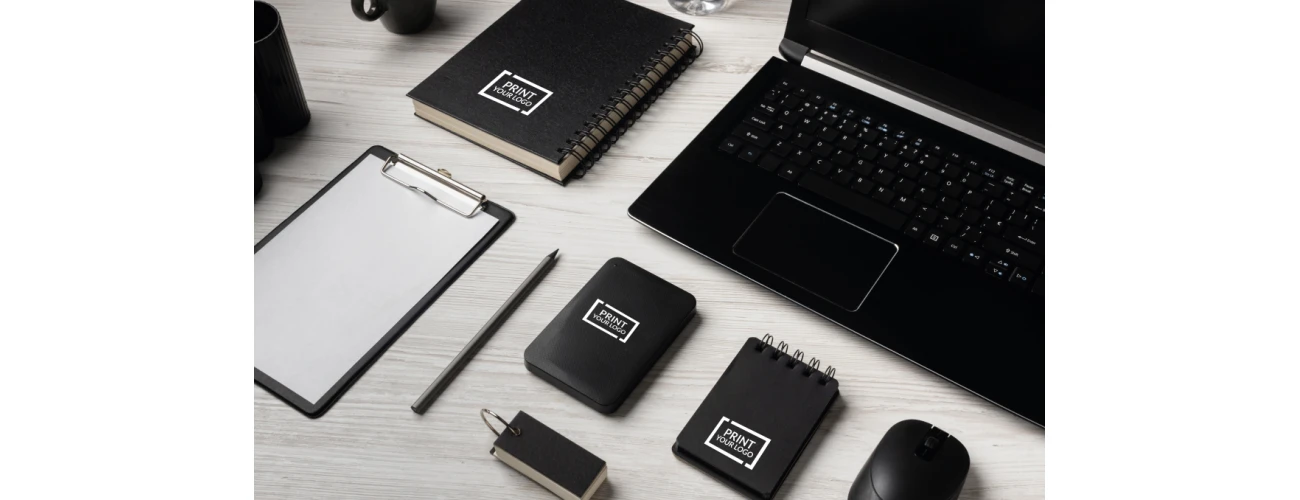
- Tech promotional products only work when they serve a real, everyday purpose for the recipient.
- The novelty effect fades quickly: the real value of a tech accessory is measured by how long it stays in use.
- In corporate branding, technology pays off when it strengthens the image of reliability without feeling forced.
- If the budget doesn't cover adequate quality, a higher-tier traditional item is almost always the smarter choice.
In the world of corporate gifts and branded merchandise, technology holds a strong appeal. It signals innovation, modernity and an awareness of the way people work today. But a tech item is not automatically a sound investment for your brand.
We've written this guide because tech promotional products are often chosen for their initial impact, without considering whether they'll actually get used over time. A tech accessory only works when it fits the recipient, the context and the image of reliability the company wants to project.
This question comes up every time you plan products for events, onboarding kits or corporate gifts: the problem isn't picking something that looks innovative today — it's working out whether that item will still be useful and in use months later.

A tech product can strengthen brand perception, particularly when it signals practicality and attention to user experience. It can also do the opposite — if it looks flimsy, outdated or out of place against the recipient's actual habits.
When evaluating corporate tech promotional products, it's worth focusing less on the wow factor and more on the concrete relationship between daily usefulness, target audience and perceived quality.
In that light, tech items shouldn't be treated as a standalone choice but as a specific family within promotional products: accessories to be assessed by material, printable surface area, personalisation technique, frequency of use and distribution context. This approach keeps the item, the logo and the brand image consistent — especially when the product is part of a larger supply for events, onboarding kits or ongoing promotional activity.
Why technology calls for a more careful choice
Tech accessories behave differently from traditional promotional items. The person receiving a tech product instinctively compares it against the personal devices they use every day — and that raises the bar automatically.
- Faster obsolescence — an accessory with outdated connection standards signals neglect, not innovation.
- Compatibility is decisive — if the item doesn't connect easily to the target's devices, it becomes useless straight away.
- Perceived quality is immediate — a modest notebook still does its job, while a low-quality electronic accessory creates instant frustration.
The drawer effect vs the desk effect
If a product doesn't solve a small daily problem, it ends up in a drawer the same day. If it helps with organisation or charging, it earns a fixed spot on the desk — giving the brand steady visibility over time.
Which tech promotional products work best today
The most effective tech items are those that genuinely become part of professional routines. It's not enough to be modern: they need to solve an everyday need simply, reliably and immediately.
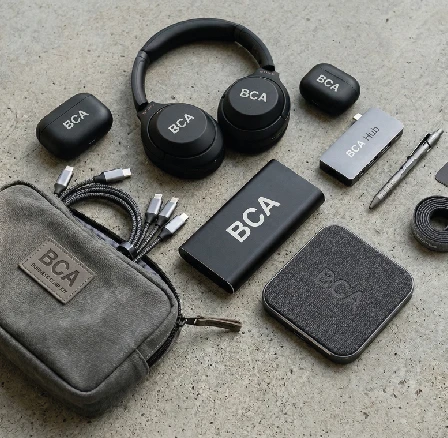
- Power banks — useful for events, business trips, trade shows and mobile working, particularly when battery quality and device compatibility are adequate.
- Multi-charging cables — useful on the road, in the office and during events or business trips, because they reduce compatibility issues between different devices.
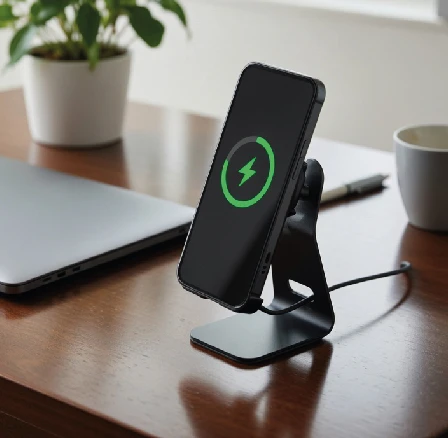
- Wireless charging pads — keep the desk tidy and offer constant brand visibility over time.
- USB hubs and adapters — especially useful for people working on the go, connecting multiple devices or using flexible workstations.
- Webcam privacy covers and video-call accessories — privacy shutters, phone stands and small items that keep the workstation tidy address very concrete needs.
- Desk stands and tech organisers — improve the daily work experience and stay visible far longer than an item chosen purely for novelty.
The rule is simple: the more the item becomes part of the real working routine, the more likely the brand stays visible and linked to a positive experience.
Hybrid working and mobility: where tech products work best
Hybrid working has changed the rules. The home desk, a co-working space or a work bag are contexts where professionals carry only what genuinely earns its place.
Accessories linked to connectivity, charging and workstation organisation have a concrete advantage: they become part of the working routine and provide continuous brand visibility — every day, inside the recipient's professional setting.
The most effective items address real needs for people who travel or work remotely: power banks, multi-charging cables, wireless charging pads that keep the workstation tidy, privacy accessories for video calls. These tools turn a simple giveaway into something actually used throughout the working day.
Common mistakes when choosing tech promotional products
- Choosing on price alone — an inadequate budget in tech almost always leads to products that create dissatisfaction.
- Ignoring the target's routine — not everyone has the same digital habits or the same connectivity needs.
- Judging only the moment of handover — the visual impact at delivery doesn't compensate for no use afterwards.
- Underestimating personalisation — tech surfaces require specific printing techniques to look legible and well-finished.
What we have observed since 2006 about supplies of corporate tech promotional products
One of the most common misjudgements involves low-capacity USB sticks: they are still requested because they are inexpensive, but in many professional contexts they have become less useful than in the past, because file sharing now happens through the cloud more often than through physical media. In the most successful supplies, today, investment shifts towards accessories linked to power, charging and connectivity. Power banks, multi-charging cables, wireless charging pads and tech organisers solve small everyday problems and increase the chance that the item stays visible in the daily working routine.
Always check the certifications
When choosing electronic products, always verify the compliance documentation required for your target market, including CE marking (and UKCA marking for Great Britain where applicable) and RoHS requirements on restricted substances in electronic devices. This isn't only a technical step: it affects perceived safety and brand reliability.
Where to start when choosing a corporate tech product
Before ordering, it's worth answering three questions:
- Who will receive this item, and how do they work?
Hybrid worker, mobile professional, operational team — the working context defines real usefulness. - Is the item consistent with the brand's level and positioning?
An accessory of insufficient quality can undermine even a company with a strong positioning. - If the budget is tight, is it better to change category?
A traditional premium item is almost always preferable to a low-end tech accessory.
To dive deeper into how to handle these choices in an event or trade show context, you can also read the guide on promotional products for trade shows: maximising contact.
You can explore the options available in the promotional products section, compare hi-tech promotional products for desk and charging accessories, or extend the selection with travel accessories when the order is aimed at professionals who travel frequently.
Visual comparison: useful in the routine or forgotten product?
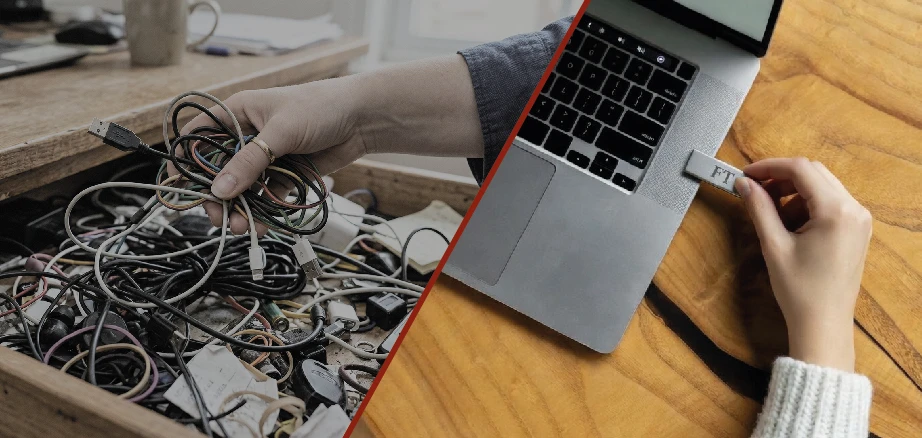
A visual comparison makes it immediately clear where the difference lies between an accessory that truly becomes part of a professional routine and one that remains an interesting idea on paper.
Check real usefulness before ordering
Before choosing, picture the item in a concrete situation for the recipient: desk, travel, meeting, remote working. Ask yourself whether it would genuinely be used every day, or whether it would fade into the background after the first week. This simple check turns a novelty-led decision into a more effective one over time.
Corporate tech promotional products deliver more when they're planned alongside the other elements of the supply — packaging, shoppers, coordinated custom clothing and promotional materials — within a consistent brand communication system. To explore this approach in greater depth, you can also read our guide to the coordinated branded range of promotional products, clothing and packaging, where each item is treated not in isolation but as part of a wider brand communication project.
Frequently asked questions about corporate tech promotional products
Are tech promotional products always more effective than traditional ones?
No. They can be highly effective, but only when they genuinely match the recipient's needs. Without concrete, everyday usefulness, even a tech accessory loses its strength quickly.
Do tech promotional products only suit companies in the digital sector?
No. Mobile devices are used across almost every professional context. Any company can benefit from a tech product, provided that quality and usefulness are consistent with the brand.
How do you personalise a tech accessory effectively?
Tech personalisation needs attention to surface and material. Laser engraving works well on metal and premium finishes; UV printing suits rigid surfaces and delivers precise colours. In both cases, a discreet and well-positioned personalisation is more effective than an invasive design.
In short: corporate tech promotional products are truly worth it when they bring together concrete usefulness, compatibility with the target and quality consistent with the brand — turning a modern item into a tool the recipient uses every day and links over time to the company that gave it to them.
If you're evaluating tech products for an order, an event or a corporate kit, the starting point isn't the category but the question: will this item genuinely be useful to the recipient, in their real working life?
2 Comments
Can you tell us more about this? I\'d love to find out some additional information.
Great article! You explained the value of corporate tech promotional products in a simple and practical way. Choosing the right promotional items can strengthen brand recognition and leave a lasting impression on clients. Pairing these efforts with a trusted <a href="https://liquiddesigns.in/" target="_blank" rel="noopener noreferrer">b2b branding agency</a> can help businesses create a consistent brand experience and achieve better long-term marketing results. Thanks for sharing these helpful insights!
Leave a comment