
In short
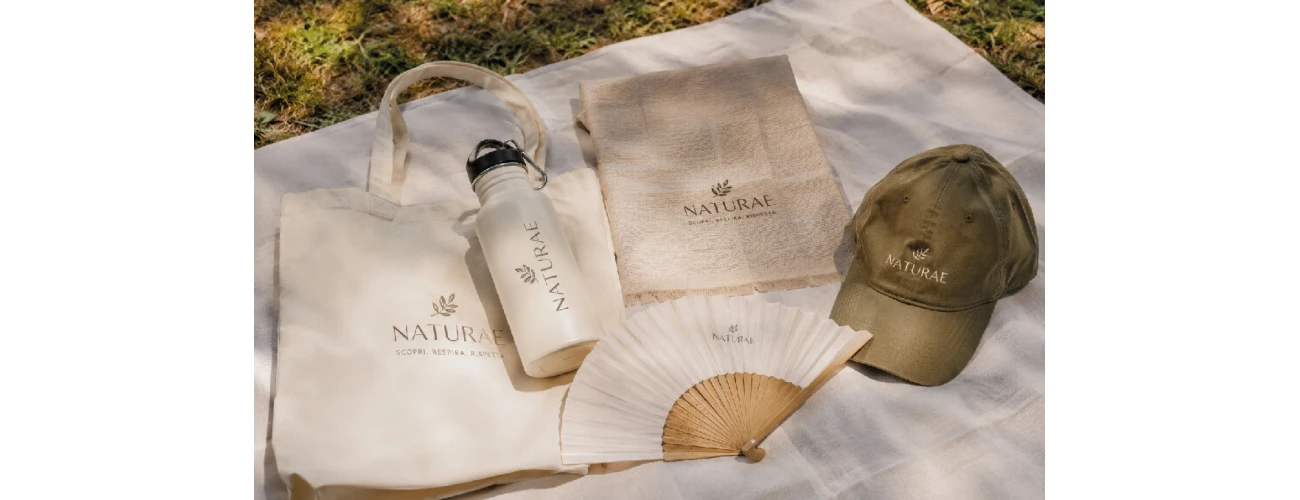
- Outdoor promotional products should be chosen around real usage conditions: sun, transport, humidity, movement and frequent handling.
- Picnics, beach days, light sport and corporate open-air events require different items, materials and print techniques.
- The strongest choices follow a clear sequence: usage context → material → personalisation technique.
- For spring and summer campaigns, it is worth planning ahead, especially for medium to large quantities, coordinated items or specific materials.
Which outdoor promotional products should you choose by context?
- Beach days, beach clubs and summer promotions → summer promotional items, hand fans, beach towels, beach bags and small outdoor accessories
- Picnics, leisure time and lightweight kits → custom cotton tote bags, drawstring bags, water bottles and reusable accessories
- Sports events, team building and active outdoor activities → custom sportswear, hats, technical T-shirts and water bottles
- Corporate days, outdoor trade shows and hospitality → bottles and thermos flasks, umbrellas, lanyards and useful event accessories
- Coordinated outdoor supplies and welcome kits → promotional products, bags, clothing and gift bags selected with a shared logic
A promotional product for picnics, beach days or open-air events does not live in the same conditions as a desk item. It is carried in a bag, placed on sand, used in the sun, handled with damp hands, folded, washed and moved from one person to another.
For this reason, an outdoor promotional product should not be chosen only because it looks “summery” or appealing. It needs to fit the place where it will be used, the material on which the logo is applied and the personalisation technique best suited to that surface.
The difference between a useful branded supply and one that is rarely used often comes from a simple sequence: usage context → material → personalisation technique. When these three elements are aligned, personalised promotional products are more likely to follow the recipient into their leisure time, rather than being handed out and forgotten at the event.
Picnics, beach days and outdoor events: three contexts to distinguish
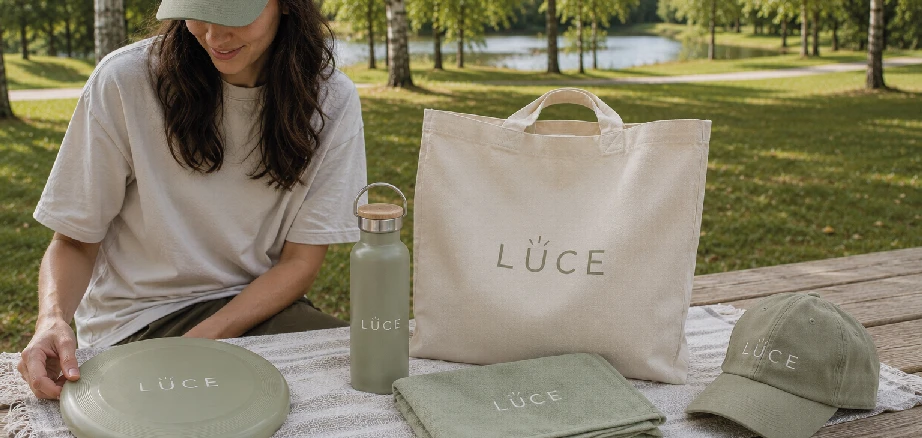
The first step is not choosing the item, but understanding where it will be used. A promotional product for a beach day, a corporate sports event or an open-air sponsorship responds to different needs.
Picnics and beach days: lightweight, portable and reusable items
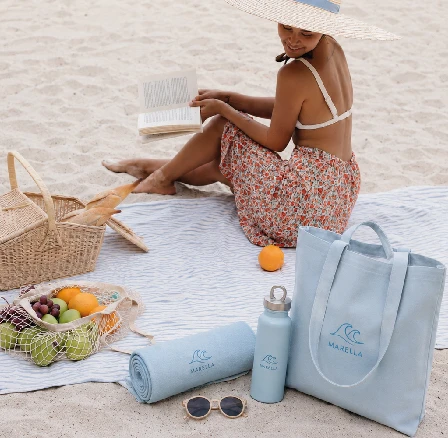
In contexts such as picnics, days by the sea, beach clubs, campsites or light tourism activities, simple items that are easy to carry work well: cotton shoppers, tote bags, drawstring bags, water bottles, microfibre towels, hand fans, frisbees, lunch boxes, reusable cutlery and small travel accessories.
Here the promotional product is often used straight away. A custom cotton tote bag can hold a towel, water bottle and information material; a drawstring bag can accompany the day; a promotional hand fan can become useful during a hot event; and a water bottle keeps the brand present without feeling intrusive.
Sport and open-air activities: comfort, lightness and frequent use
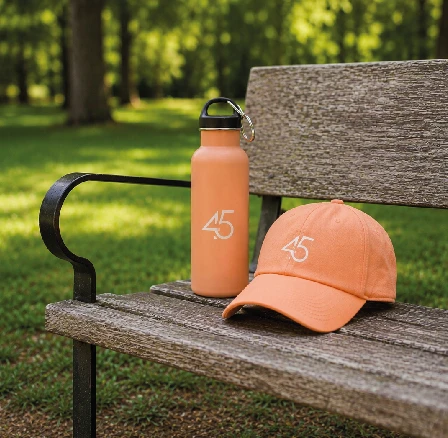
For running, light trekking, cycle tourism, corporate tournaments, sports days or outdoor team building, the item needs to be comfortable to use and easy to carry. Branded bottles and thermos flasks, custom T-shirts, custom hats, sports headbands, microfibre towels and lightweight drawstring bags are often more relevant than purely decorative giveaways.
When wearable items are involved, the choice should also be connected to fabric type and personalisation. T-shirts, caps and other custom sportswear items should be assessed according to season, event duration, comfort and logo readability.
Outdoor hospitality and corporate events: immediate usefulness and brand recall
In beach clubs, hotels, resorts, outdoor trade shows, festivals, sponsorships and corporate open-air days, the promotional product has a dual role: being useful at the moment it is handed out and leaving a memory of the brand after the event.
In these cases, promotional hand fans, lanyards, fabric or silicone wristbands, cork drink tags, coasters, umbrellas, caps, lightweight shoppers and small coordinated sets can work well. The right choice depends on audience, location and the duration of the experience.
Materials for outdoor promotional products: what to assess before ordering
The choice of material is one of the most important steps. For outdoor use, weight, transport, light exposure, contact with water or humidity, usage frequency and type of personalisation all matter.
Textiles: cotton, non-woven fabric, R-PET and microfibre
- Cotton 140-220 gsm: suitable for shoppers, tote bags and promotional T-shirts. Lighter weights can work for high-turnover events; heavier weights create a more structured perception.
- GOTS organic cotton: useful when sustainable positioning is part of the message. Certification should be checked explicitly, not assumed.
- Non-woven fabric 80-120 gsm: lightweight and practical for medium to large quantities, one-off events and promotional distribution. Custom non-woven bags are less suitable when prolonged use is the main objective.
- R-PET: recycled polyester suitable for drawstring bags, lightweight backpacks and accessories. It can be interesting when the environmental message is consistent with the project.
- Microfibre: common for beach towels and sports towels because it takes up little space and dries quickly.
Plastics, metals and natural materials
- PP, polypropylene: often used for frisbees, hand fans, paddles and small rigid items. It is lightweight and suitable for promotional products handed out at events.
- LDPE and HDPE: materials used for lightweight bags and carriers. Thicknesses of 60-100 microns are standard references for many plastic bag supplies.
- Aluminium: suitable for lightweight bottles, camping mugs and metal accessories. It can work well with laser engraving.
- Stainless steel: suitable for thermal bottles and more durable accessories, especially when the product needs a more solid perception.
- Bamboo: used for cutlery, cups, chopping boards and small picnic accessories. It requires consistency between the natural message and product quality.
- Cork: interesting for drink tags, coasters and hospitality details, especially when a warm and natural finish is desired.
- FSC wood: relevant for place cards, chopping boards and picnic accessories when certification is part of the supply message.
Practical table: material, context and technique
| Material | Recommended context | Techniques to assess |
|---|---|---|
| Cotton 140-220 gsm | Shoppers, tote bags, event T-shirts | Screen printing, DTF |
| Non-woven fabric 80-120 gsm | One-off events, medium to large quantities | Screen printing |
| R-PET | Drawstring bags, backpacks, lightweight accessories | DTF, sublimation depending on support |
| Microfibre | Beach towels, sports towels | Sublimation |
| Aluminium | Bottles, mugs, metal accessories | Laser engraving, UV printing |
| Stainless steel | Thermal bottles, outdoor cutlery | Laser engraving |
| PP, polypropylene | Frisbees, hand fans, paddles | Pad printing, UV printing |
| Bamboo, cork, FSC wood | Hospitality, picnics, natural accessories | Laser engraving, UV printing |
Personalisation techniques suitable for outdoor promotional products
The print technique should be chosen after the material, not before. A very detailed graphic, a curved surface or a technical fabric can completely change the final result.
- Screen printing: suitable for shoppers, tote bags, cotton T-shirts and non-woven bags, especially for logos with a few solid colours and medium to large quantities.
- DTF, Direct To Film: useful on textile promotional products, drawstring bags, backpacks and soft supports when finer details or more complex graphics are required.
- Sublimation: suitable for polyester and microfibre, for example towels, lanyards and some technical textiles.
- Laser engraving: worth assessing on metal, wood, bamboo and cork when a subtle and durable personalisation is required.
- Pad printing: useful on small rigid items, curved surfaces or plastic promotional products such as frisbees, hand fans and accessories.
- UV printing: suitable for rigid surfaces and items where a more visible full-colour result is needed.
Common mistakes in outdoor promotional supplies
- Choosing the technique before defining the material and usage context.
- Using the same item for beach days, sport, hospitality and corporate events without adapting the choice.
- Underestimating transport, humidity, sun exposure and frequent handling.
- Printing logos that are too small or too detailed on curved, soft or uneven surfaces.
- Making sustainability claims without checking explicit certifications such as FSC, GOTS or GRS.
- Ordering too close to the season, reducing the margin for choosing more suitable materials and techniques.
Which promotional product to choose according to the objective
Not all outdoor promotional products have the same role. Some make the brand visible during the event, others focus on everyday usefulness, while others enhance the leisure experience.
| Objective | Recommended promotional products | Why they can work |
|---|---|---|
| Visibility during the event | Caps, T-shirts, drawstring bags, hand fans | They remain visible in groups, during movement and in event photos. |
| Everyday usefulness | Water bottles, shoppers, lunch boxes, compact power banks | They can be reused after the outdoor day is over. |
| Leisure and relaxation | Towels, frisbees, lightweight blankets, hand fans | They connect the brand with informal and pleasant moments. |
| Coordinated outdoor kit | Drawstring bag, water bottle, cap, information material | It makes the handout more organised and helps create a more curated perception. |
Staff, clients and participants: the recipient changes the choice
A promotional product designed for staff does not have the same role as one intended for the final customer. Before ordering, it is useful to identify who will actually use the item.
For staff
For staff, recognisability, comfort and practicality matter. Caps, lightweight T-shirts, drawstring bags, water bottles and small organisational accessories can help during outdoor events, open-air trade shows and corporate days. The item should not only display the logo: it should make the working day easier.
For clients and guests
For clients, guests and visitors, simple items that are easy to take away and reuse usually work best: shoppers, water bottles, towels, compact power banks, hand fans and small travel accessories. Perceived value depends heavily on the moment of handout and on consistency with the overall experience.
For coordinated kits and handouts
When the outdoor promotional product is handed out together with other materials — for example a drawstring bag, bottle, cap, event programme, voucher or packaging supplies for presentation — the order in which the items are presented can also contribute to overall perception. The supply does not need to become complex: often it simply needs to feel more organised and consistent.
Sustainability: when it is genuinely relevant
In outdoor promotional products, sustainability is particularly visible because the item is often associated with nature, leisure time, beaches, parks and open-air activities. For this reason, generic claims should be avoided.
Materials such as organic cotton, R-PET, bamboo, cork and FSC wood can be interesting, but they should be assessed together with certifications, intended use and the real durability of the item. To explore this topic further, the guide to eco-friendly promotional products helps distinguish between materials, certifications and commercial claims.
When to order promotional products for the outdoor season
For spring and summer events, it is worth planning ahead of the scheduled date. This is especially true when you need medium to large quantities, multiple coordinated items, specific materials or more complex personalisation.
Planning ahead is not only about meeting delivery times. It also helps you choose the most suitable item, check the artwork proof, verify logo readability and avoid falling back on faster but less appropriate solutions.
The questions to ask before ordering
Before requesting a quote, it is useful to answer these questions:
- Where will the promotional product be used? Beach day, picnic, sports event, outdoor trade show, hospitality or corporate day.
- Who will receive it? Staff, clients, guests, participants, families or a general audience.
- Does it need to be used immediately? If so, it should be lightweight, intuitive and easy to carry.
- Which conditions will it face? Sun, humidity, water, washing, frequent transport or occasional use.
- Will the logo be readable? Surface, colour, position and print technique should be checked before production.
- Is the choice consistent with the rest of the supply? Colours, message, packaging, bags and clothing should all speak the same visual language.
What we have observed since 2006 in outdoor promotional supplies
In outdoor supplies, the recurring critical point is rarely only the quality of the individual product. More often, it is the consistency between usage context, material and personalisation technique. We often see companies choose interesting items that are not always suited to the moment in which they will be used: a T-shirt too light for an intense sports event, a bottle not aligned with the duration of the day, or a cap with a logo that is not readable from a distance.
In the most successful supplies, we see a sequential approach: first clarify where and how the item will be used, then choose the material, and finally the technique. This helps reduce the risk of promotional products being handed out but rarely used, keeping the brand present in a more natural way.
How outdoor promotional product supplies work with Shop for Shop
Shop for Shop is an Italian company active since 2006 in corporate personalisation and works as a direct supplier for companies, shops, events and commercial activities that want to order branded promotional products in a clear and coordinated way.
For an outdoor supply, it is useful to start from a few concrete details: distribution period, quantity, audience type, usage context, logo to apply and indicative budget. From these elements, the most suitable items, materials and personalisation techniques can be assessed.
When the supply includes several items — for example a drawstring bag, water bottle, cap and information material — it is worth keeping colours, logo and message consistent. Even with outdoor promotional products, the objective is not to create isolated items, but a small and coherent brand communication system. To explore this wider logic, you can also read the guide on how to create a coordinated branded range across promotional products, clothing and packaging.
Before production, the artwork proof makes it possible to check logo position, proportions and readability. Online quote calculation and delivery planning help keep the supply under greater control, especially when the order is linked to a seasonal deadline or to an already scheduled event.
FAQ about personalised leisure and outdoor promotional products
Which promotional products work best for picnics and beach days?
For picnics and beach days, cotton shoppers, tote bags, drawstring bags, water bottles, microfibre towels, hand fans, frisbees, lunch boxes and small travel accessories are often useful. The choice depends on audience, season and distribution method.
Which promotional products should you choose for corporate open-air events?
For corporate open-air events, caps, lightweight T-shirts, drawstring bags, water bottles, hand fans, lanyards and coordinated kits can work well. For staff, recognisability and practicality matter; for clients and guests, perceived usefulness is especially important.
Which materials are most suitable for outdoor promotional products?
It depends on the context. Cotton, non-woven fabric, R-PET and microfibre are common in textiles; aluminium and stainless steel are used for bottles and metal accessories; bamboo, cork and FSC wood can suit natural or hospitality-focused supplies.
Which print technique should be used for outdoor promotional products?
The technique should be chosen according to the material. Screen printing and DTF are common on textiles, sublimation on polyester and microfibre, laser engraving on metal, wood, bamboo and cork, and pad printing or UV printing on many rigid items.
Can outdoor promotional products be eco-friendly?
Yes, when materials, certifications and real use are consistent. FSC, GOTS and GRS are useful references, but any sustainability claim should be supported by verifiable information, not just by a generic label.
When should promotional products for spring or summer events be ordered?
It is worth planning ahead of the event date, especially for medium to large quantities, coordinated kits, specific materials or complex personalisation. This leaves more room for artwork proofing, production and delivery.
Leave a comment