
In short
- An eco-friendly promotional product is not credible just because it is presented as "green": materials, certifications, practical use and durability all matter.
- Sustainability in corporate branding works when it is verifiable and consistent, not when it stays a simple communication label.
- A product that is rarely used or poorly suited to the recipient is not a sustainable choice: it consumes resources without building value.
- The most sustainable promotional product is often the one that actually gets used, remembered and credibly associated with the brand.
The word "eco-friendly" has become one of the most widely used in the world of branded promotional products. For this reason, it is also one of the easiest to empty of meaning. Today nearly every catalogue has an eco section. Far less often, however, is it explained how to recognise a genuinely sustainable product from a purely decorative choice.
We are writing this guide because eco-friendly promotional products are still chosen too often as a quick response to a trend. In reality, this decision involves materials, certifications, durability, practical use and consistency with the brand's positioning. Sustainability is not declared: it is verified through the choice itself.
This question comes up whenever a company wants to refresh its branded merchandise with greater attention to environmental impact, but struggles to distinguish between what carries genuine value and what only carries narrative value. This is where the difference between a credible choice and a surface-level one becomes visible.
An eco-friendly promotional product is not automatically a better choice. It can be, if it is selected with judgement. It can also become a mistake — both environmental and communicative — if it is chosen only to associate the brand with a green image without checking whether that promise holds up in reality.
For this reason, when evaluating eco-friendly promotional products for a branded merchandise order, the first question is not "which material is the most sustainable?", but "will this item actually be used by the person who receives it?"
Why product sustainability is more complex than it looks
The lifecycle of a branded promotional item is different from many consumer products. It is produced, personalised, distributed and, in many cases, forgotten in a drawer or thrown away soon after.
This applies to "eco" promotional items too. An item in bamboo, organic cotton or recycled plastic that ends up unused right after delivery is not a sustainable choice: it has consumed resources, energy and materials without generating real-world use or lasting value for the brand.
The sustainability of a branded promotional item is measured on at least three levels:
- the material — where it comes from, how it was produced and whether it is supported by verifiable references
- practical use — whether the item actually enters the recipient's habits or is set aside immediately
- brand consistency — whether the choice reflects authentic positioning or remains only an image statement
All three levels matter. A good material on a useless item is not enough. A useful item without verifiable elements is not enough. A useful and documented item, but completely disconnected from the brand distributing it, still risks looking weak in credibility.
Signals that a "green" choice is not really strategic
- The item is described as eco, but has no verifiable references — without documentation, the label is not enough.
- The material is sustainable, but the item has no practical use — the product does not enter the recipient's routine.
- The choice follows the trend, not the brand's consistency — the message looks decorative rather than credible.
In all these cases, the result is wasted resources, wasted budget and reduced perceived reliability.
The three criteria to check before choosing
A strategic choice is not the one that looks most sustainable on paper. It is the one that holds up to three very concrete questions.
1. Is the material verifiable?
Bamboo, organic cotton, recycled plastic, cork, certified paper or biodegradable materials can all be valid options if they are supported by verifiable references. FSC for wood and paper-based products, GOTS for organic textiles and GRS for recycled materials are useful references to ask the supplier for. If what is being declared cannot be documented, you are not yet making a sustainable choice: you are making a choice that needs to be verified.
2. Does the item have a real use?
An eco-friendly promotional item that does not get used has already exhausted its impact at the moment it was produced and delivered. Sustainability grows when the product genuinely enters the recipient's day.
On this point, it can also be useful to read why so many promotional products fail (and how to avoid it): the reasons a traditional promotional item is not used apply, very often, to an eco one too.
3. If you remove the "green" label, is it still a good item?
This is one of the most useful questions to ask. If a product seems interesting only as long as you describe it as sustainable, its real value is probably weak. A good promotional item needs to remain consistent, useful and well chosen even before any environmental narrative.

Which eco-friendly promotional products work best in practice
There is no universal list that works for every brand. There are, however, some product families that, in many contexts, combine practical use, durability and message credibility well.
- Reusable water bottles and containers — they work when the target audience genuinely integrates them into their routine. To go deeper, you can also read the guide on custom water bottles: how to choose.
- Notebooks and diaries in certified or recycled paper — they make sense if the recipient writes, takes notes or actually uses them in daily work.
- Reusable shopping bags and tote bags — they work when they are reused over time, not when they are distributed in large quantities without a clear purpose. In these cases, it makes sense to also evaluate custom shopping bags, choosing format, material and intended reuse.
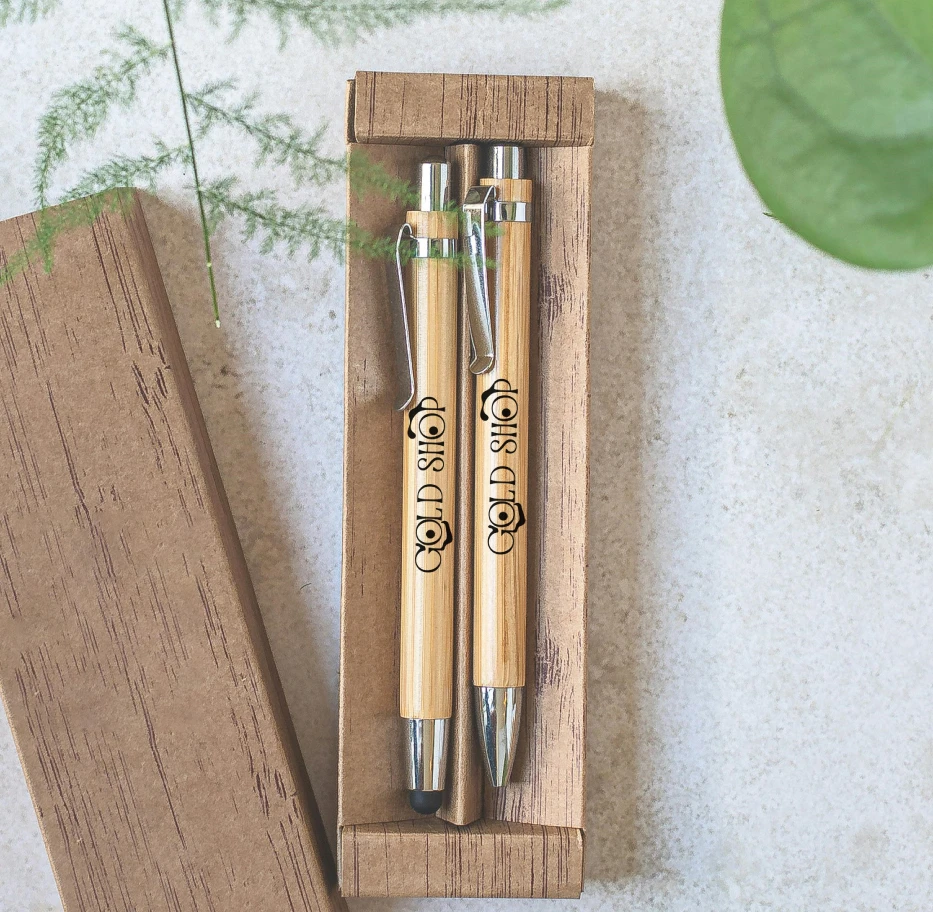
- Pens and small accessories in recycled materials — they only make sense if they maintain a good user experience and a quality consistent with the brand.
In every case, the question stays the same: who will receive this item, and at what moment of their day will they actually use it?
What we have observed since 2006 about eco-friendly branded merchandise
In our experience with branded merchandise projects, one of the most useful signals to watch is this: when an item combines different materials glued or assembled in unclear ways, the declared sustainability becomes much weaker. An item that looks natural on the surface but, at the end of its life, cannot be handled in a credible way risks communicating image rather than substance. For this reason, when choosing an eco-friendly item, asking "what material is it made of?" is not enough: it is also worth asking "how is it really made, how long will it last, and will it actually be used?".
Unintentional greenwashing: when good intentions are not enough
Not all greenwashing is deliberate. It often comes from a choice made with good intentions but without the necessary checks.
The most common situations are these:
- choosing a natural material that has not been verified — the name of the material, by itself, does not guarantee supply chain or sustainability
- distributing excessive quantities of "eco" items that are barely useful — the real impact stays high if the items do not get used
- communicating sustainability without being able to document it — the brand exposes itself to doubts that would be better avoided
In these cases, good intentions are not enough to make the choice credible. Verification, proportion and consistency are needed.
Where to start for a more credible choice
Before selecting an eco-friendly promotional product, it is worth answering three very practical questions:
- Can the supplier provide verifiable references on materials?
If the answer is vague, the choice needs deeper investigation. - Will the recipient genuinely use this item in their routine?
A useless item does not become sustainable just because of the material. - If you remove the "green" label, is this product still a good choice?
This question helps to understand whether the value of the item is real or only narrative.
To compare different options, you can also start from the promotional products section and evaluate categories based on usefulness, durability and consistency with your brand.
A visual comparison: a well-chosen eco product or a green choice for show?
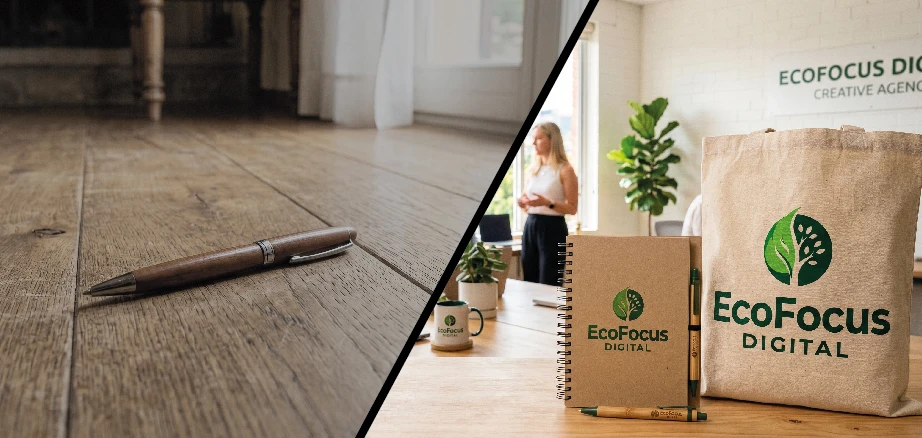
A visual comparison helps to distinguish immediately between a product that brings usefulness, consistency and verifiable references with it, and one that uses the green language only as image.
Run the Eco-Audit on your next order
Before confirming an eco-friendly promotional item, put the product you are evaluating to this 3-question test:
- Use test: check whether the item will genuinely enter the daily routine of the person receiving it, or whether there is a risk it will remain unused.
- Materials test: verify whether the supplier can clearly document materials, certifications or verifiable references.
- End-of-life test: evaluate whether, when the product is no longer needed, it can be disposed of, recycled or handled responsibly, or whether it is made from materials that are difficult to separate.
If even one of these answers stays uncertain, it is worth reviewing the selection before confirming the order.
Eco-friendly promotional products as part of a coordinated branded range
Shop for Shop is an Italian company operating since 2006 as a direct supplier of promotional products, clothing, shopping bags and packaging for companies, shops and events. Even when choosing eco-friendly promotional items, the goal is not to add a green label to a generic product, but to place the item inside a consistent brand communication system: branded merchandise, staff clothing, shopping bags and packaging that all speak the same language and tell the same positioning story. Sustainability becomes more credible when it is not the message of a single item, but a choice that runs through the whole branded range.
Frequently asked questions about eco-friendly promotional products
Is a product made of natural material always more sustainable than a conventional one?
No. Without checks on supply chain, usefulness and durability, the material alone is not enough to define the real sustainability of the item.
How can you recognise a genuinely eco-friendly promotional product?
Through a combination of elements: materials supported by verifiable references, practical use for the recipient and consistency with the context in which the product will be distributed.
Is it possible to do green marketing without risking greenwashing?
Yes, if communication stays anchored to verifiable facts and consistent choices. Declaring less and showing more is almost always the more credible path.
In short: choosing eco-friendly promotional products with judgement means verifying materials and certifications, selecting items that will actually be used and making sure the environmental message is consistent with the brand. Only this way does sustainability stop being a trend and become a choice that holds up over time.
Leave a comment