
At a glance
- Digital textile printing has moved on from transfers that were often stiff and plasticky to technologies that handle complex artwork with a far more refined finish.
- With DTF printing, the design is printed onto film and then heat-applied to the garment: full colour, gradients and fine detail are now possible, even on dark garments.
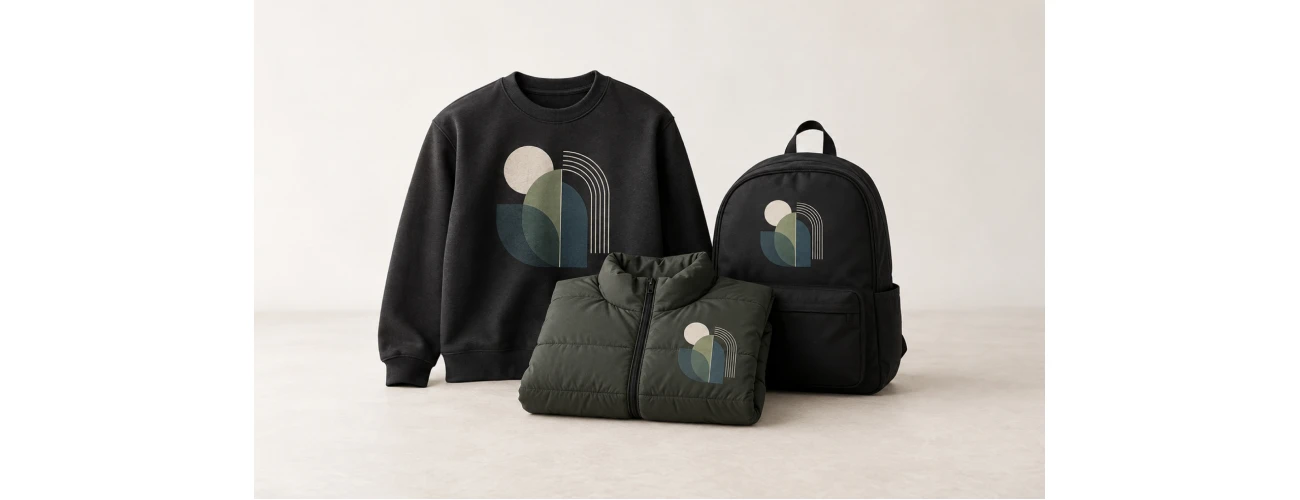
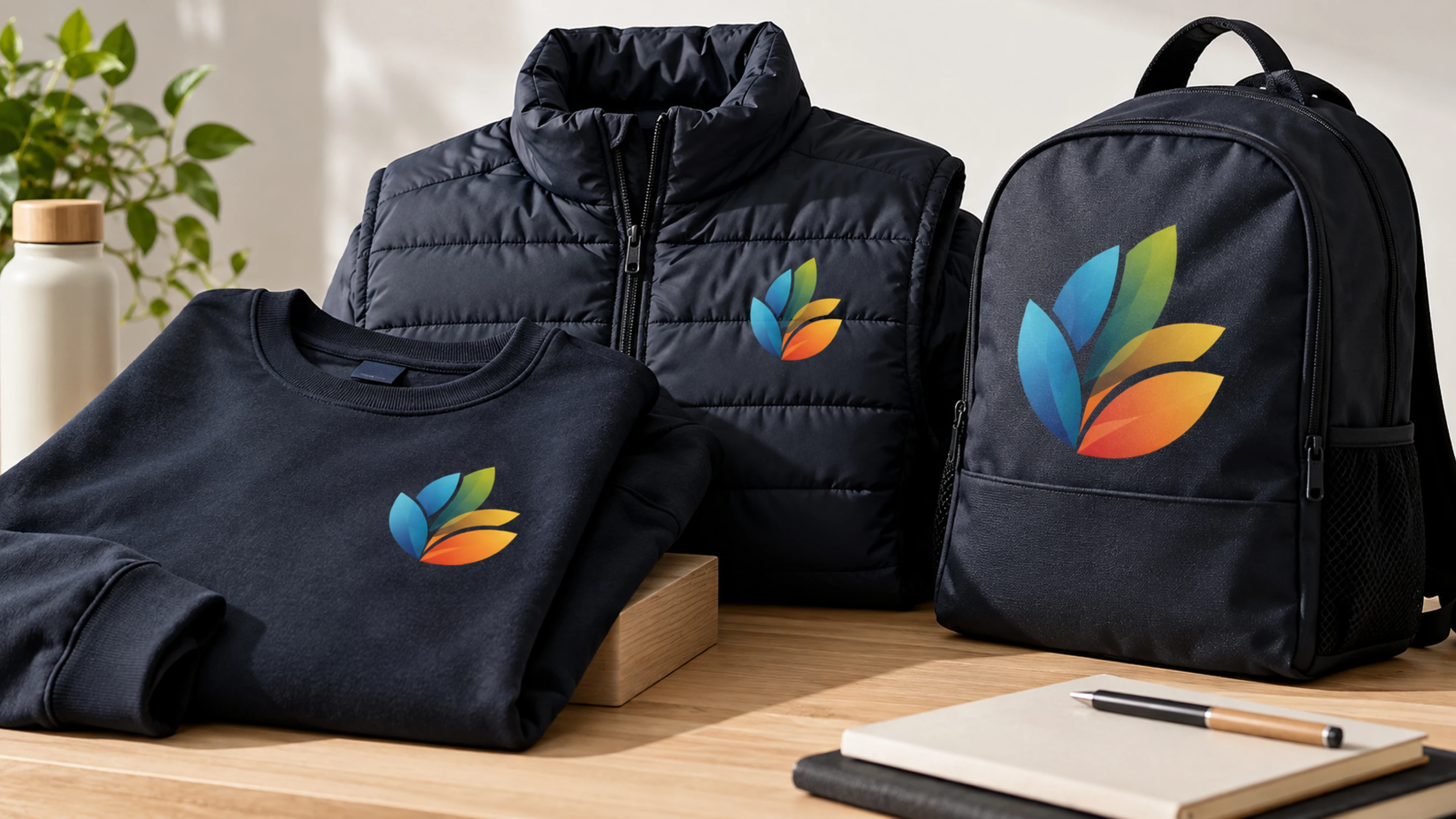
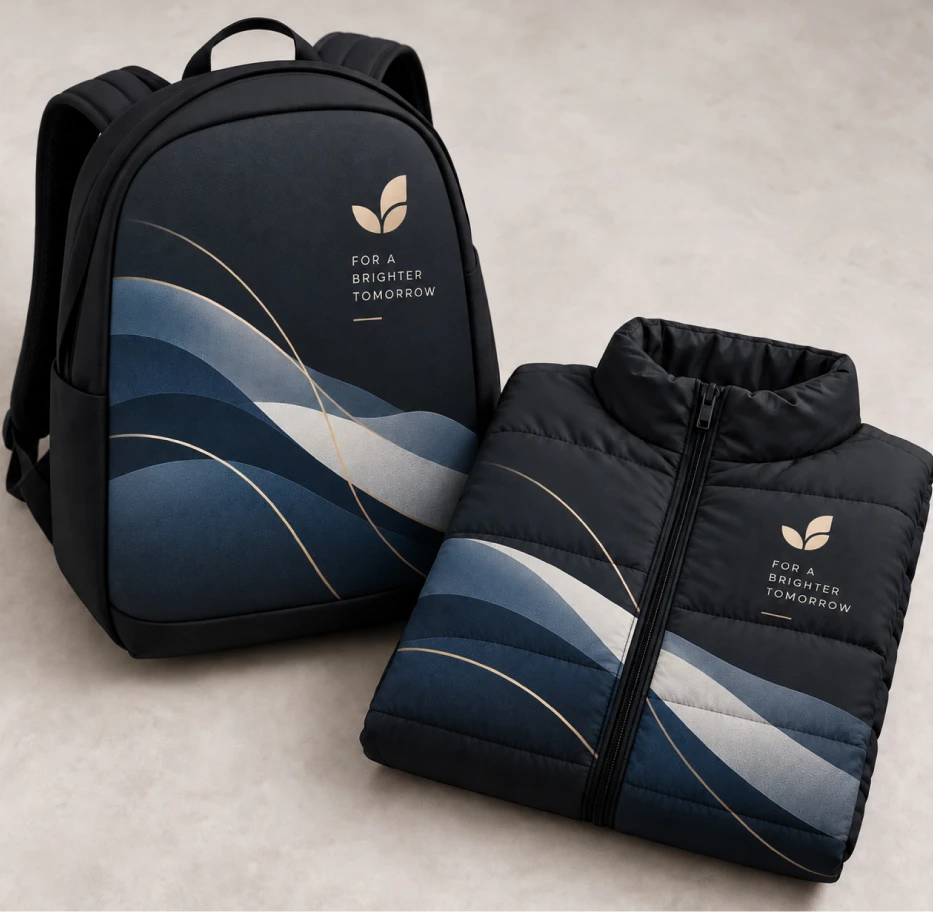
- Items that were once difficult to brand with complex artwork, such as jackets, backpacks and fabric tote bags, can now be personalised.
- The result depends on file preparation, print size and the item itself, which is why the artwork is adapted before production.
Which products is DTF printing used on today?
- T-shirts, sweatshirts and clothing for staff and events → branded clothing
- Outerwear for the colder months → jackets, coats and gilets
- Backpacks for welcome packs, business travel and giveaways → personalised backpacks
- Fabric tote and shopping bags → tote bags
DTF printing has transformed digital textile printing: it reproduces complex, full-colour artwork and, when the design and print area are set up correctly, can deliver a softer hand feel than some older digital transfers, even on items such as jackets and backpacks. Until a few years ago, anyone wanting a logo with gradients, multiple colours or fine detail on a textile item had to choose between technical limitations and aesthetic compromise. Today the options are much wider, but they still depend on how the artwork is prepared and on the item it is applied to.
In this guide we look at where digital textile printing started, how DTF technology works, what has really changed for anyone ordering branded clothing and accessories, and which limitations remain.
Where digital textile printing started
For a long time, textile branding relied mainly on screen printing and embroidery. Screen printing delivers solid colours and good durability, but needs a separate screen for each colour, which makes it less practical for artwork with gradients or for short print runs. Embroidery is hard-wearing and looks premium, but cannot reproduce gradients or very fine detail.
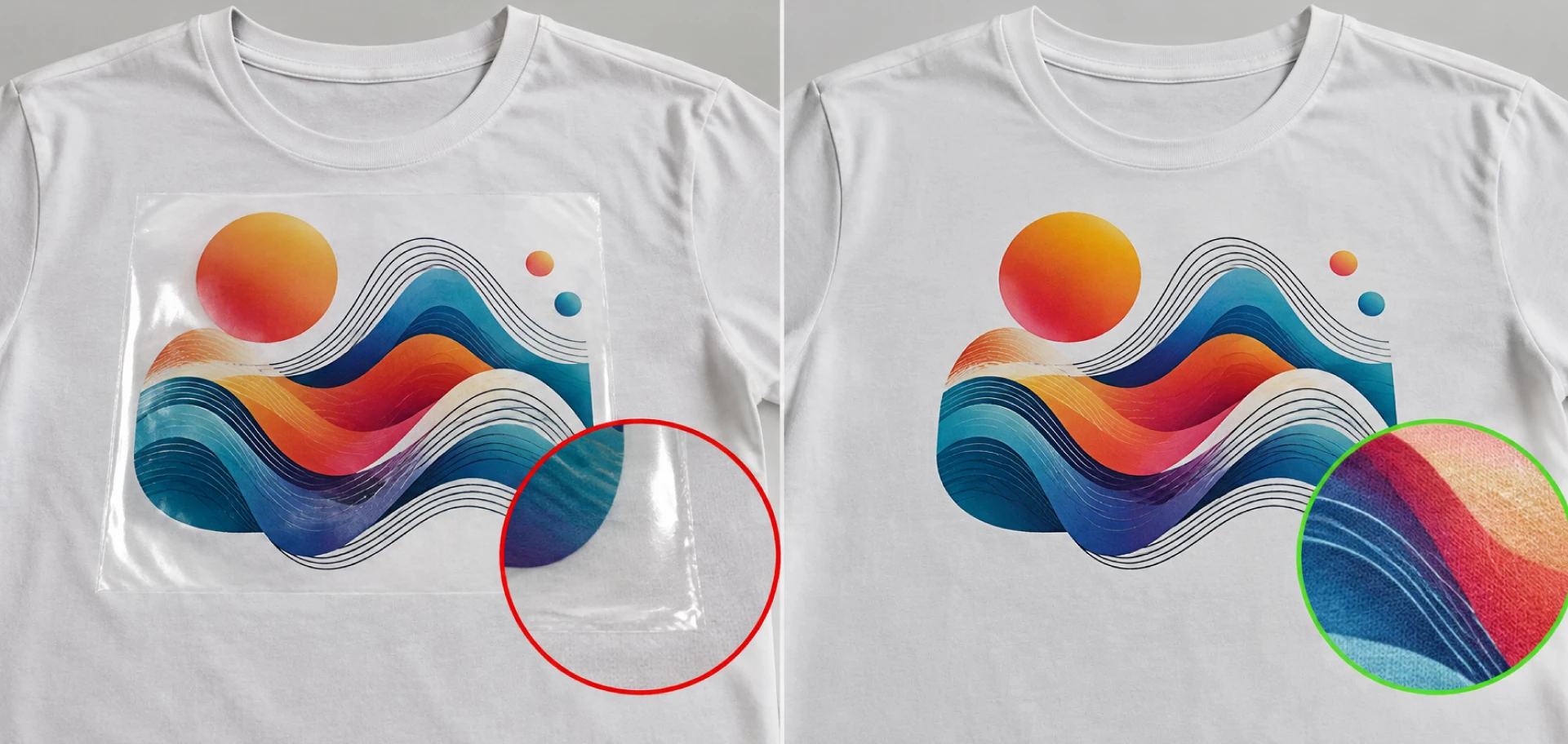
Earlier digital options also included digital transfers, which could print full-colour images but often left a stiff layer on the fabric, with a plasticky feel and, in some cases, a visible border around the design. On a T-shirt that might be acceptable; on a technical jacket or a backpack, a quality finish was hard to achieve.
How DTF printing works
DTF stands for Direct To Film. The process has four stages:
- Printing onto film — the design is printed with textile inks onto a transparent film, with a white underbase where needed to support the colours.
- Adhesive powder — a hot-melt adhesive powder is applied to the print while the ink is still wet.
- Curing — heat melts the powder and fixes the design on the film.
- Transfer — the film is positioned on the garment and heat-pressed; once the film is peeled away, the transferred layers of the design remain on the fabric, without the visible background box typical of some traditional transfers.
The practical advantage is that printing happens on the film rather than directly on the fabric, so the technology adapts to different materials and constructions, from cotton garments to polyester and blends, as well as compatible textile accessories. To understand how different fibres affect comfort and print quality, see our guide to materials for customised clothing.
What has really changed for buyers
Complex artwork, not just simple logos
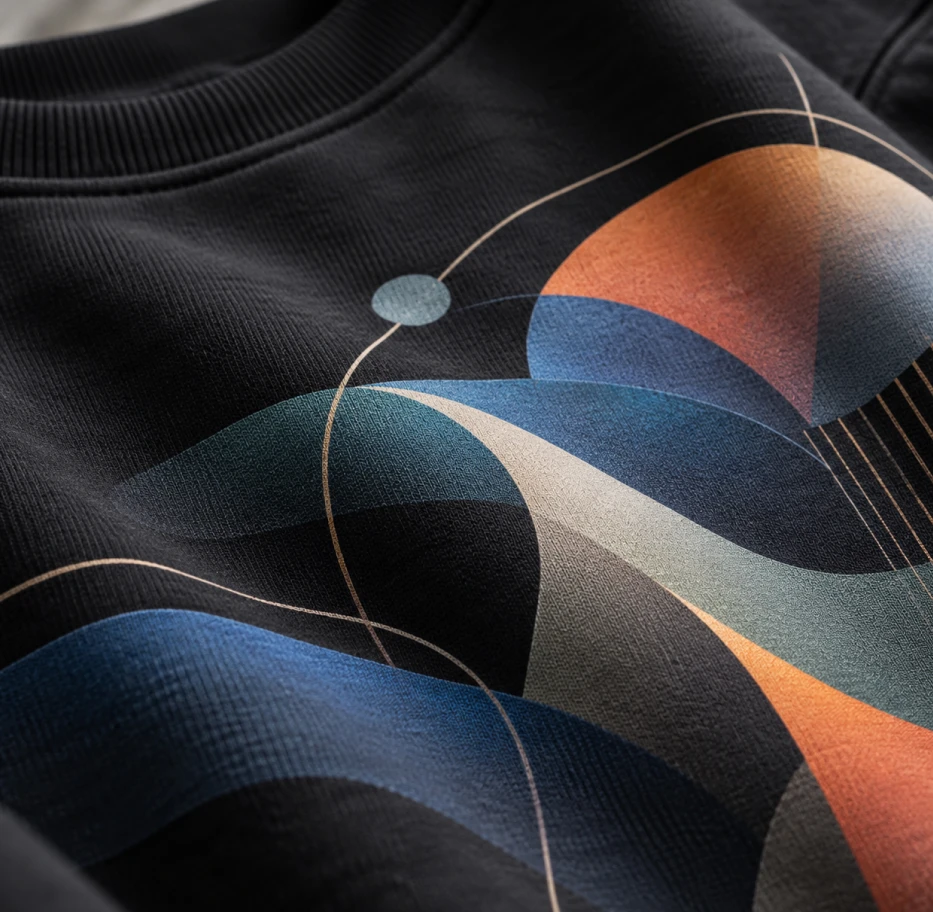
Gradients, multiple colours, stylised photographs and fine detail can all be handled in the same digital workflow, without setting up a separate screen for each colour. Artwork that would have needed several screens for screen printing becomes manageable with DTF even in small quantities: orders for branded clothing start from 5 pieces.
A softer hand feel
This is the most noticeable difference compared with older transfers. With a properly prepared file and a print area sized to the garment, the result feels softer and can come close to screen printing, without the plastic layer or the visible background box of some earlier transfers. The final hand feel still depends on the artwork, ink coverage, film, adhesive and garment: large, solid designs remain more noticeable to the touch than those with open areas.
Dark garments and vibrant colours
The white underbase printed beneath the colours keeps the design bright even on dark fabrics, where techniques without a white base lose impact.
Items that used to be difficult
The biggest change concerns what can be printed. On jackets and gilets, backpacks and fabric tote bags, complex artwork was until recently hard to produce to a good standard. Today it can be assessed on the specific model, taking into account seams, pockets, padding and fabric finishes. DTF widens the range of printable items but is not universal: the item must withstand the heat and pressure of the transfer, and stretch, treated or heat-sensitive fabrics need checking first.
DTF, DTG and sublimation: the digital technologies in the industry
DTF is not the only digital technology for textiles. Understanding the differences helps explain why it has spread so quickly in promotional branding.
| Technology | How it works | Typical items | Main limitations |
|---|---|---|---|
| DTF (Direct To Film) | Printing onto film, then heat transfer to the garment | Cotton, polyester, blends; garments and textile accessories | Large, solid designs more noticeable to the touch |
| DTG (Direct To Garment) | Inkjet printing directly onto the garment | Generally garments with a high cotton content | Variable results on synthetic fibres; pre-treatment needed for dark garments |
| Sublimation | Heat drives the ink into polyester fibres | Light-coloured polyester garments | Not suitable for cotton or dark garments |
At Shop for Shop, digital textile printing is carried out in-house using DTF technology. For flat-colour logos with few colours and larger runs, screen printing remains a good choice; for a full comparison of methods, see our guide to logo printing techniques.
Preparing artwork for DTF printing
Print quality is largely decided before printing. Complex artwork works when it is adapted to the item and to the actual print size:
- File — ideally a vector file or a high-resolution image with a transparent background.
- Detail — very thin lines and very small text should be checked at actual print size, not on screen.
- Colours — specify your brand reference colours, especially if the design needs to match other printed items.
- Solid areas — breaking up very large solid areas helps keep the hand feel soft.
Before production, the artwork is adapted for printing and sent as a free digital proof, so you can check the design, proportions and position on the chosen garment. The proof checks the visual layout but does not replace checking fabric and print compatibility: for clothing, you can request an unbranded sample to assess the garment before placing your order.
Common mistakes with digital textile printing
- Sending a low-resolution logo, or one with a solid background, designed for screen rather than print.
- Choosing a very large, solid print area without considering how it will feel on the garment.
- Assuming every digital technology works on every fabric.
- Ignoring seams, pockets and zips when positioning the design on jackets and backpacks.
- Not keeping the care instructions and passing them on to the people wearing the garment.
How to order a DTF-printed garment: a five-step process
- Choose the item and its use. Pick the item based on how it will actually be used: a T-shirt or sweatshirt for events and staff, a jacket for outdoor wear, a backpack or tote bag for giveaways.
- Prepare the artwork file. Send a vector or high-resolution file with a transparent background and check text and detail at actual print size.
- Decide on size and position. Size the print area to the garment: large, solid designs affect the hand feel more than those with open areas.
- Approve the digital proof. Check the design, proportions and position on the free digital proof before production starts.
- Follow the care instructions. Keep the care instructions for the fabric and the print, and pass them on to the people wearing the garment.
What we have seen in digital textile printing since 2006
The most obvious change is in the artwork we can print today. In our experience, complex designs properly adapted for printing can achieve a hand feel close to screen printing, without the plasticky effect we used to see with some older digital transfers. And on items such as jackets and backpacks, we can now digitally print complex artwork that we could not achieve to the same standard with the solutions available in the past.
Shop for Shop is an Italian company established in 2006 and a direct supplier of branded clothing, promotional products and tote bags, with DTF printing carried out in-house. Digitally printed items fit seamlessly with the rest of your order, so every branded garment or accessory becomes part of a consistent brand communication system.
Frequently asked questions
What is DTF printing?
DTF stands for Direct To Film. The design is printed with textile inks onto a film, coated with a hot-melt adhesive powder, cured with heat and then transferred to the garment with a heat press. Finally, the film is peeled away, leaving the transferred design on the fabric.
What is the difference between DTF printing and older digital transfers?
Older digital transfers often left a stiff layer and a plasticky feel, sometimes with a visible border around the design. With DTF printing, the design is transferred without the visible background box typical of some older transfers and, with a properly prepared file, the result can feel softer and come close to screen printing. The final hand feel still depends on the artwork, ink coverage and garment.
Which garments can DTF printing be used on?
T-shirts, sweatshirts and other garments in cotton, polyester or blends, as well as items that were once difficult to brand with complex artwork, such as jackets, backpacks and fabric tote bags. Compatibility should always be checked on the specific model, based on fabric, finishes and print area.
Can DTF printing be used on any fabric?
No. DTF works on many fabrics, from cotton to polyester and blends, but it is not universal. The item must withstand the heat and pressure of the transfer; stretch, treated or heat-sensitive fabrics should be checked on the specific model.
DTF printing or screen printing: which is better?
It depends on the artwork and the quantity. DTF printing suits full-colour artwork, gradients, fine detail and short runs; screen printing remains the right choice for flat-colour logos with few colours and medium to large runs. The choice comes down to the artwork, the item and the number of pieces.
Does Shop for Shop carry out DTF printing in-house?
Yes. At Shop for Shop, digital textile printing is carried out in-house using DTF technology. Before production, the artwork is adapted for printing and sent as a free digital proof for approval.
How should artwork be prepared for DTF printing?
Start from a vector or high-resolution file with a transparent background and defined colours. Very thin lines and very small text should be checked at actual print size. Before production, the artwork is adapted to the item and sent as a free digital proof to check the design, proportions and position.
How well does DTF printing stand up to washing?
Durability depends on the fabric, the artwork and following the care instructions for the garment and the print. Following the guidance on the label and product page helps keep the branding looking good over time.
Leave a comment