
In brief
- For a sports side or a company team, sportswear works on the move: breathability and freedom of movement matter more than looks.
- Technical fabrics (breathable polyester, mesh, microfibre) behave differently from the cotton of a promotional t-shirt: they manage sweat and heat during activity.
- Think of the kit as a set: the playing shirt or vest, the shorts and the supporting pieces (polo shirt, sweatshirt) matched by colour and logo.
- Sports personalisation has its own demands: the logo, names and numbers must stay legible and withstand sweat and frequent washing; DTF, heat transfer, embroidery and, where the project calls for it, sublimation through technical partners should be weighed up garment by garment.
Which team is the sportswear for?
- Company team, tournament or sports event → custom sportswear
- A kit coordinated with the rest of your gear → custom clothing
- Only light promotional pieces, not technical ones → a promotional garment is better than technical sportswear that goes to waste
Kitting out a team — whether a sports side or a company team — isn't like ordering a batch of promotional t-shirts. Here the garments are worn during physical activity: people sweat, move about and wash them often. A kit chosen on colour or price alone, but with the wrong fabric, becomes uncomfortable within minutes of play.
That's why custom sportswear for a team is chosen around how it will be used: the type of activity, the right fabric, the pieces you actually need and the way the logo, names and numbers are applied. In this guide we set out the practical criteria for ordering a kit that performs on the pitch and represents the team or brand well.
Why sportswear isn't the same as corporate clothing
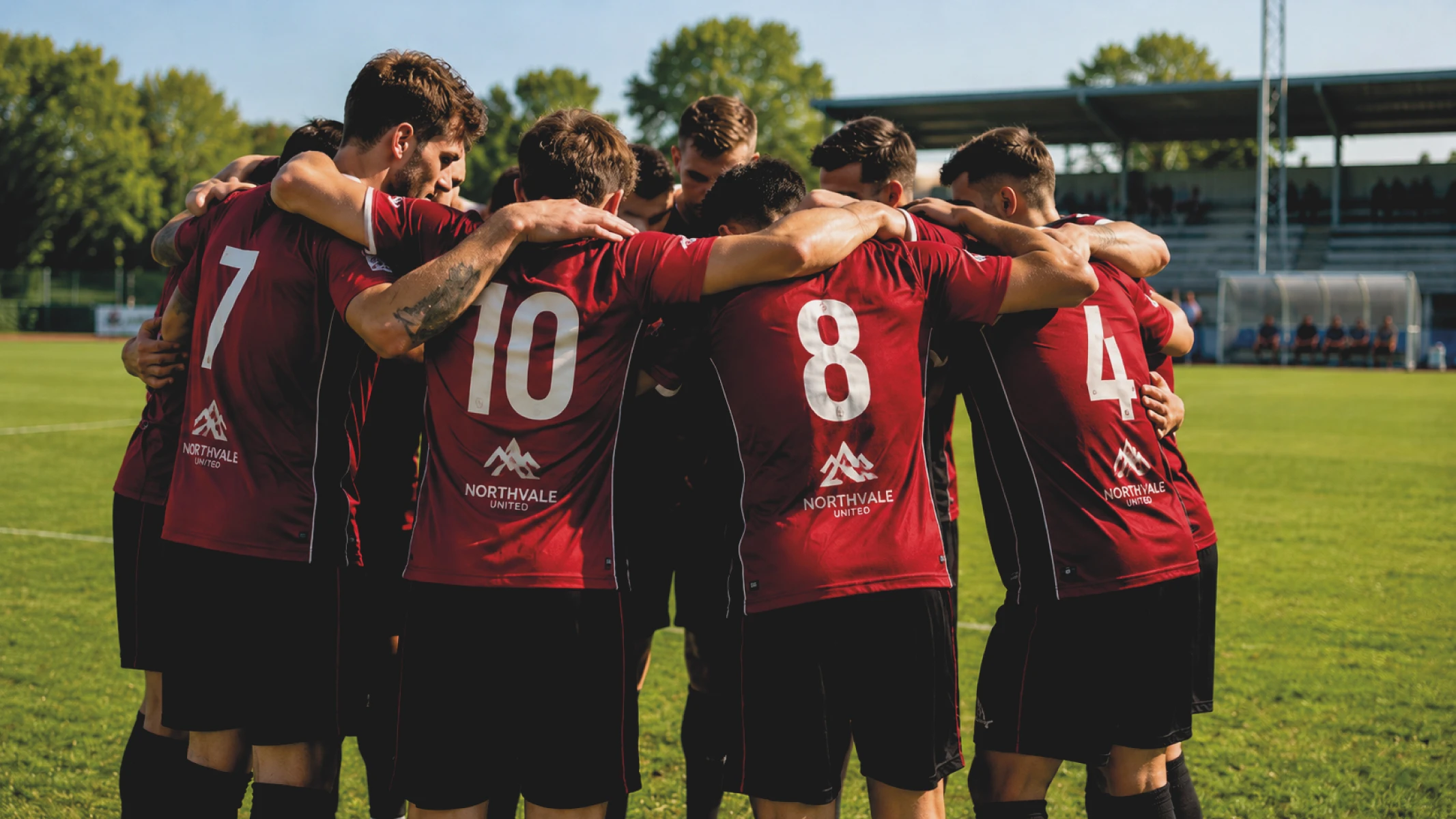
The main difference is the context of use. A corporate polo shirt or an event t-shirt is worn in static situations, where appearance matters most. Sportswear, by contrast, works under strain: it has to manage sweat and heat, allow freedom of movement and withstand frequent washing. That's why the materials and cuts change — and so does the way the logo is applied.
How to choose sportswear for your team
The choice starts from the type of activity and how the garments will be used: a weekly match, a one-off company tournament or a team-building day all place different demands on the fabric, the garments and their durability.
Technical fabrics
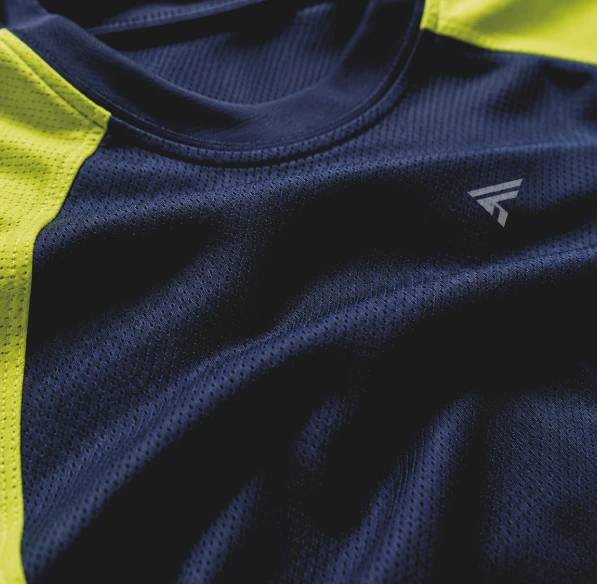
The heart of sportswear is the fabric. Unlike cotton, which soaks up sweat and stays wet, technical fabrics such as breathable polyester, mesh and microfibre draw moisture away from the skin and dry quickly, keeping the garment lighter during activity. Mesh panels, in the areas that heat up most, add ventilation. It's the reason a playing kit uses different materials from a promotional tee.
The garments in the kit
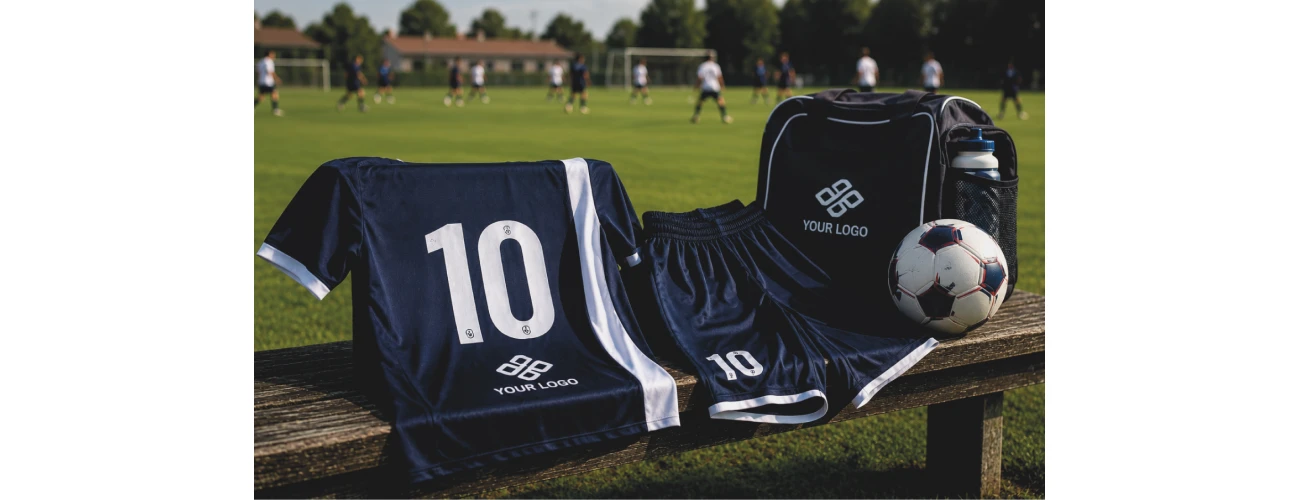
A sports kit is rarely a single garment. It usually includes the playing shirt or vest, the shorts and, depending on use, supporting pieces such as a team polo shirt for off-pitch wear or a sweatshirt for the warm-up and the bench. Thinking of the kit as a set — same logo, same palette, same logic — is what makes the team recognisable on and off the pitch.
Fit and sizing for the team
When you're kitting out a group, the size range becomes a practical criterion: you need a range that covers every member, with a consistent fit across the garments. It's worth checking size availability before confirming the order, especially for kits that need to be uniform across the whole team.
| Garment | Features | Typical use |
|---|---|---|
| Playing shirt / vest | Breathable technical fabric, lightweight | Match, training, competition |
| Shorts | Technical fabric, freedom of movement | Paired with the playing shirt |
| Sports polo shirt | Technical but smarter | Off-pitch wear, pre and post match |
| Sweatshirt / jacket | Warmer layer | Warm-up, bench, away travel |
Personalising the team: logo, names, numbers and sponsors
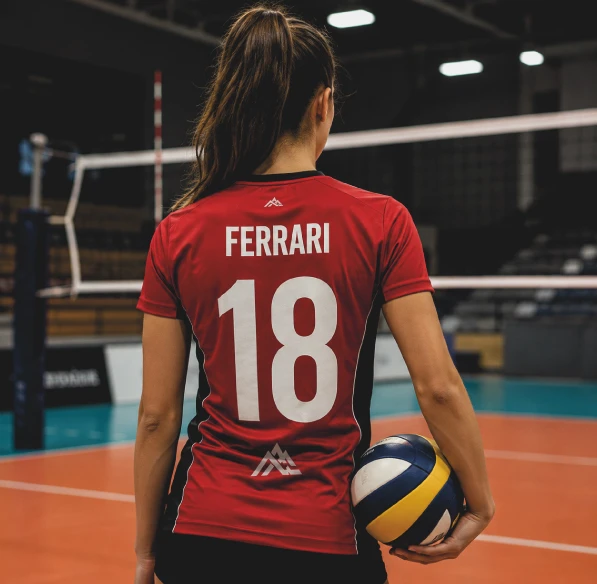
In sportswear, personalisation is more than the logo. You often also need names, squad numbers and sponsor logos, which have to stay legible and withstand sweat and washing. The technique should be chosen to suit the garment and how much wear it will take.
For some sports orders, especially on light technical polyester fabrics and large graphics, sublimation can be considered on a project basis, including through specialist technical partners: the colour becomes part of the fabric rather than sitting on the surface, so it doesn't peel and doesn't weigh the garment down. DTF (Direct to Film), heat-applied, handles logos and detail well on compatible fabrics. Heat transfer is practical for numbers and names. Embroidery remains suited to areas not under strain, such as the team polo shirt, where it conveys a smarter image.
Here too it's worth asking for a visual proof before production, to see how the logo, numbers and sponsors sit on the fabric and colour chosen for the kit.
How to choose your team's sportswear, step by step
To get it right without slip-ups, the choice usually follows four practical steps.
- Start from the type of activity and team. A side that plays regularly has different needs from a one-off company tournament or a team-building day.
- Choose the right technical fabric. Breathable polyester and mesh for the playing pieces; consider more ventilated panels where extra breathability is needed.
- Define the garments in the kit. Shirt or vest and shorts for play, plus any supporting pieces (polo shirt, sweatshirt) for off-pitch wear and the bench.
- Weigh up the personalisation technique. DTF for logos and detail on compatible fabrics, heat transfer for numbers and names, embroidery for off-pitch pieces; sublimation can be considered on specific projects, including through technical partners, when the garment and fabric allow.
What we've seen since 2006 on sportswear orders
In many cases the difficulty comes from choosing a sports garment as if it were a promotional t-shirt, looking only at price and colour. What we tend to notice is that kits chosen around real activity — the right technical fabric, the right garments, consistent sizing — get worn more willingly and last longer. The personalisation technique matters too: on playing garments the technique needs care, because a surface-applied solution isn't always suited to sweat, movement and frequent washing; where the project allows, sublimation can also be considered through specialist partners. There's no 'right' kit in absolute terms, only the one that fits how and how much it will be used.
Common mistakes on sportswear orders
- Choosing a non-technical fabric (e.g. cotton only) for garments meant for physical activity.
- Ordering only the shirt, forgetting useful supporting pieces such as a polo shirt or sweatshirt.
- Not checking the full size range for the team in good time.
- Applying numbers and names with a technique that doesn't stand up to sweat and washing.
- Treating the kit as a one-off purchase, without coordinating it with the team's wider gear.
Sportswear as part of a coordinated supply
The principle of the right fabric for the use applies to every garment, not just sportswear: it's the same principle we explore in our guide to the materials of customised clothing. And a sports kit is at its best when it doesn't stay isolated but is coordinated with the rest of the team's or company's gear — t-shirts, sweatshirts, accessories — as part of a coordinated supply, where every element fits into one consistent system of brand communication.
Questions to ask before ordering
Before confirming a sportswear order, a few questions help you avoid the most common mistakes:
- What activity and what kind of team are the garments for?
- Is the fabric technical and suited to use under strain?
- Which garments do you actually need in the kit, beyond the playing shirt?
- Does the size range cover the whole team with a consistent fit?
- Will the personalisation technique hold up to sweat, movement and washing for the logo, names and numbers?
Shop for Shop is an Italian company operating since 2006, a direct supplier of customised clothing for businesses, teams and events across Italy and more than thirty European countries.
Frequently asked questions
What's the best fabric for a team's sportswear?
For playing garments you use technical fabrics such as breathable polyester, mesh and microfibre, which draw sweat away and dry quickly. Unlike cotton, they keep the garment lighter during activity and stand up better to frequent washing.
What's the difference between sportswear and corporate clothing?
Corporate clothing is worn in static situations, where appearance matters most. Sportswear works under strain: it has to manage sweat and heat, allow freedom of movement and withstand washing, so it uses technical materials and different cuts.
How are names and numbers personalised on a sports shirt?
Names and numbers are usually applied with heat transfer or technical solutions chosen to suit the garment. On some specific projects, especially on light technical polyester fabrics, sublimation through specialist partners can also be considered. The choice depends on the material, the garment colour, quantity and the durability required.
Is sublimation suitable for all sports garments?
No. Sublimation performs best on light technical polyester fabrics and isn't suited to every garment or every colour. For Shop for Shop it should be treated as an option to weigh up on a project basis, including through specialist technical partners. For other garments, DTF, heat transfer or embroidery may be more suitable, depending on the fabric and the position of the logo.
Can you order sports kits for the whole team in different sizes?
Yes, a sports kit is normally ordered in a range of sizes to cover every member of the team. It's worth checking size availability before confirming the order, so you get a consistent fit across the whole team.
Can sportswear be coordinated with the rest of a company's gear?
Yes, by using the same logo and the same visual logic applied to the other garments and accessories, the sports kit becomes part of a coordinated supply rather than a one-off purchase.
Leave a comment