
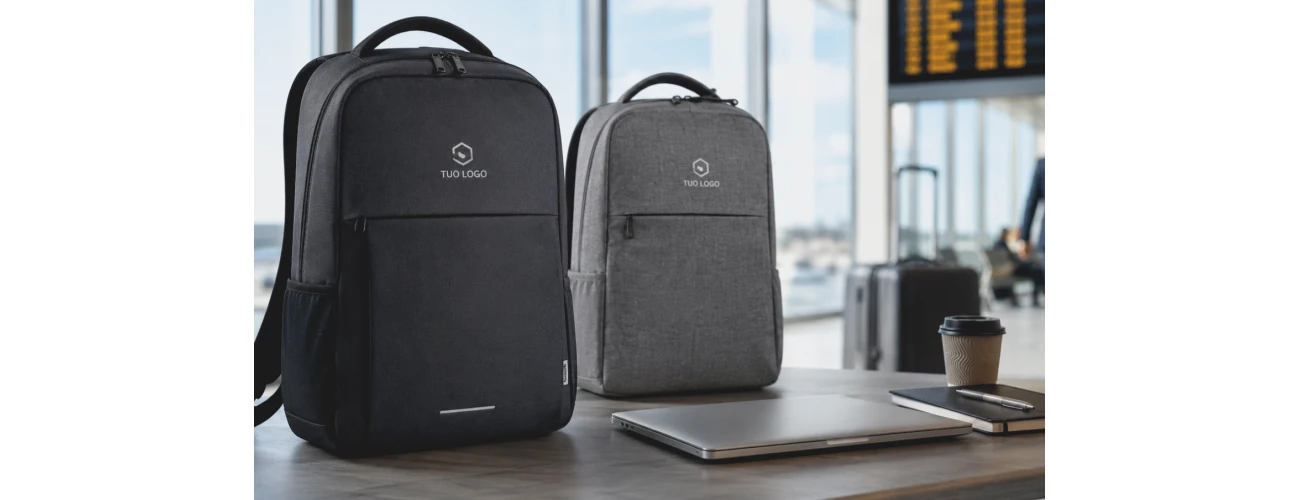
In brief
- The corporate backpack has become a moving brand asset: it travels with people on business trips, between offices and during hybrid working, far beyond an item that stays on a desk.
- The choice starts with how it will be used: capacity, comfortable shoulder straps and back panel, a laptop compartment and internal organisation matter before aesthetics.
- The material defines durability: polyester and rPET for everyday use, technical nylon or high-strength fabrics for intensive use, and cotton or canvas for a more informal look.
- Logo decoration should be chosen according to the fabric: embroidery, DTF and transfer printing deliver different results and influence the perceived quality of the backpack.
What do you need the corporate backpack for?
- Business travel and mobile working with a laptop → personalised laptop backpacks
- Gifts, events and teams on the move → personalised backpacks
- Promotional products and travel accessories → promotional products
- Welcome packs and coordinated supplies → the backpack as part of a system, not as a standalone purchase
For years, the corporate backpack was treated as just another promotional item: useful, but not especially strategic. Working habits have changed. Between business travel, movement between offices, trade fairs and hybrid working, a backpack is one of the items people genuinely use every day, carrying the company logo outside the office, on trains, at airports and in client meetings.
This changes the way it should be chosen. A backpack that breaks after a few weeks or cannot protect a laptop works against the brand, not for it. By contrast, a comfortable, well-made backpack is used for longer, and the logo keeps circulating with it. The decision is therefore not only about appearance: it is about real use, materials and the method used to apply the logo to the fabric.
In this guide, we look at how to choose a corporate backpack starting from practical criteria — capacity, comfort, laptop compartment and materials — before moving on to logo personalisation and the role of the backpack within a coordinated supply, together with other promotional products and staff clothing.
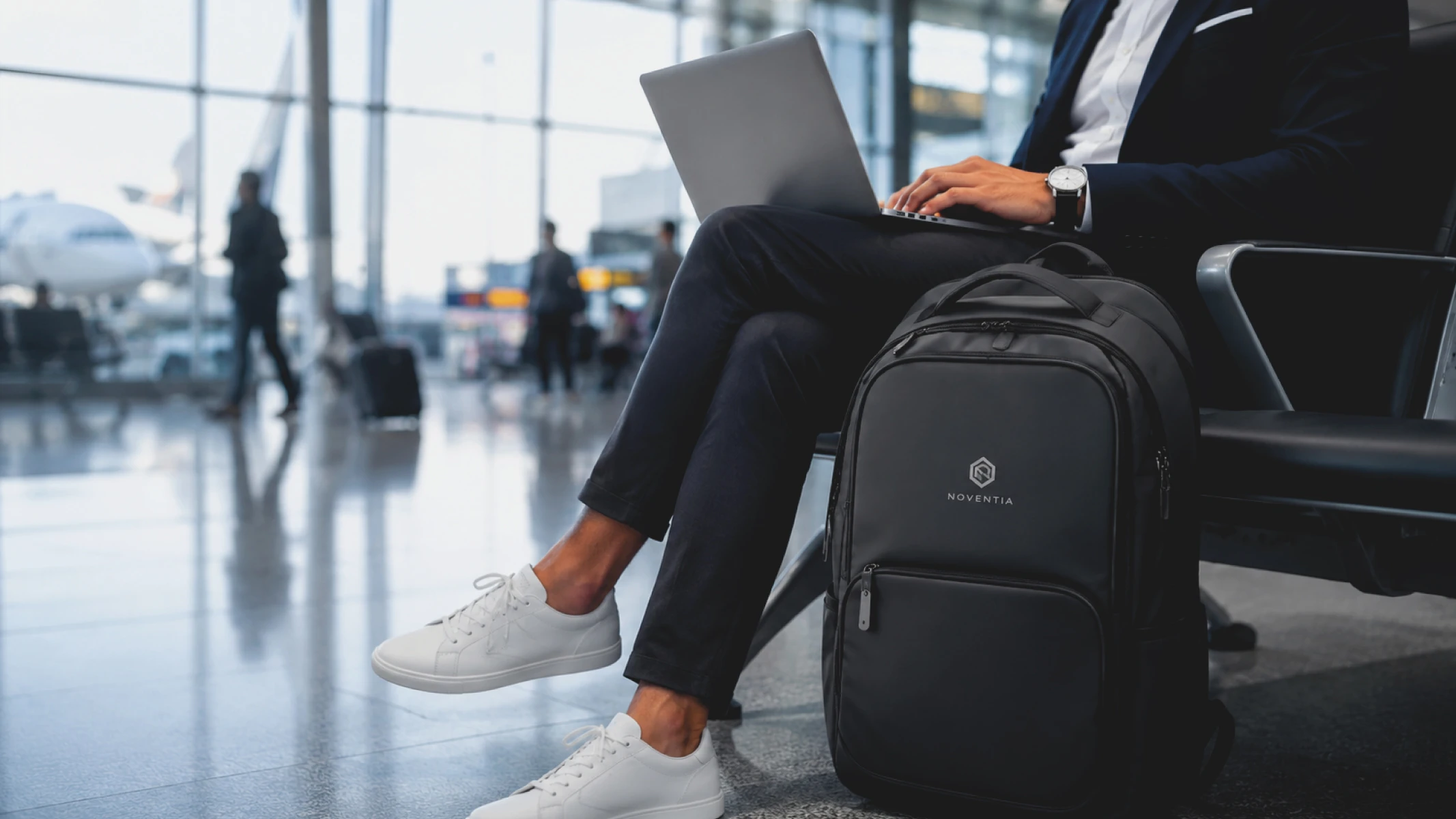
Why the backpack has become a moving brand asset
Unlike a desk accessory, a backpack follows the person. It is worn, seen and used in public settings: the logo does not stay in a drawer, but appears while travelling, in waiting areas and at events. For a company, this creates continuous, non-intrusive visibility linked to an item that the recipient uses because it is genuinely useful.
This applies to different recipients. For employees who travel, the backpack is part of their work equipment: it carries a laptop, documents and accessories in an organised way. For clients and partners, it can be a high-value corporate gift, perceived as more useful than many disposable giveaways. In welcome packs, it often becomes the item that physically and symbolically contains everything else. In all these cases, the rule is the same: the backpack only works as a brand tool if it first works as a backpack.
How to choose the right corporate backpack
The choice always starts with the intended use. A backpack for someone who often travels with a computer has different requirements from one designed as a lightweight event giveaway. It is worth clarifying the use case before looking at models and prices.
Capacity, back panel and shoulder straps
Capacity is usually measured in litres and should match the intended use: a compact model is suitable for giveaways and light commuting, while someone carrying a laptop, charger and everything needed for a working day will need more volume. Comfort, however, is not only about capacity: a padded and breathable back panel, adjustable shoulder straps and good weight distribution make a real difference during daily and prolonged use, especially when travelling.
The laptop compartment and internal organisation
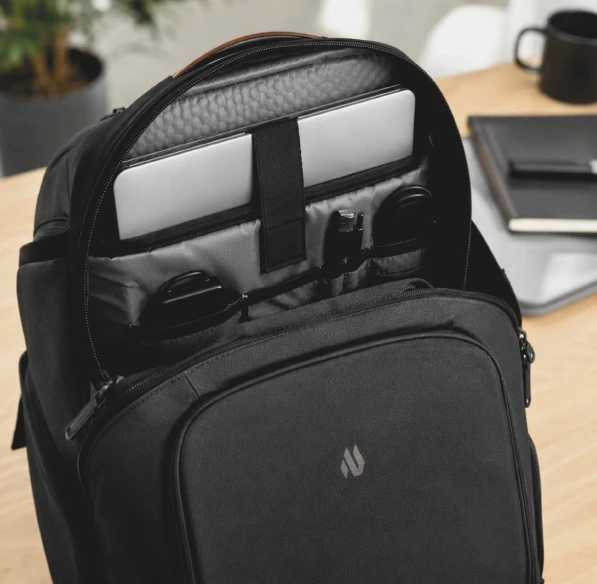
For professional use, a padded laptop compartment is often the deciding factor. Check the maximum laptop size supported — 13″, 15″ or 17″ — and make sure the padding genuinely protects the device. Alongside the main compartment, organiser pockets for cables, power banks, documents and small accessories make a practical difference: a well-planned internal layout is what separates a work backpack from a generic one. For people who travel with a computer, models with a dedicated laptop compartment are the natural starting point.
Materials and durability
The material determines how long the backpack will remain in use — and therefore how long the logo will continue to circulate. Common options range from polyester, which is versatile and cost-effective, to technical nylon and high-strength fabrics for intensive use, through to cotton or canvas for a more natural look. For companies with a sustainability-led positioning, recycled polyester rPET, made from PET bottles, offers a similar performance to standard polyester with a product story that is more aligned with a greener brand message.
| Material | Features | Typical use |
|---|---|---|
| Polyester | Versatile and cost-effective, a good base for logo decoration | Everyday use, gifts, events |
| rPET recycled polyester | Made from PET bottles, with a performance similar to polyester | Companies with a sustainability-led positioning |
| Technical nylon and high-strength fabrics | High resistance to abrasion and tearing | Frequent business travel, intensive use |
| Cotton / Canvas | Natural appearance, casual-premium look | Lifestyle contexts and informal brands |
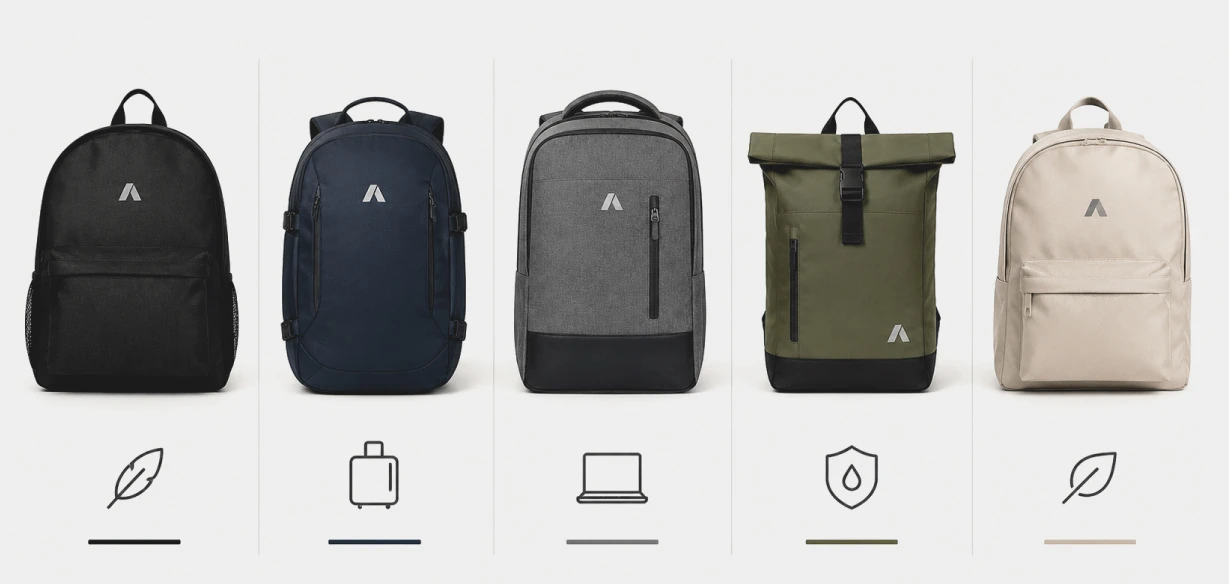
Personalising the logo on a backpack: methods and finish on fabric
On backpacks, the logo is almost always applied to fabric, often on a flat area such as the front pocket or back panel. The decoration method should be chosen according to the material, the complexity of the logo and the desired finish.
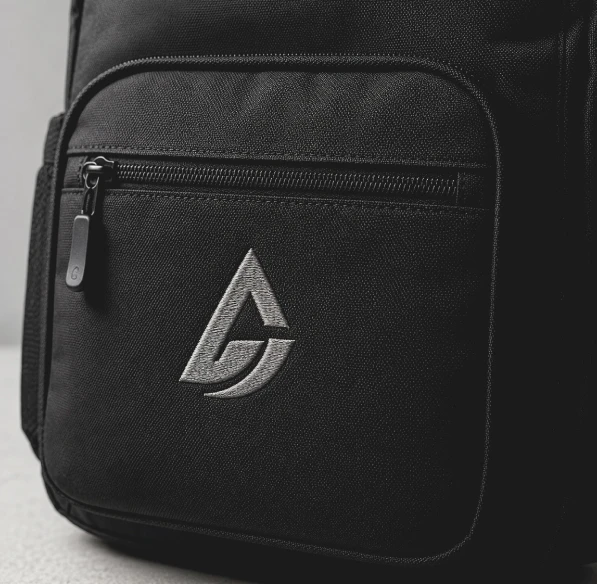
Embroidery is the most recognisable choice for a premium result: it is durable and has a raised finish that communicates quality, although it works with thread colours, so the closest match to the brand colour should be checked. DTF (Direct to Film), applied with heat, handles multicolour logos and fine details well and is widely used for textile promotional products, drawstring bags and backpacks. Screen-printed transfer delivers solid colours on larger flat surfaces. For a more discreet brand detail, woven labels or patches can also be applied to pockets and straps.
In most cases, it is worth asking for a digital artwork proof before production, so the logo can be checked on the chosen fabric and backpack colour, especially when it includes multiple colours or small details.
How to choose a corporate backpack to personalise, step by step
To avoid mistakes, choosing a corporate backpack usually follows four practical steps.
- Start from the use case and the capacity. Decide whether the backpack will be used as work equipment for people who travel, as a client gift or as part of a welcome pack. This defines the useful capacity and the level of durability required.
- Check the laptop compartment and internal organisation. For professional use, check the laptop size supported and the presence of real padding, as well as pockets for cables, power banks and documents.
- Choose the material and durability level for the intended use. Choose polyester or rPET for everyday use and giveaways, technical nylon or high-strength fabrics for frequent travel, and cotton or canvas for a more informal look.
- Choose a decoration method that suits the fabric. Use embroidery for a premium and durable finish, DTF for multicolour and detailed logos, and screen-printed transfer for larger flat areas. Always confirm the result with an artwork proof before production.
What we have observed since 2006 in corporate backpack supplies
In many cases, difficulties do not come from the backpack itself, but from choosing it only by price or appearance, without starting from real use. What we often see is that backpacks selected according to the context — suitable capacity, protected laptop compartment and material fit for purpose — stay in circulation for longer, and so does the logo. The decoration method also matters: on fabric, a logo applied with the right method resists continuous use, rubbing and daily movement, while a solution chosen only to reduce cost tends to deteriorate sooner. There is no single “right” backpack, only the one that is coherent with how it will be used.
Common mistakes in corporate backpack supplies
- Choosing the backpack only by price or appearance, without starting from how it will be used.
- Overlooking the laptop compartment or its padding when the backpack is intended for people who travel with a computer.
- Underestimating the material: fabric that is too light wears out quickly and shortens the life of the logo.
- Applying the logo with a method that does not suit the fabric, resulting in a poor or less durable finish.
- Ordering the backpack as a standalone item, without coordinating it with the rest of the staff supply or welcome pack.
The backpack within a coordinated supply
A backpack works best when it is not treated as a standalone purchase, but as part of a wider set. In a welcome pack, for example, it can contain or accompany other items: a bottle, a notebook, a T-shirt or a sweatshirt for the team. When these items share the same logo and visual direction, the set communicates a stronger image than a single product on its own.
This is the same principle behind a coordinated supply of promotional products, clothing and packaging, where each item is chosen with a shared palette and a consistent visual logic. The backpack fits naturally into this system, especially when the same logo also appears on the custom clothing worn by the people carrying it at trade fairs, events or during business travel.
Questions to ask before ordering
Before confirming a backpack supply, a few questions help avoid the most common mistakes:
- Who will receive the backpack and in what context will it be used: business travel, events or welcome packs?
- Does it need a protected laptop compartment and, if so, for which laptop size?
- Is the material suitable for the intended use in terms of durability and lifespan?
- Will the chosen decoration method reproduce the logo well on that fabric and colour?
- Is the backpack consistent with the other elements of the staff supply or welcome pack?
Shop for Shop is an Italian company active since 2006 and a direct supplier of personalised promotional products, clothing and packaging for companies, shops and events. Choosing the backpack from the point of real use — and not only from its appearance — makes it possible to manage it not as a standalone purchase, but as part of a coherent brand communication system.
Frequently asked questions
Which corporate backpack should I choose for people travelling with a laptop?
Start with a model that has a padded laptop compartment, check the maximum laptop size it supports and make sure the internal layout can hold cables, a power bank and documents. For frequent travel, breathable back padding, comfortable shoulder straps and a durable material are just as important.
Which materials are most durable for a corporate backpack?
For intensive use and frequent business travel, technical nylon and high-strength fabrics offer good resistance to abrasion and tearing. Polyester is versatile and cost-effective for everyday use and giveaways, while recycled polyester rPET offers a similar performance with a more sustainability-led product story. Cotton and canvas are usually chosen more for their natural look than for maximum durability.
What is the best way to personalise a logo on a backpack?
It depends on the logo and the fabric. Embroidery gives a premium, long-lasting finish on flat areas such as the front pocket; DTF works well for multicolour logos and fine details; screen-printed transfer is suitable for solid colours on larger flat surfaces. A digital artwork proof is useful before production.
Can personalised backpacks be ordered in small quantities?
Minimum quantities depend on the backpack model and the personalisation method. The safest approach is to start from the artwork file and the required quantity, so product, branding method and production times can be checked together.
Can a backpack be part of a welcome pack?
Yes. A backpack is often the item that contains or accompanies the rest of a welcome pack, such as a bottle, notebook or staff clothing. When it shares the same logo and visual direction as the other items, it strengthens the coordinated image of the whole kit.
How do I keep the backpack logo consistent with the rest of the supply?
Use the same approved logo and colour references across promotional products, clothing and packaging, then choose the most suitable decoration method for each surface. This makes the backpack part of a coordinated supply rather than a one-off purchase.
Leave a comment