
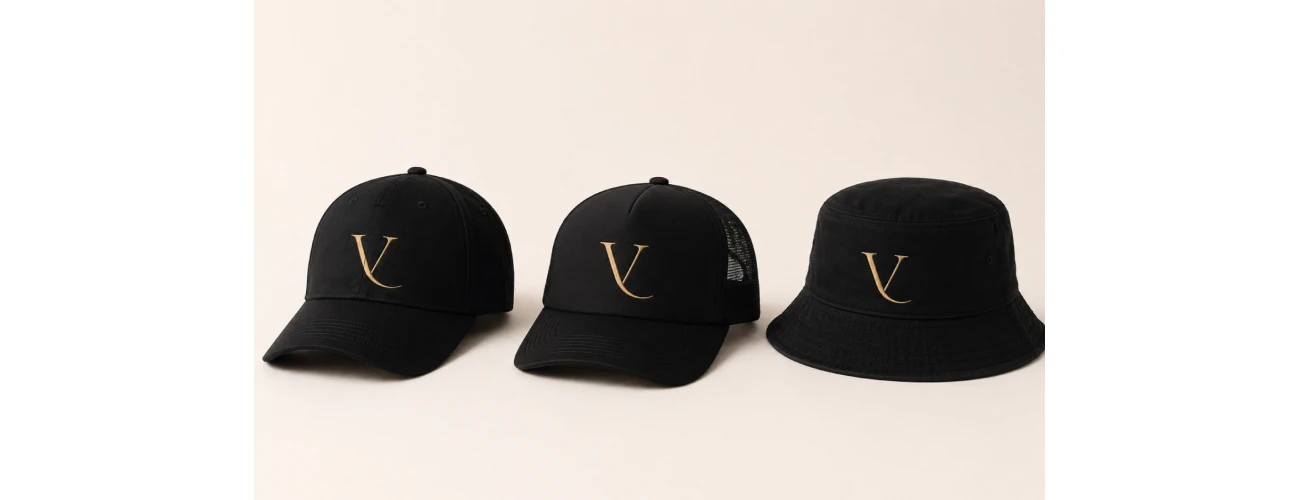
In brief
- Personalised caps are among the most versatile branded accessories: they work for staff, events, merchandise and outdoor use.
- The choice starts with the model — baseball cap, trucker cap, snapback, dad cap, bucket hat or beanie — according to use, season and audience.
- Embroidery is the most common branding technique, but raised embroidery, applied patches and transfer printing are also available for different graphic needs.
- For a consistent result, the cap should be chosen together with the rest of the staff clothing, not treated as a separate purchase.
What will you use the caps for?
- Staff and uniforms (cafés, restaurants, shops, reception desks) → custom promotional clothing
- Events, trade shows and branded merchandise → custom promotional products
- Outdoor work, tourism and summer activities → breathable models with good sun protection
The cap is one of the most requested branded accessories, but also one of the most often chosen without enough thought. Many orders start with “a cap with the logo”, before deciding who will wear it, where it will be used and in which season. The result can be an item that staff do not enjoy wearing, or one that does not really support the brand image.
A cap works when the model suits the context, the branding is legible and the fit makes people want to wear it. Let’s look at how to choose the right model, material and branding technique based on real use.
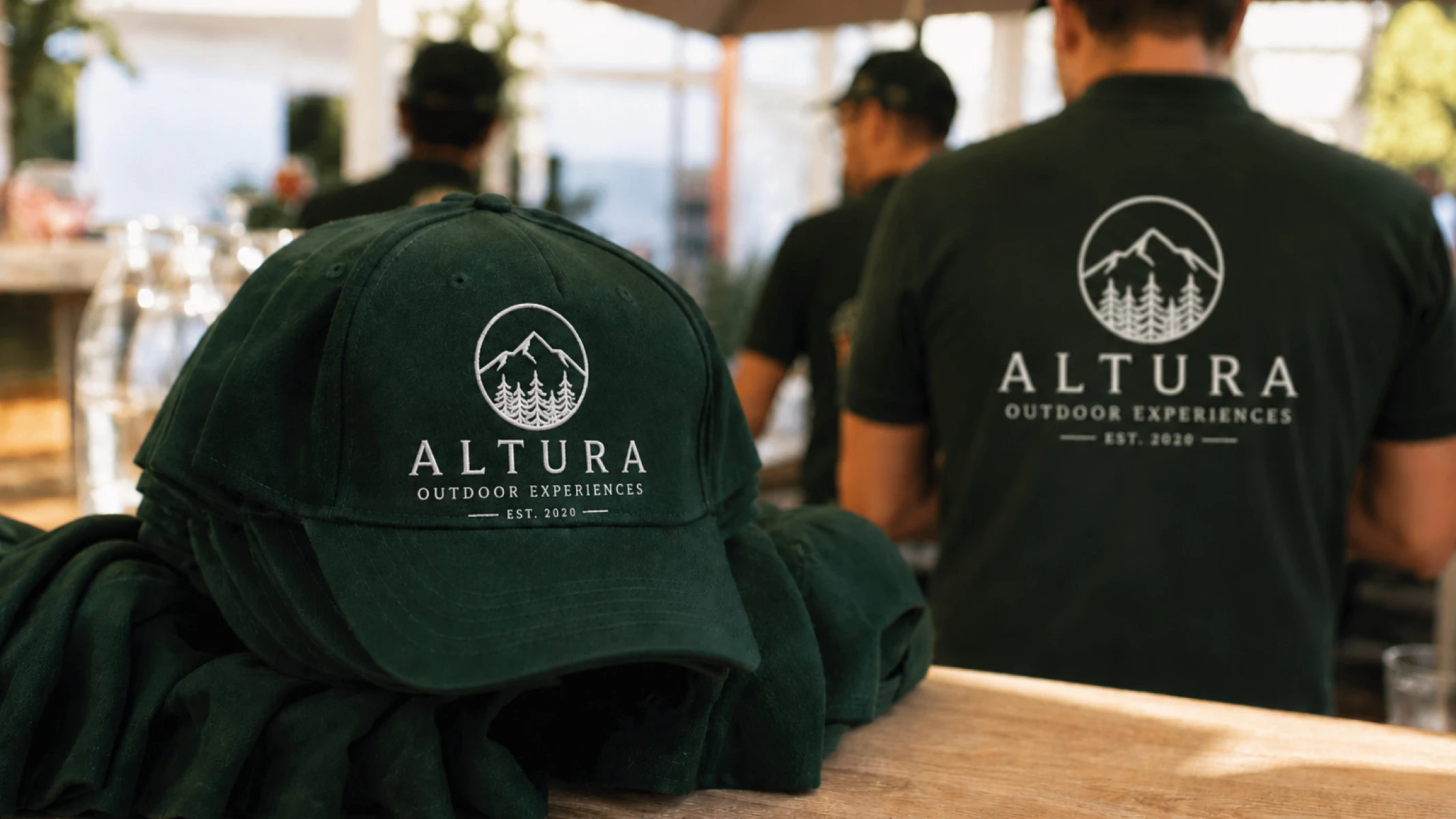
The main models of personalised cap
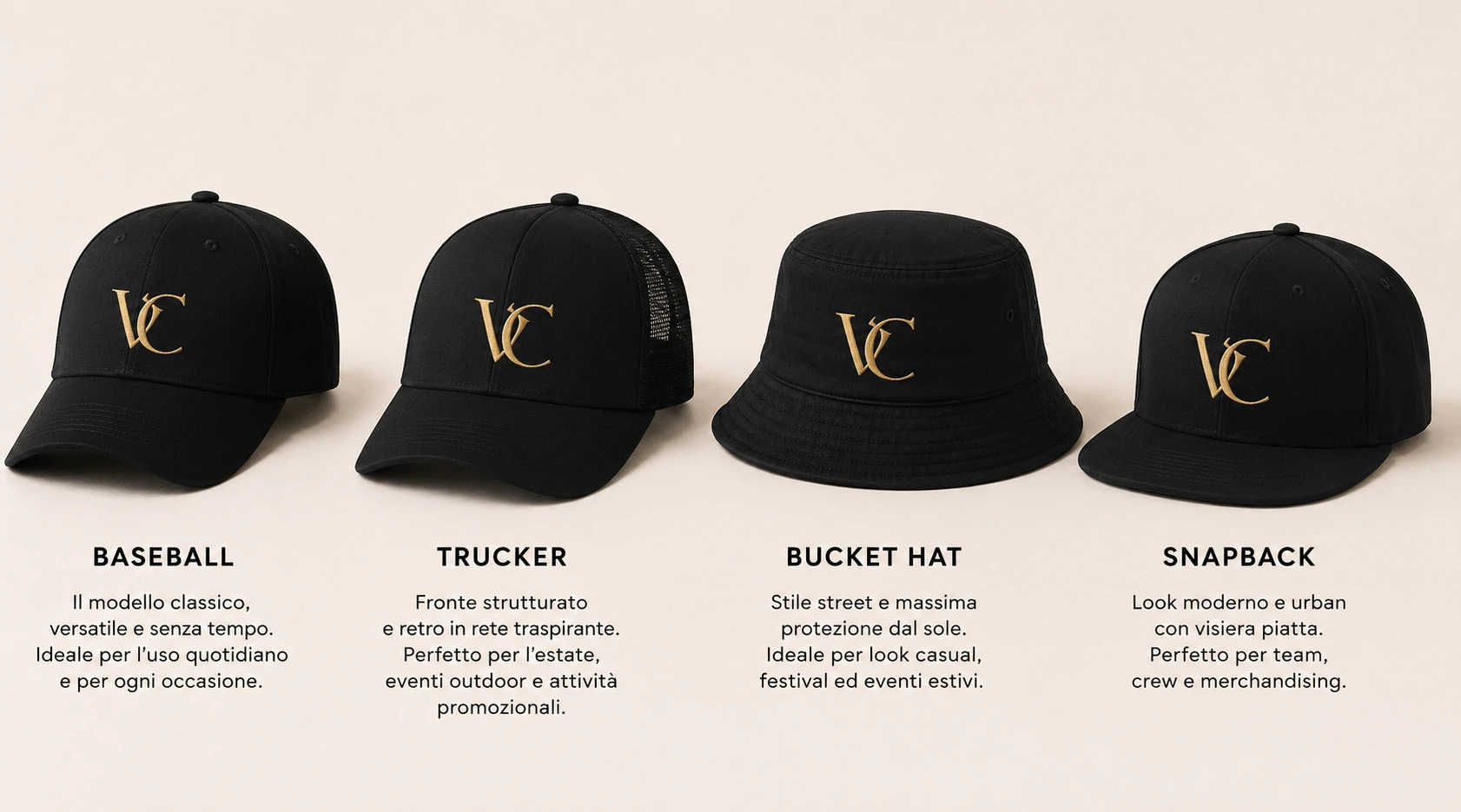
Before choosing colour or logo placement, it is worth selecting the right model from the range of personalised hats and caps. Each style has a different fit, look and target audience.
| Model | Features | Typical use |
|---|---|---|
| 5/6-panel baseball cap | Classic style, structured or softer front, curved peak | Staff, everyday use, events |
| Trucker cap | Fabric front with breathable mesh back | Summer events, outdoor activities, merchandise |
| Snapback | Flat peak, adjustable snap closure | Branded merchandise, younger audiences |
| Dad cap | Low profile, soft fabric, informal look | Lifestyle brands, gifts, urban use |
| Bucket hat | All-round brim, good sun protection | Summer events, seaside venues, festivals |
| Beanie | Knitted style in acrylic, cotton or blended yarns | Cold season, winter outdoor use |
Visors are another option: they have no crown and can be useful for sports activities or very hot conditions. The practical rule is simple: the model should follow the use, not the other way round.
Size and closure: adjustable is usually safer
Closure matters because it affects fit. Most caps for companies and events are one-size adjustable models, with a metal buckle, hook-and-loop strap, snapback closure or elasticated band. This is the most practical solution for business orders, because it fits different head sizes without the need to manage several sizes. Fitted caps, with no adjustment, can give a more precise fit, but they require size planning and are less convenient when the team is large or when caps are handed out at an event.
Materials and personalisation techniques
The most common materials are cotton, cotton twill, polyester, mesh for trucker caps and acrylic for beanies. Organic cotton and recycled polyester are also increasingly requested when they fit the brand’s positioning.
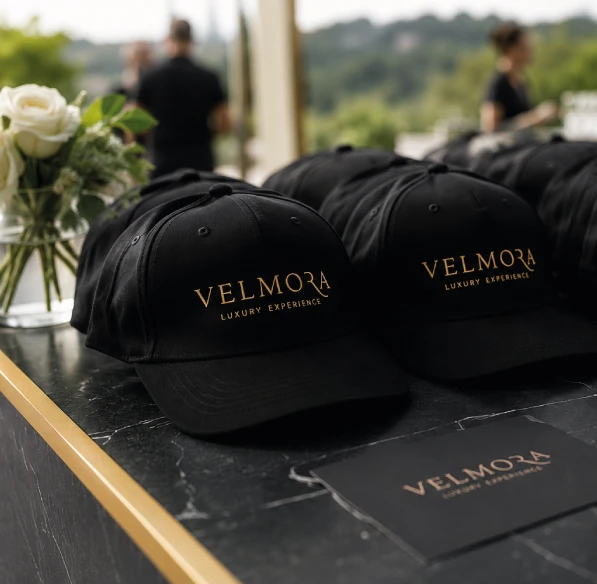
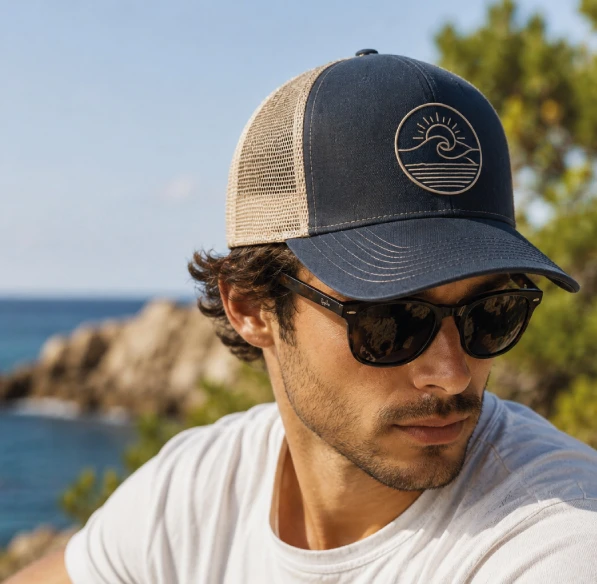
The main personalisation options are:
- Direct embroidery: the most common choice, with a premium look and excellent durability; ideal for logos with a limited number of colours.
- Raised embroidery, or 3D embroidery: gives the logo depth and works best for simple, well-defined lettering and symbols.
- Embroidered patch or applied patch: a distinctive detail, also available in felt or PVC depending on the style required.
- Transfer print / DTF: suitable for multicolour graphics or gradients that embroidery may reproduce less effectively.
- Pad printing: mainly used on visors and rigid parts where compatible.
The most common logo position is the front, but the side, back and peak can also work well. Whatever the choice, contrast and legibility should always be checked: an elegant logo that is barely visible does not do its job.
How to choose the right cap by context
Staff and uniforms
For cafés, restaurants, shops, hotels and reception teams, a sober and comfortable model in colours coordinated with the rest of the uniform is usually the safest choice. In these cases the cap often sits alongside staff T-shirts and polo shirts, so it is worth selecting it together with the other garments and considering the T-shirt fabric weight best suited to the season.
Events, trade shows and branded merchandise
For events and promotional activity, more visible styles such as trucker caps, snapbacks and bucket hats can work well, including in brighter colours. Here the cap becomes one of the custom promotional products to distribute: it needs to stand out and remain useful after the event.
Outdoor use, tourism and summer activity
For outdoor activities, resorts, tourist venues and summer events, breathability and sun protection matter. Mesh backs, lighter fabrics and models such as the trucker cap or bucket hat are usually more suitable. In hot weather, a heavy cap is likely to be left in a drawer.
Common mistakes when choosing personalised caps
- Ordering one model for very different contexts, from daily staff use to a summer event.
- Choosing the cap colour without checking whether the embroidered logo will remain legible.
- Ignoring the season: a model that is too warm in summer will not be worn.
- Stopping at the catalogue image without considering comfort, fit and closure type.
How to choose personalised caps before ordering
Before starting a business order, a few practical steps help avoid the most common mistakes.
- Start from the context of use. Decide whether the caps are for daily staff use, an event, branded merchandise or outdoor activity: this is the choice that guides all the others.
- Choose the right model. Baseball caps and dad caps suit ongoing use, trucker caps and bucket hats work well for summer and events, while beanies are better for colder seasons.
- Define the personalisation technique. Embroidery gives durability and a premium finish, transfer printing helps with multicolour artwork, and patches create a more distinctive detail.
- Check legibility and comfort with an artwork proof. Review logo position, contrast with the cap colour, closure type and fit before production starts.
What we have observed since 2006 about personalised caps
In cap supplies, the difference between an item that is worn and one that is forgotten rarely depends on price alone. More often, it comes down to choosing a model that suits the people who will wear it and the setting in which it will be used. What we tend to see is that companies starting from real use — rather than from a single model seen in a photo — obtain caps that staff are more willing to wear and that audiences more easily associate with the brand. A cap works when it is worn, not just when it is ordered.
Personalised cap trends for 2026
In terms of style, several directions are becoming more established:
- the bucket hat, increasingly used for summer events and younger audiences;
- the dad cap and low-profile shapes for a relaxed, lifestyle look;
- raised embroidery and applied patches as distinctive branding details;
- neutral shades and lower-impact materials, such as organic cotton and recycled polyester, when consistent with the brand.
Trends are useful for inspiration, but the choice still depends on the context of use and the brand identity: a fashionable model is not automatically the right one for your staff or audience.
Caps and coordinated staff branding
A cap rarely stands alone: it often accompanies staff T-shirts, polo shirts or sweatshirts. When colour, logo and style are coordinated with the rest of the custom promotional clothing, the result is a more recognisable image in a shop, at a trade show or during an event.
Shop for Shop is an Italian company operating since 2006 and a direct supplier of custom promotional clothing and branded products with logo for businesses, retailers and events across Europe. This means each item can be managed not as an isolated purchase, but as part of a consistent brand communication system.
Frequently asked questions
What is the best technique for personalising a cap?
In most cases, embroidery is the best option because it gives a premium look and lasts well over time. For graphics with many colours or gradients, transfer printing may be more suitable, while an embroidered patch is useful when a more distinctive detail is required.
Which cap models are best for staff?
Baseball caps and dad caps usually work well for staff: they are sober, comfortable and suitable for regular use. They should be chosen in colours coordinated with the rest of the uniform, with the logo clearly legible.
Which caps work best in summer?
Breathable models such as trucker caps, with a mesh back, and bucket hats, which offer good sun protection, are often the most suitable. In general, lighter fabrics are preferable and overly heavy models should be avoided.
Where can the logo be placed on a cap?
The front is the most common position, but the logo can also be placed on the side, back or peak. In every case, contrast with the cap colour and overall legibility should be checked before production.
Is it worth choosing one cap model for every use?
Usually not. Daily staff use and a summer event have different needs in terms of comfort, style and season, so it often makes sense to select different models for different contexts.
Are personalised caps suitable as promotional merchandise?
Yes. Visible models such as trucker caps, snapbacks and bucket hats are widely used for events, trade shows and branded merchandise because they can continue to be worn after the event.
Leave a comment