
In brief
- Festive packaging needs a backwards planning calendar, not a last-minute choice: production and delivery lead times work against late orders.
- For Christmas, the right time to confirm the order is between late September and mid-October, with a safety margin for delivery and shop-floor preparation.
- Easter, Valentine’s Day and local seasonal events can have shorter lead times, but they still need planning, especially for quantities and decorative finishes.
- Choosing materials, formats and printing techniques that match the seasonal campaign helps avoid rework, express costs and missed selling periods.
Which packaging should you choose for each seasonal campaign?
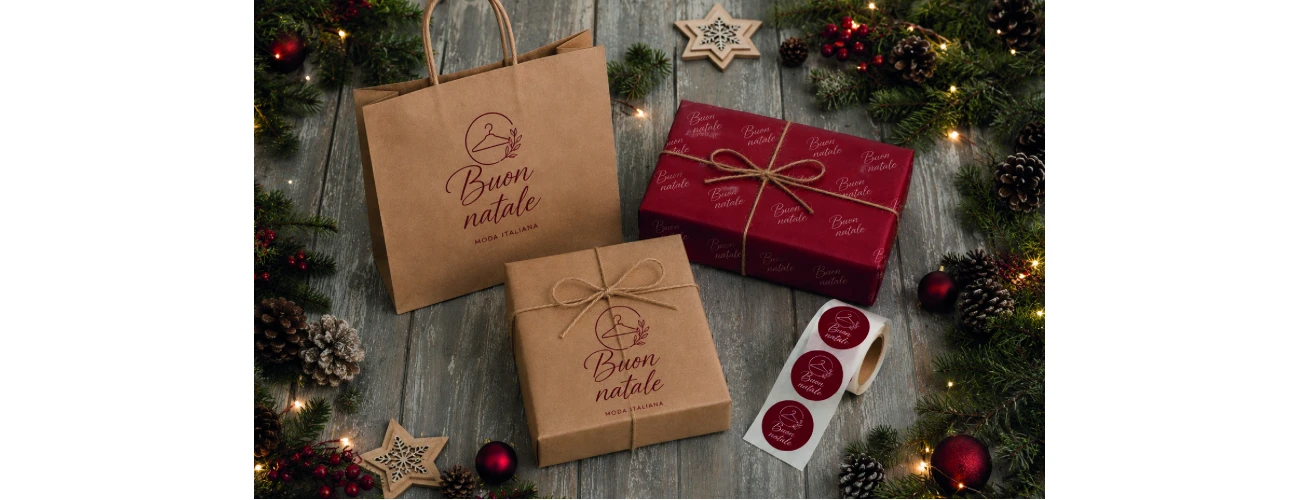
- Christmas, gift packaging and seasonal retail → custom gift boxes, paper bags, tissue paper and closing labels.
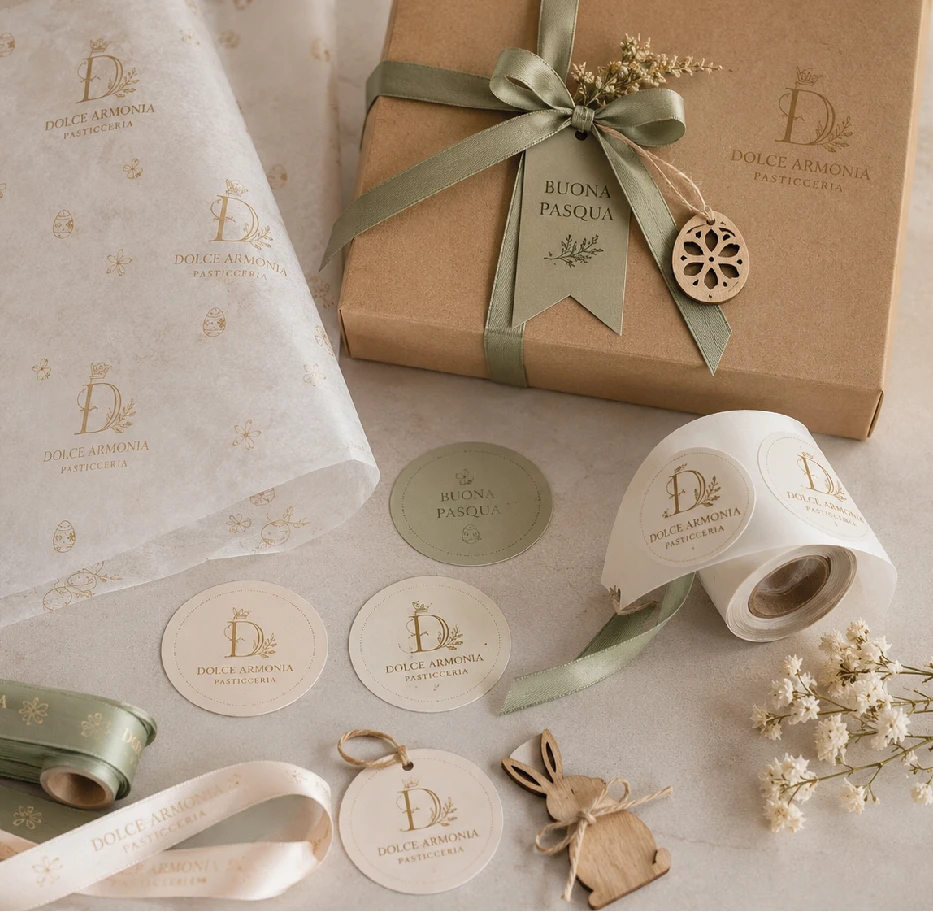
- Easter, bakeries and chocolate products → custom pastry boxes, trays, paper bags and food packaging for seasonal ranges.
- Valentine’s Day and short seasonal campaigns → custom self-adhesive labels, stickers, tissue paper and small closing details.
- Coordinated gift packaging → custom gift wrap and tissue paper combined with shopping bags, boxes and gift bags.
- Deliveries, giveaways and seasonal kits → custom gift bags to complete festive packaging and product presentation.
The difference between festive packaging that works and packaging that arrives after the peak has passed is not design: it is timing. Businesses that plan early have more choice of formats, quantities and delivery slots; those that start late often have to choose from what is still available, sometimes paying more for standard finishes.
This article comes from a practical question that returns every year between August and October: “When should I order Christmas packaging?” The answer is not a single date, but a backwards planning calendar that starts from the moment the packaging needs to be ready in store or with the customer.
Planning festive packaging means working backwards from the date of use and calculating the time needed for artwork approval, production, printing, delivery and in-store preparation. It is an operational step that reduces waste, avoids emergency reorders and keeps brand, product and customer perception aligned during the highest-visibility period of the year.
Seasonal events that require dedicated packaging
Not every seasonal event has the same commercial weight, but most have a window in which dedicated packaging can make a real difference. The table below gives a practical guide:
| Seasonal event | Operational peak | Most requested packaging | When to order |
|---|---|---|---|
| Christmas | Early December | Gift boxes, Christmas paper bags, tissue paper, labels | Late September – mid-October |
| Easter | 2-3 weeks before | Pastry boxes, trays, tissue paper, paper bags | Early February |
| Valentine’s Day | 7-10 days before | Small boxes, dedicated paper bags, heart-shaped labels | Mid-January |
| Mother’s Day / Father’s Day | 2 weeks before | Dedicated shopping bags, gift packaging | 5-6 weeks before |
| Halloween | Last 7-10 days of October | Themed gift bags, small-format packaging | Early September |
| Local seasonal events | Variable | Dedicated seasonal packaging | 5-7 weeks before |
The dates are indicative and depend on quantities, finishes and the final distribution channel. A small order with standard digital printing may need a shorter lead time; a larger order with premium finishes such as hot foil stamping, varnishes or decorative enhancements needs additional margin.
The backwards planning calendar for festive packaging
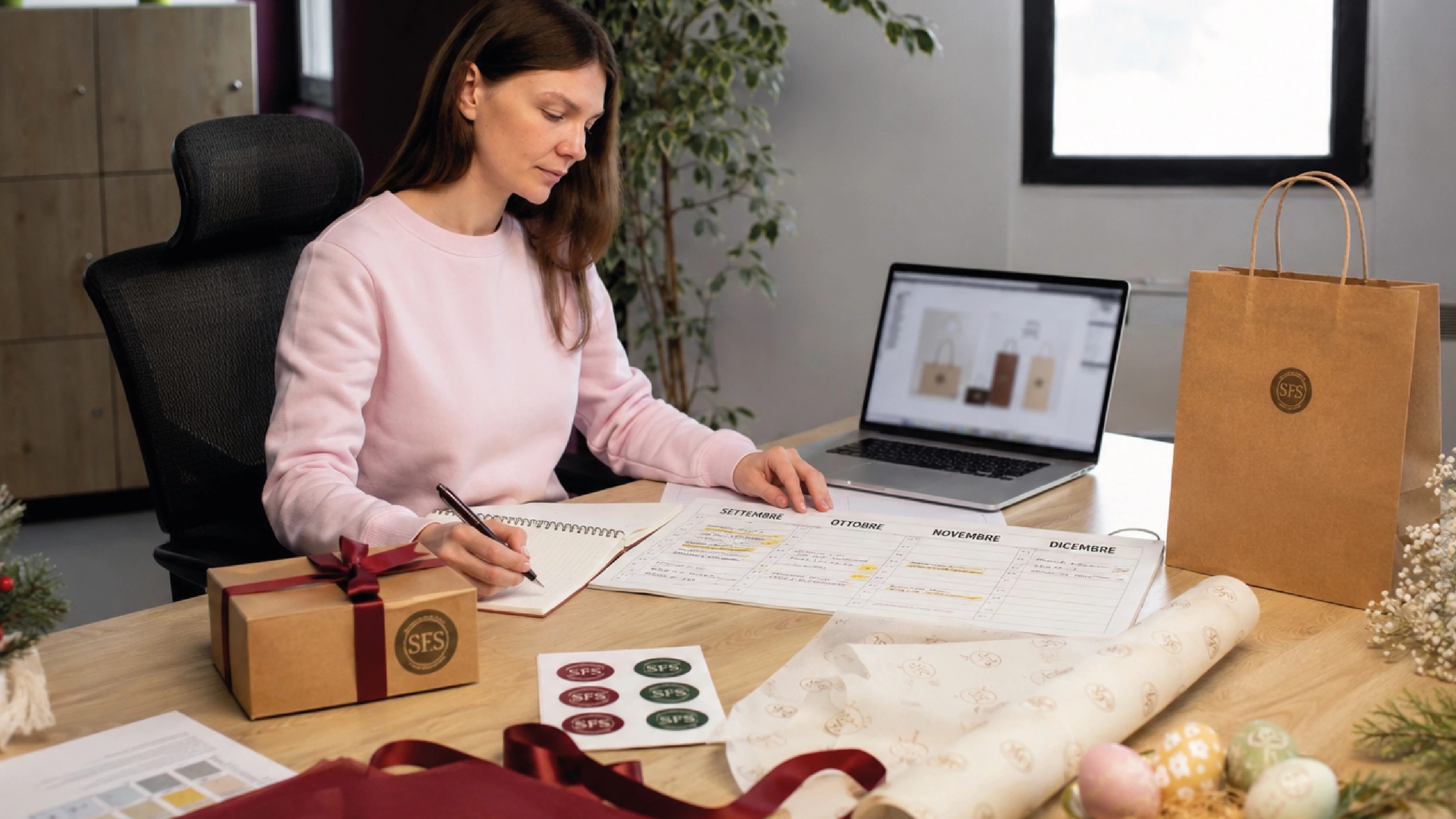
Thinking of festive packaging as a chain of operations with clear deadlines reduces the risk of mistakes. The backwards planning calendar starts from the date when the packaging needs to be available in store or with the customer, then works back through each step.
For Christmas, for example, the starting point is the first week of December, when the packaging should already be ready and in use. From there, you work backwards:
- Shop-floor preparation / customer delivery: the first week of December.
- Dispatch and delivery: between late November and the first week of December, depending on destination and volumes.
- Production and personalisation: an indicative lead time of 10-20 working days, depending on quantity and printing technique.
- Artwork proof approval: 3-5 working days for file submission, technical check and final confirmation.
- Order confirmation and print-ready artwork: between late September and mid-October.
Adding these steps together, the operational window for confirming a Christmas packaging order falls between late September and mid-October. Businesses that start planning in November work under pressure, with fewer options and a higher risk of compromise.
Materials and formats: what changes from one seasonal campaign to another
Festive packaging is not simply standard packaging with a seasonal graphic. Materials, formats and printing techniques change according to the product and the context of use.
For Christmas, where gifting is central, recurring choices include:
- Custom gift boxes in solid board, with offset or digital printing for strong colour impact.
- Paper bags in kraft or coated paper, usually 100-140 gsm, with twisted paper handles or flat paper handles.
- Custom tissue paper and gift wrap for internal wrapping, often with a logo or seasonal pattern.
- Custom self-adhesive labels for closing packaging or adding a branded detail to generic bags and boxes.
For Easter, where packaging is often used for bakery, pastry and chocolate products, the choice usually moves towards:
- Custom pastry boxes in certified food-grade board, suitable for Easter eggs, colombe, pralines and seasonal desserts.
- Trays and rigid bases for fresh pastry, with higher board weights.
- Paper bags for Easter takeaway sales, often with flexographic printing for medium to high quantities.
For Valentine’s Day and short seasonal campaigns, the format becomes smaller and the investment focuses on details: heart-shaped labels, red or pink tissue paper and small-format paper bags. Quantities are typically lower and lead times are tighter.

Common mistakes when planning festive packaging
- Starting when the seasonal peak is already close, reducing available options and increasing the unit cost for express production.
- Underestimating artwork approval time, especially when the file needs changes or the person approving it is not available on the expected dates.
- Ordering too few units “to test” and then being unable to reorder in time if the packaging performs better than expected.
- Choosing complex printing techniques without enough margin, such as hot foil stamping or premium finishes, under time pressure.
- Failing to coordinate festive packaging with paper bags, tissue paper and labels, losing the overall effect that makes the brand more recognisable during the season.
Printing techniques for festive packaging
The printing technique depends on quantity, material and available time. The most common options for festive packaging are:
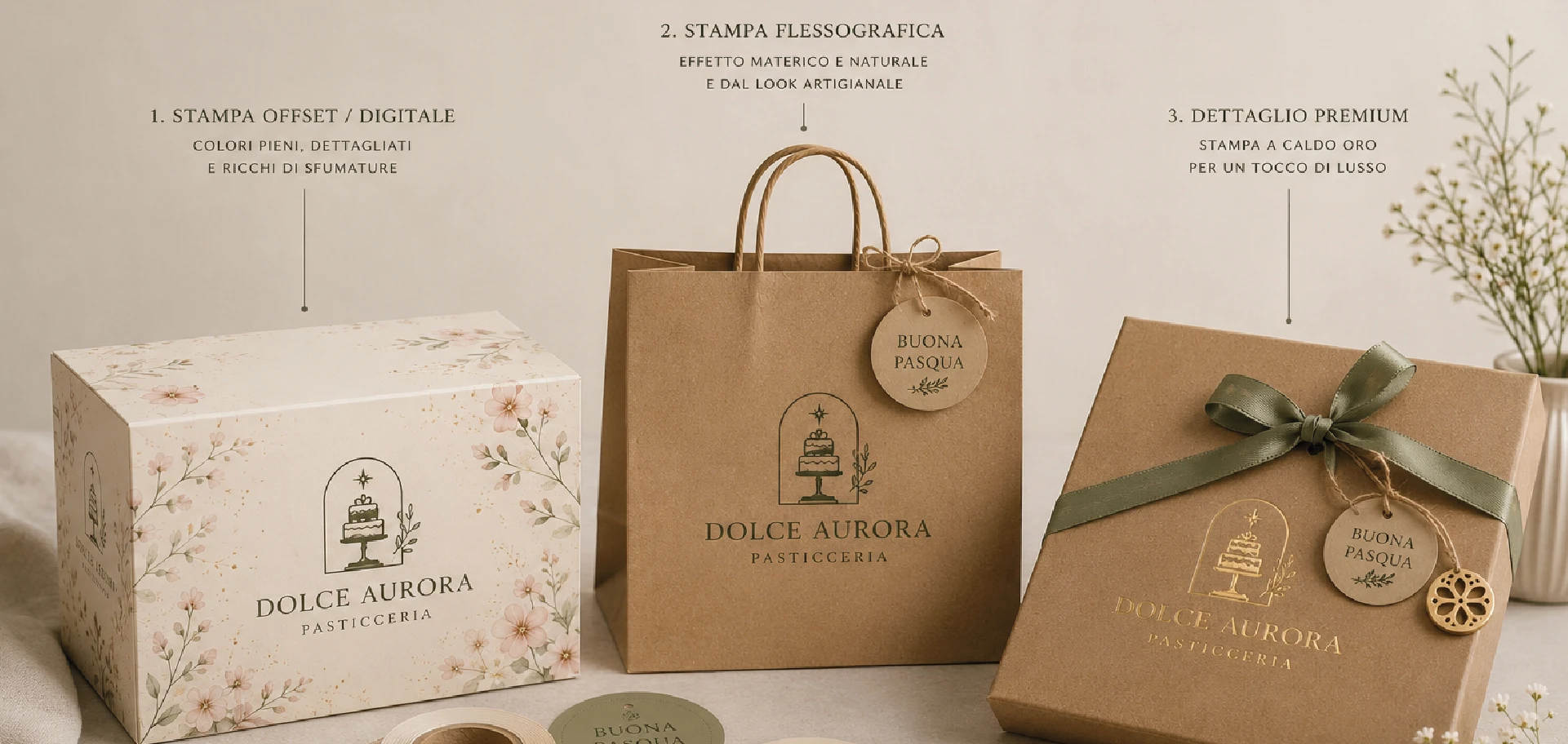
- Offset printing: for high quantities, strong print quality and competitive unit cost. It requires broader lead times for plate preparation.
- Flexographic printing: for paper bags and carrier bags in medium to high quantities, on kraft paper or coated paper.
- Digital printing: for short runs, multiple artwork versions or late-stage personalisation. Lead times are usually faster.
- Hot foil stamping: a premium finish using gold, silver or metallic foils, ideal for gift boxes and high-end seasonal packaging. It needs extra time.
- Varnishes and premium finishes: gloss, matt or tactile varnishes, laminations and decorative enhancements for a more premium feel. Lead times are generally longer.
Hot foil stamping and varnishes are often the techniques that make the biggest difference in premium Christmas packaging, but they are also the least tolerant of time pressure. Including them in the project means anticipating the order.
Questions to ask before ordering festive packaging
Before confirming an order, answer these questions in order. Each one narrows the options that follow.
- When does the packaging need to be ready?
The date when the packaging must be available in store or with the customer is the starting point for the backwards planning calendar. - Which seasonal event and which product?
Christmas, Easter, Valentine’s Day and local events each have different formats, materials and customer expectations. - What quantity and how many versions?
A single quantity or different versions for product lines, sizes or audiences. More versions mean more time for artwork preparation and proof management. - Which printing technique?
Offset printing for high quantities, digital printing for short runs or variants, hot foil stamping and premium finishes for a higher perceived value. - Is the packaging part of a wider system?
Coordination with shopping bags, tissue paper, labels, gift bags and shop-floor materials.
Once these five questions are clear, lead times, costs and feasibility become easier to calculate with a safety margin. The artwork proof before production remains the most delicate operational step: approving it early prevents delays from cascading through the whole order.
What we have observed since 2006 in festive packaging orders
One constant we have seen over the years is that the decisive factor in festive packaging is not only the design, but when the planning starts. Businesses that confirm the order 8-10 weeks before the seasonal peak work with a margin: they have time for the artwork proof, for adjustments, for coordinating packaging with paper bags and tissue paper, and for managing possible rework without pressure. Businesses that start 3-4 weeks before the peak often have to choose from what is still available, with standard formats, basic finishes and less room for personalisation. The difference affects the unit cost, but above all the coherence between the packaging and the brand identity at the moment of highest public visibility.
How festive packaging orders work with Shop for Shop
Shop for Shop is an Italian company active since 2006 in business personalisation and works as a direct supplier of packaging, shopping bags, boxes and coordinated materials for shops, events and commercial activities.
For a seasonal order, it is useful to start with a few practical details: the date when the packaging needs to be ready, quantity, formats, artwork to apply, printing technique and the margin needed for proofing, production and delivery.
When boxes, shopping bags, tissue paper, labels, gift bags and shop-floor materials are planned together, festive packaging does not remain an isolated item: it becomes part of a consistent brand communication system.
This is especially important during periods when the customer meets the brand several times: in front of the shelf, at the counter, during delivery, when opening the package or when preparing the gift. To explore this topic further, you can also read the guide on packaging and unboxing: perceived brand value.
FAQs about festive packaging
When should I order Christmas packaging?
For Christmas packaging that needs to be ready in the first week of December, the right time to confirm the order is between late September and mid-October. The calculation includes artwork proof approval, production, personalisation and delivery. High quantities or complex techniques such as hot foil stamping need an even earlier start.
Can I order festive packaging in small quantities?
Yes. Digital printing makes it possible to produce smaller quantities with faster lead times than offset printing. For multiple artwork versions or late-stage personalisation, digital printing is often the most suitable option, although the unit cost is generally higher than on larger offset runs.
What happens if I order too late?
The options become narrower. Standard quantities may remain available for longer, but special finishes, bespoke formats and premium printing techniques may no longer fit the seasonal deadline. Express production can also increase costs, while flexibility on artwork changes decreases.
Should festive packaging be coordinated with other elements?
Yes, where possible. Coordinating gift boxes, shopping bags, tissue paper, labels and shop-floor materials strengthens brand recognition during the festive period and creates an overall effect that a single packaging item cannot achieve on its own.
What paper weight should I choose for Christmas paper bags?
For Christmas paper bags designed to hold medium-weight gifts, 100-140 gsm kraft or coated paper is a good balance between strength and perceived quality. For premium paper bags intended for important gifts or high-end retail, 140-210 gsm with finishes such as lamination or hot foil stamping may be more suitable.
Can I use the same packaging for different seasonal events?
Usually not, if the aim is strong seasonal coherence. Festive packaging works because it speaks to a specific moment: using the same packaging for different events weakens that effect. A practical middle ground is neutral seasonal packaging, combined with dedicated labels or tissue paper for each occasion.
To plan festive packaging with the right timing, explore Shop for Shop’s custom cardboard boxes, custom gift boxes and packaging supplies.
Leave a comment