

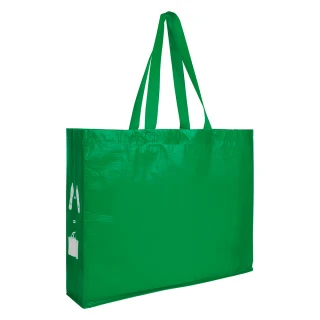
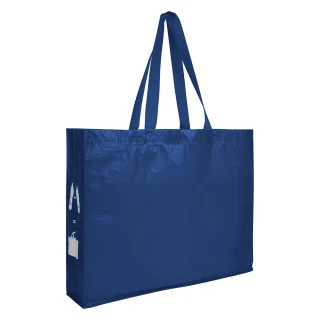

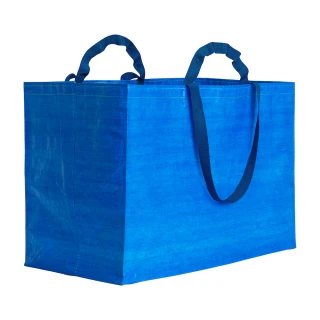



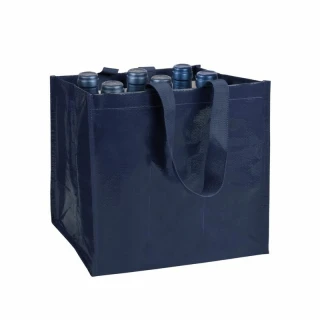
-320x320.webp "Laminated PP bottle bag")
-320x320.webp "Laminated PP bottle bag")
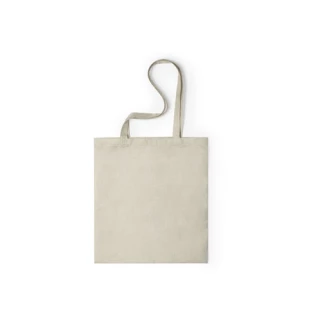
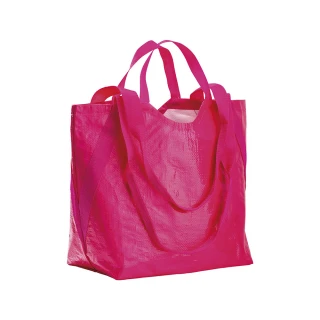
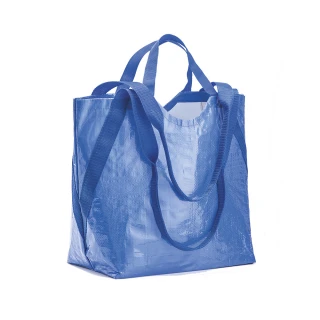
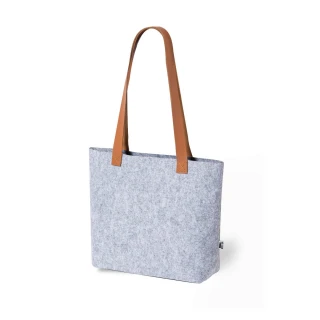
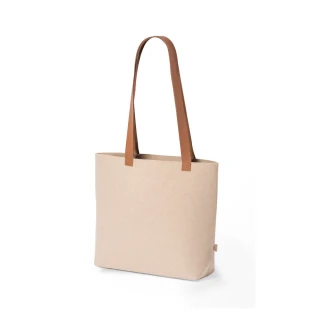
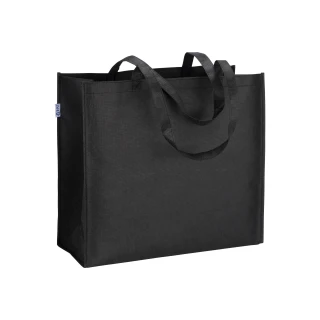
-320x320.webp "Felt shopper")
-320x320.webp "Felt shopper")

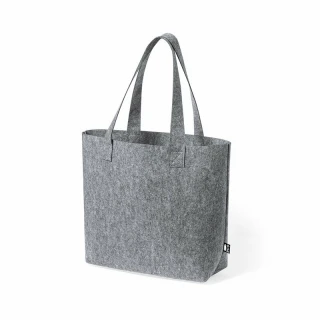
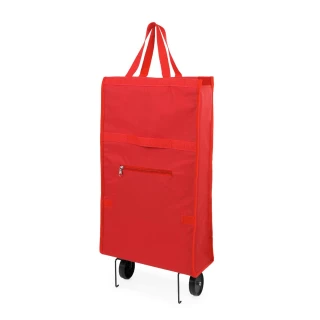
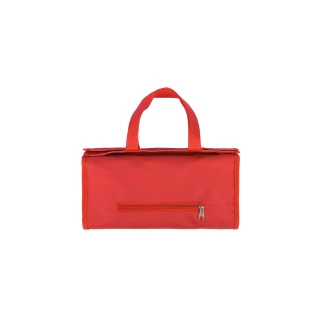
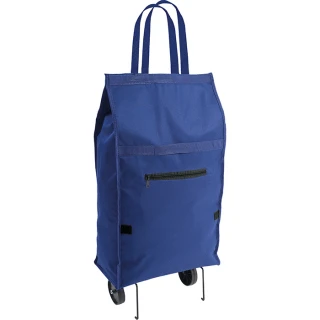
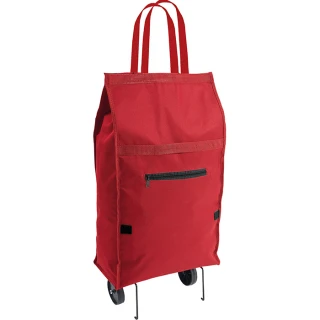
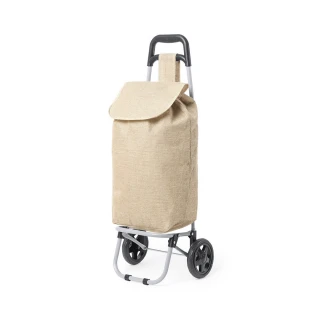



How to choose reusable shopping bags for each business and service
The intended use helps to narrow the search, but it is not a technical guarantee. Shopping volume determines the size required; bottles and rigid packs concentrate weight in specific areas; frequency of use involves the material, seams, handles and finish; and the distance travelled may make a trolley more suitable than a bag carried by hand.
Supermarkets, grocery retail and food stores
For supermarkets and grocery retail, compare reusable bags that can accommodate packs of different shapes and remain stable while being filled. Size, base, gusset and handles should be proportioned to the typical basket and expected usage rate. The presence of laminated PP or R-PET can help narrow the selection, but it does not replace checking the complete construction and the information published for the model.
Independent retailers, specialist shops and loyalty schemes
For independent and specialist retailers, the bag can become a recurring service item or part of promotions and loyalty schemes. Ease of distribution, storage volume, logo legibility and suitability for repeated use all matter. Reuse can extend brand visibility beyond the purchase, but the actual result varies according to the model, the load and customer habits.
Wine merchants, drinks retailers and businesses selling bottles
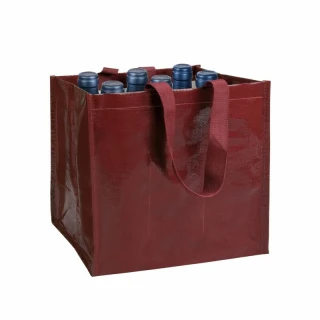
The Bottle holder filter helps identify solutions for wine merchants, specialist drinks retailers, food shops, events and corporate packs containing one or more bottles. Measure the diameter and height of the bottles, include caps and outer packaging, and check the base, handles, any dividers or compartments and the stated number of positions. The Bottle holder label does not represent a guaranteed load capacity and does not certify direct food contact.
Markets, local services and customers with recurring bulky purchases
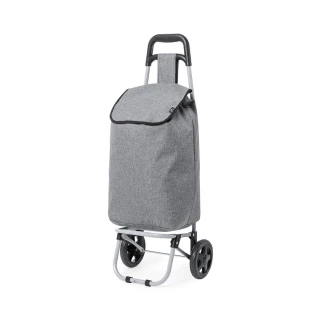
The Shopping Trolleys filter is relevant where customers need to move bulky purchases or travel distances that make carrying the weight by hand impractical. Markets, launderettes, retail chains and businesses serving regular high-volume purchases may have similar needs, subject to verification against the actual product. Before ordering, compare overall size, opening and closure, bag construction, grip, stability in motion and any capacity information published on the product page. The term trolley does not imply uniform performance across all models.
Trade shows, events and promotional campaigns
For concentrated distribution, consider the usable artwork area, ease of hand-out and the relationship between bag size and the items being supplied. Printable area, available technique and the possibility of personalising the front and back depend on the model and the options shown in the configurator.
Materials and construction: how to read the specifications
The table distinguishes the main product families and filters without turning them into universal performance claims. The product page and configurator remain the source for the final specification.
| Family or filter | Main function | What to check | Personalisation |
|---|---|---|---|
| Laminated PP | Structured reusable carrier bag for shopping and point-of-sale distribution. | Model weight, weave or construction, gloss or matt lamination, base, gusset, seams, handles and closure. | Screen printing and other options shown by the configurator; colour count and print area depend on the product. |
| R-PET | Reusable bag in material stated to contain recycled PET. | Fabric weight, composition, recycled percentage, certifications, finish, seams, handles and end-of-life information. | Screen printing or digital printing only on models offering those methods. |
| Shopping Trolleys | Move purchases using a dedicated transport structure. | Dimensions, storage size, bag, grip, closure, components, stability and stated capacity. | Print area and method applying to the bag or other personalisable part of the model. |
| Bottle holder | Carry one or more bottles in a way proportioned to their shape. | Number of bottles, diameter, height, base, any dividers, handles and weight distribution. | Area and method available on the surface specified for the product. |
The value in gsm describes the mass of the material per square metre. It does not measure overall product quality and does not correspond to a number of kilograms that can be carried. Two bags made from the same material and with the same gsm can behave differently when the dimensions, base, joints, handles or load distribution change.
Size, capacity and transport: technical checks before ordering
- Actual contents – measure the largest item together with its packaging and consider bottles, rigid edges and concentrated weight.
- Usable volume – assess width, height, base and gusset together; one dimension alone does not describe capacity.
- Carrying method – distinguish between hand carrying, shoulder carrying and a trolley model according to the journey and intended use.
- Handles and attachment points – compare length, grip and construction without deriving capacity from handle type alone.
- Closure and storage – check how the bag or trolley closes and is stored when not in use.
- Correct filter – Shopping Trolleys identifies a product family; the Bottle holder filter describes the intended use.
- Artwork – adapt the logo, colours and level of detail to the surface, folds and method shown in the configurator.
Common selection errors
- Turning gsm or material into an automatic load rating – resistance depends on the complete construction and the contents.
- Confusing the Shopping Trolleys filter with a material – it identifies a transport model, not the composition of the bag.
- Treating Bottle Carriers as a universal capacity – the number and dimensions of bottles vary by product.
- Choosing a size from width and height alone – base, gusset, closure and item shape change the usable space.
- Assigning the same recycled percentage or certification to every R-PET product – only model-specific documented data apply.
- Assuming the same printing method for every material – area, colours and process vary by surface and configuration.
- Using the word reusable as a guarantee of unlimited life – frequency, load, abrasion and care affect service life.
Environmental labelling, R-PET and product configuration
The category is intended for repeated use, but actual service life depends on the individual model and operating conditions. A laminated PP bag, an R-PET model, a shopping trolley and a bottle carrier can contain different components and require different end-of-life instructions. The term R-PET does not by itself prove recycled percentage, traceability, certification or recyclability of the finished bag.
For reusable shopping bags falling within the definition of packaging, material identification and disposal information must refer to the actual configuration placed on the market. The bag body, lamination, handles, closures and other components may be made from different materials and may require separate information.
Shopping trolleys with a frame, wheels, removable bag or multiple components must not automatically be treated as a single-material carrier bag. Bottle carrier models must also be checked for their materials, separable components, function and product-specific documentation.
For products placed on the EU market, Regulation (EU) 2025/40 on packaging and packaging waste applies from 12 August 2026. During the transitional period, the identification system under Decision 97/129/EC remains applicable until its scheduled repeal on 12 August 2028. For Great Britain and other non-EU destinations, material identification, labelling and end-of-life information must be checked against the rules in force in the destination market and the documentation supplied with the product.
For public-sector supplies, any environmental, technical or procurement criteria stated in the specific tender must also be checked for the selected configuration.
Environmental statements must refer to the complete configuration. Lamination, handles, closures, wheels, frames, seams, print and residues may change separation and collection instructions. Follow the product information and the local collection rules in the destination market, avoiding generic claims applied to the entire category.
How personalised reusable shopping bags support brand visibility
A reusable bag accompanies a recurring activity and can make the retailer recognisable beyond the point of purchase. In supermarkets and shops it complements customer service; in loyalty schemes it becomes an item that may be used over time; at markets and events it helps keep the logo and message visible while items are being carried.
Effectiveness depends on the balance between function and artwork. A large surface does not necessarily require a larger logo: background colour, contrast, folds, lamination, usable print area and viewing distance should be assessed together in the artwork proof.
Reusable shopping bags as part of a coordinated supply
Reusable shopping bags can share the same logo, colour system and artwork rules as custom cardboard boxes, packaging supplies, promotional products and personalised clothing for staff and retail teams. Each medium still has its own materials, print areas and technical limits, which must be checked for the specific supply.
Reusable Shopping Bags or another category: where to continue your search
Stay in this category when the main need is recurring shopping, a trolley model or the transport of bottles in a reusable solution. When the material, format or service changes, continue with the relevant specialist category.
| Main requirement | Correct category | Semantic boundary |
|---|---|---|
| Recurring shopping, high-volume purchases, trolley models or bottle carrier use | Reusable Shopping Bags | Specialist category organised by use, which is the subject of this page. |
| Compare cotton, non-woven, jute and foldable fabric bags | Tote Bags | Specialist category organised by textile material and the related personalisation techniques. |
| Paper carrier bags with handles, including paper bottle bags | Paper Bags | Specialist paper category covering paper type, gsm, base, handles and paper-compatible printing. |
| Carrier bag with a body made from plastic film | Plastic Bags | Specialist film category covering HDPE or LDPE, thickness, seals and different handle systems. |
| Takeaway, food delivery, closed food containers or pizza boxes | Takeaway Bags | Specialist food-service category for carrying closed food packaging. |
| Bread, counter-service products or small items in paper bags without handles | Paper Bread Bags | Specialist category for counter-service paper bags. |
Frequently asked questions about personalised reusable shopping bags
Which reusable shopping bag should retailers and supermarkets choose?
Start with the contents and the service: for everyday shopping, compare the model's size, base, gusset, handles and material; to avoid carrying the weight by hand, use the Shopping Trolleys filter; for bottles and cylindrical containers, use the Bottle holder filter. Fabric weight, material or product name do not equal a guaranteed load capacity: always check the product page and configurator.
What does the Shopping Trolleys filter mean?
Shopping Trolleys is a filter that identifies a product family. It identifies products with a structure intended to move shopping without supporting its full weight by hand. Before ordering, compare the overall dimensions, stored size, bag construction, closure system, grip and any capacity stated on the individual trolley's product page.
What does the Bottle holder filter mean?
Bottle holder is a use filter. It identifies models intended for one or more bottles, but it does not determine the number, diameter, height or load capacity on its own. Check the bottle dimensions, the bag base, any dividers or compartments, the handle construction and the product information. For paper models, visit Paper Bags; for jute solutions, visit Jute Bags.
What is the difference between Reusable Shopping Bags and Tote Bags?
Reusable Shopping Bags organises the range by function: recurring shopping, bulky purchases, trolley models and bottle carrier use. Tote Bags organises shopping bags by textile material and links to cotton, non-woven, jute and foldable models. Stay in this category when the primary criterion is use during shopping; visit Tote Bags when you need to compare fibres and textile personalisation methods.
Which materials are available for personalised reusable shopping bags?
Materials stated within the range include laminated PP and R-PET for certain reusable models. Material, gsm, finish, recycled percentage and any certification depend on the individual product. Shopping trolleys and bottle carriers may use different structures and components, so the product page and configurator remain the source for the final specification.
How should size, gusset and capacity be selected?
Measure the largest items in their actual carrying position and include packaging, bottles, rigid edges, closure and the space needed for grip. Width, height and gusset must be assessed together. Dimensions published for certain models help comparison, but do not replace the actual measurements of the selected product and do not represent universal category capacity.
Do gsm and material show how many kilograms a bag can carry?
No. Gsm describes the mass of the material per square metre and the material name identifies its stated composition, but neither equals a guaranteed load capacity. Actual resistance also depends on size, base, gussets, seams or joints, handles, trolley construction, load distribution and rigid edges. When a capacity is stated, the valid reference is the individual model's product page.
Which printing methods are available for reusable shopping bags?
Screen printing is available on various models for solid-colour logos, while digital printing may be offered on selected products for more detailed artwork. The number of colours, print area, front or back personalisation, compatibility with PP, R-PET or other materials and artwork requirements vary by product. The configurator and free artwork proof define the actual options.
Are personalised reusable shopping bags reusable and recyclable?
The category is intended for repeated use, but service life and the number of uses depend on the model, load and operating conditions. Disposal cannot be derived from the PP or R-PET label alone: lamination, handles, wheels, frames, closures, print and other components may change the instructions. Follow the product information and the collection rules in the destination market.
Are Bottle Carrier models suitable for direct food contact?
The Bottle holder filter concerns the transport of bottles or containers and does not constitute a declaration of suitability for direct food contact. Where any part of the product is intended to touch food or another regulated surface directly, check the intended use and documentation for the selected model and configuration.
What is the minimum order and how much do personalised reusable shopping bags cost?
There is no single minimum order quantity or price applying to the whole category. Both depend on the model, material, size, personalisation and quantity. The configurator shows the conditions for the selected product, and a free artwork proof is provided before production to check the layout and logo position.
Personalise the reusable shopping solutions for your retail business: identify the correct function between a reusable carrier bag, Shopping Trolleys and Bottle Carriers, compare the model's dimensions, construction, material and print area, and approve the artwork proof before production.