
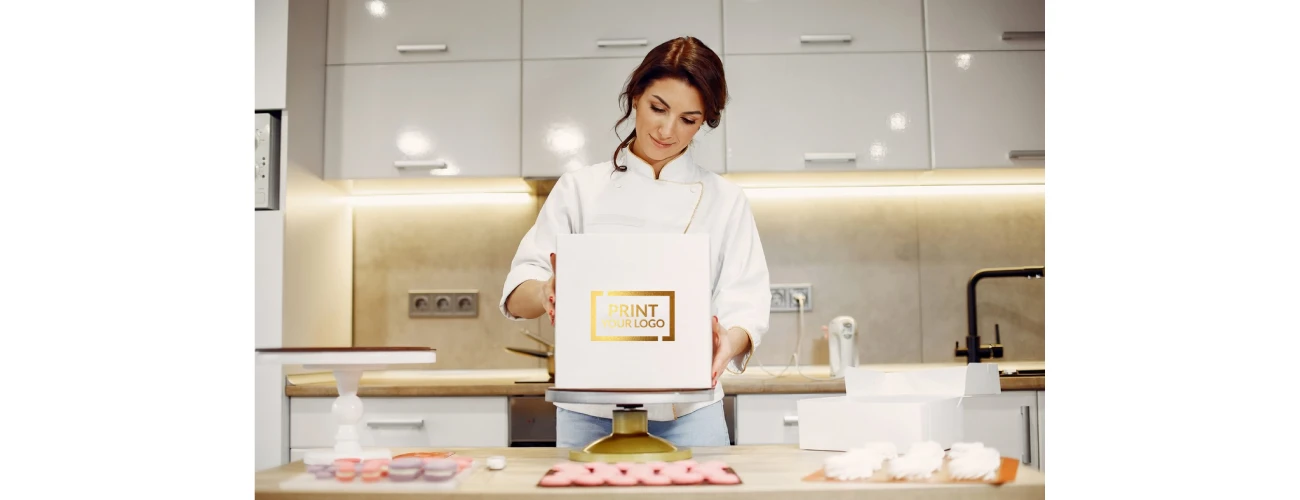
- Effective bakery packaging is not built around one single element, but around a coordinated system: the box, paper and sticker seal need to work together.
- The right box improves presentation at the counter, for takeaway and during delivery, without adding unnecessary bulk.
- Custom bakery paper and branded sticker seals are low-cost details that can significantly improve perceived brand value.
- Coordinating these three elements helps build a recognisable, consistent and professional brand identity.
In a bakery, the product reaches the customer wrapped in something. And that packaging is what immediately communicates the value of what is inside.
We wrote this guide because bakery packaging is often chosen one item at a time, without any system behind it. The result is a disjointed brand image: one type of box, different paper, and no sticker seal at all or just a generic one. Building coordinated packaging does not require a large budget. It requires a consistent choice.
This issue comes up time and again when a bakery or artisan workshop starts to grow: product quality is high, but the presentation does not reflect it yet. Very often, the problem is not one missing item. It is the lack of consistency across all the elements. That is why we chose to address it by starting with the three main parts of the packaging: box, paper and sticker seal.
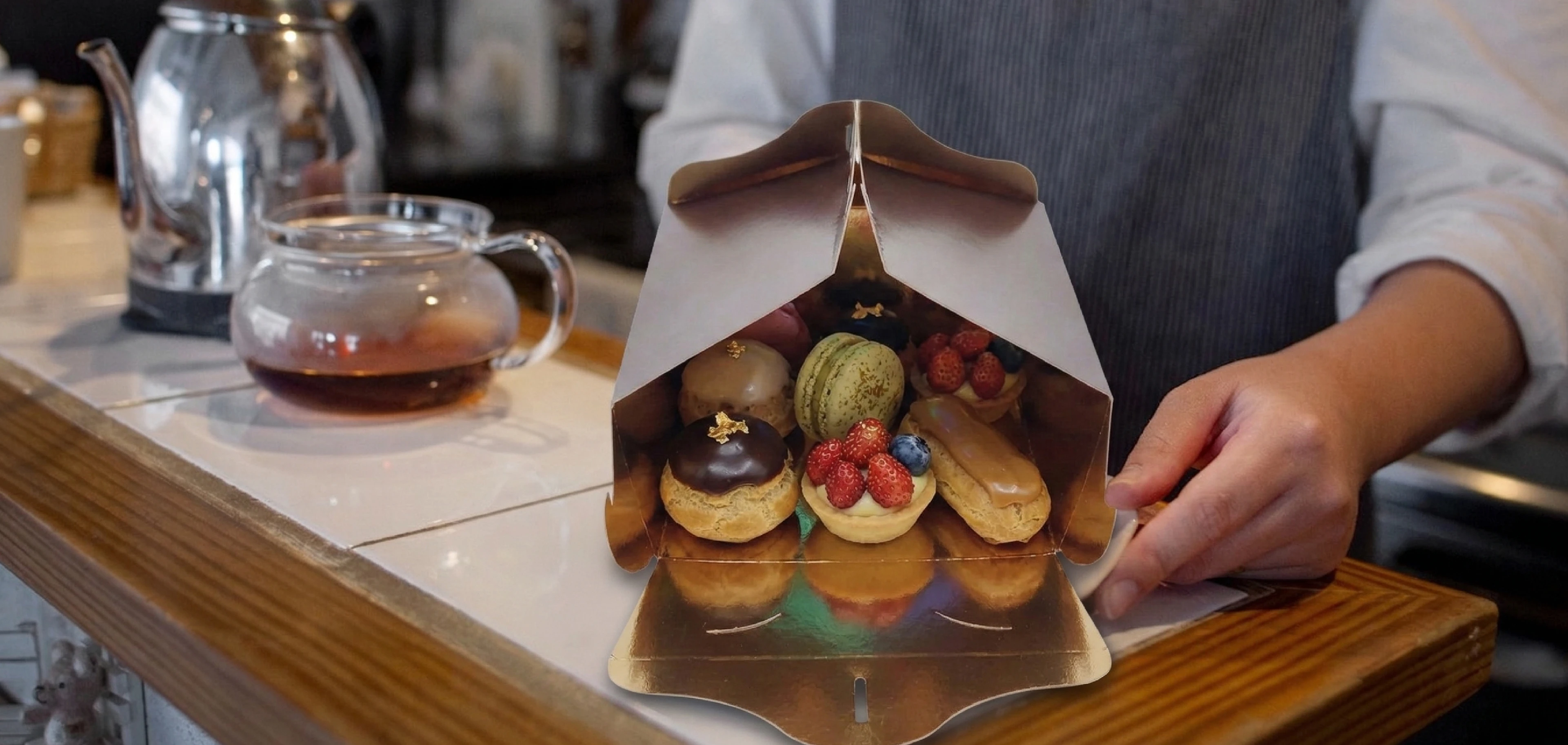
An unbranded box may hold an excellent cake or pastry, but it does not convey the care behind it. Generic paper can weaken the consistency of the packaging and make the overall presentation look less refined. A branded sticker seal, by contrast, is often the detail that turns an ordinary pack into something recognisable.
That is why, when choosing bakery packaging, it makes sense to consider three elements together: the bakery box, custom bakery paper and the sticker seal. This approach works well for the display counter, takeaway orders, delivery and gift packaging alike.
Why a coordinated packaging system works better than three separate choices
The most common temptation is to choose each packaging element independently: the cheapest box available, the paper from the usual supplier, and a standard sticker with only the shop name on it. Technically, the result still works because it holds and closes the product, but it does not communicate anything distinctive.
A coordinated packaging system works differently:
- it builds brand recognition — customers begin to associate colours, materials and details with your business
- it improves product presentation — consistent packaging communicates care and professionalism, even before the first bite
- it strengthens consistency between counter sales and takeaway orders — the same visual identity travels beyond the shop
- it creates clear differentiation — in a market where many businesses sell similar products, presentation becomes a real competitive advantage
Signs your packaging is not doing its job
- Your boxes are not the right size for your best-selling products — customers notice too much empty space or a box that looks forced.
- Your paper is generic or missing altogether — the product is presented without visual protection and without brand identity.
- Your sticker seal is plain, generic or missing — the packaging carries no brand message beyond the shop.
If any of these situations applies, the problem is not only aesthetic. It affects how recognisable your brand is and how easily customers remember it.
The three building blocks of coordinated bakery packaging
Building consistent bakery packaging does not mean changing everything at once. It simply means starting with the three elements that work together in every pack, each with a clear role.
- Box — structure and outer presentation: it holds the product, protects it and is the first visible element
- Paper — inner care and visual protection: it is the first thing customers see when they open the pack
- Sticker seal — closure, signature and immediate recognition: it carries the brand beyond the shop at minimal cost
1. The box: size, structure and brand impact
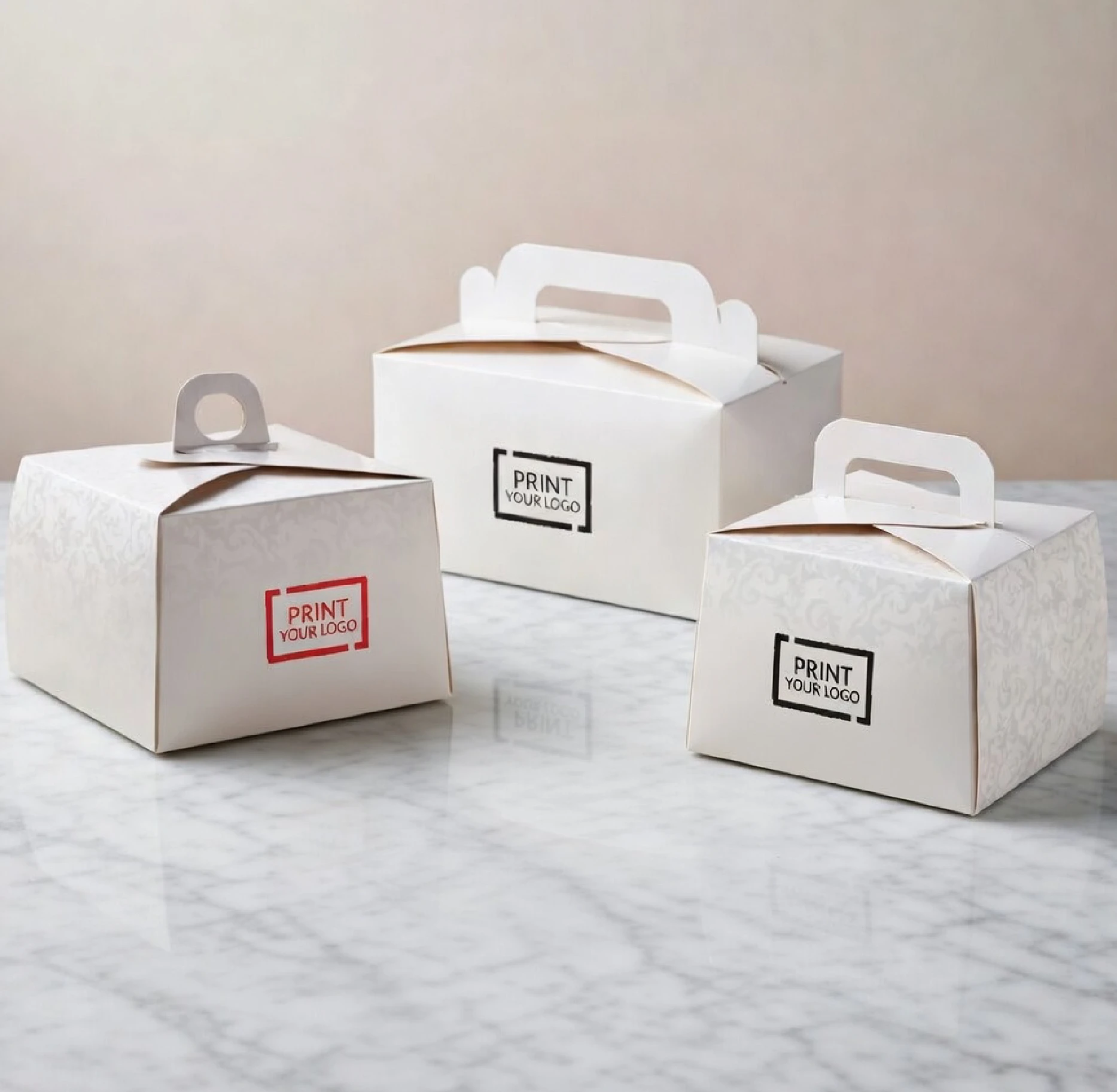
The box is the main container and the first thing customers see and touch. In a bakery, choosing the right format depends on the product: a cake box has different requirements from a box for mini pastries, single-serve desserts or gift selections.
There are three key points to assess: the internal size should match the product without excessive empty space, the structure should provide stability during transport, and the surface should display the brand clearly, whether through print, ribbon or coordinated paper inside.
A well-chosen bakery box is not necessarily the most expensive one. It is the one that presents its contents best, in the right size and with the right overall look.
2. Custom bakery paper
The paper that lines the inside of the box or wraps the product is a detail many bakeries underestimate, even though it has a direct impact on consistency and on the overall presentation of the pack.
Custom bakery paper featuring a logo, a coordinated pattern or brand colours turns the inside of every pack into branded space. It is not simply decorative. It is the first thing customers see when they open the box.
Here too, personalisation does not need to be intrusive. Paper with a subtle pattern, a consistent colour or simply a tonal repeat of the logo is already enough to create visual continuity across the whole pack.
3. Branded sticker seals
The sticker seal is the lowest-cost part of the system and often the most overlooked. In reality, it is the brand's seal of approval: it closes the pack, carries the logo and travels outside the shop with the product.
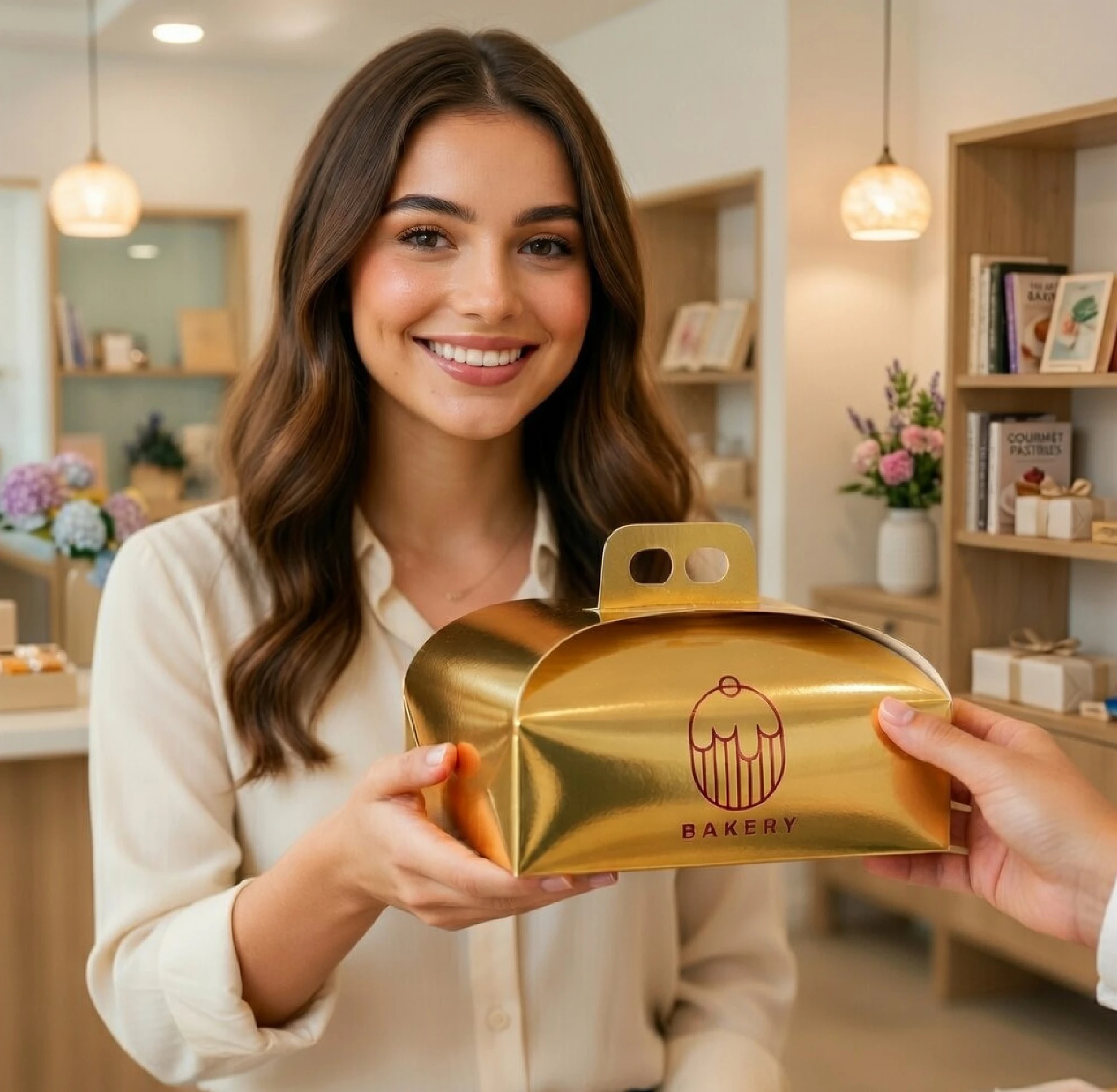
A branded sticker seal featuring the bakery name, logo and perhaps a seasonal or promotional detail is a practical brand-building tool at minimal cost. It works on boxes, bags, gift packaging and takeaway packs.
Its strength lies in visibility on the move: every customer walking away with a package closed by a branded sticker seal creates a new brand touchpoint for everyone who sees it.
How to build a consistent visual system
Coordinating the box, paper and sticker seal does not mean making everything the same colour. It means making sure all three elements are clearly recognisable as part of the same brand through palette, style and visual tone.
A consistent system works when:
- the colours are the same across all three elements, or at least clearly complementary
- the logo appears legibly on at least two of the three elements
- the materials feel compatible in terms of perceived quality
- the level of personalisation is consistent — not a premium box paired with a generic sticker
You do not need to update everything at once. In many cases, the most effective route is to start with the most visible element, usually the box, and then bring the paper and sticker seal into line over time.
Common mistakes in bakery packaging
- Choosing the largest box available — it may seem safer, but the product moves around, the inside looks empty and the sense of care is reduced.
- Using generic paper or no paper at all — the product sits directly against the board, without the layer that could also carry your brand.
- Buying standard unbranded sticker seals — a plain sticker suggests the opposite of professionalism and carries nothing of your brand beyond the shop.
- Ignoring consistency between counter sales and takeaway packaging — every customer leaving with a package becomes a point of visibility for your brand. If the packaging is anonymous, that opportunity is lost.
Experience from Salvo Miciluzzo, founder of Shop for Shop
Bakery packaging is often updated only when something runs out or breaks. The result is a gradual build-up of mismatched elements that makes the shop look less recognisable over time. By contrast, when you work from a system, even a simple one on a modest budget, every package becomes consistent. What we have observed since 2006, working with bakeries and artisan workshops, is that consistency does not cost more than separate choices: it costs the same, but over time it builds a recognisable brand instead of a series of anonymous packs. The difference is not visible on a single box, it is visible in the customer who comes back and immediately recognises the brand.
Where to start when building a coordinated packaging system
Before choosing or updating your bakery packaging, it helps to start with three simple questions:
- Which packs leave the counter most often?
This helps you understand which box sizes should be standardised and where personalisation will have the greatest impact. - Can customers see your brand when they leave with the package?
If the answer is no, or "only on the carrier bag", then the sticker seal is already a clear opportunity. - Do the paper and box tell the same story?
If the materials look as though they come from different suppliers with no common thread, the system is not working for you yet.
This quick review is often enough to show which part of the current system is weakest and where it makes most sense to begin.
Bakery packaging and brand consistency
When the box, paper and sticker seal work together, every package becomes part of the shop's visual identity. To explore how packaging shapes overall brand perception, you can also read our blog post on packaging and unboxing: how they increase perceived brand value.
If you want to place bakery packaging within a wider logic of coordinated supply, bringing together clothing, promotional products, bags, boxes and packaging materials as one brand system, you can also read our guide on promotional products, clothing and packaging as a coordinated brand system.
Packaging works best when it is chosen not only to contain the product, but to accompany it with the same care that went into making it.
Visual comparison: generic packaging or coordinated packaging?
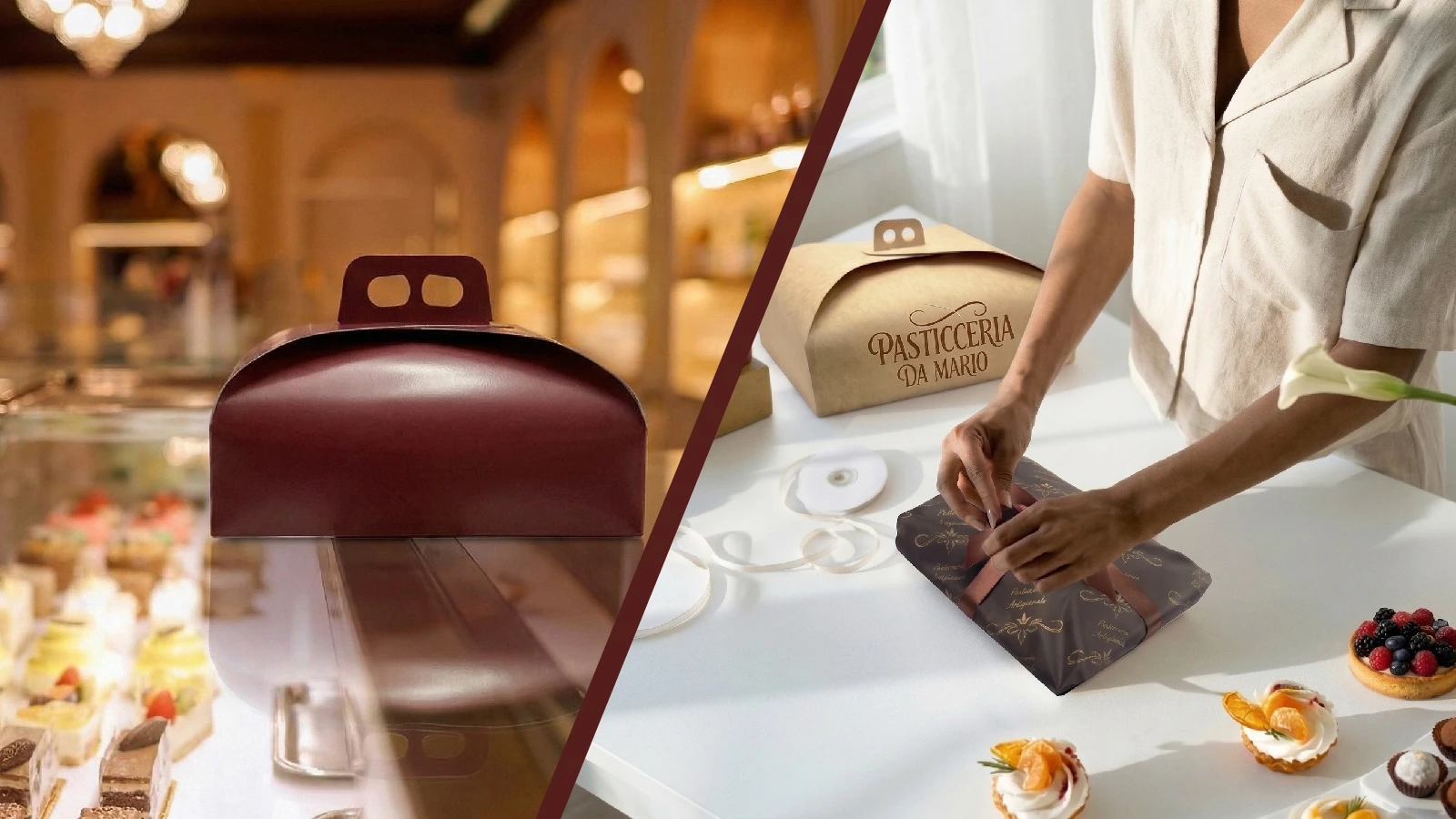
A visual comparison helps show immediately the difference between anonymous packaging and packaging that carries the brand beyond the shop in a clear and consistent way.
Review your packaging before your next order
Before placing your next order, look at the last five packs that left your counter: do the box, paper and sticker seal tell the same story? If the answer is no, or even "I had not thought about it", this is the right moment to build a proper system. Small coordinated improvements usually have far more visual impact than improving one element in isolation.
If you want to start from a practical base, you can explore our range of personalised bakery boxes, custom bakery paper and personalised adhesive labels to build a coordinated packaging system that fits your counter sales, takeaway service and brand identity.
Frequently asked questions about bakery packaging
Do you need to personalise all three elements at the same time?
No. You can start with just one and update the others gradually. The important thing is to set a consistent visual direction from the start, so that each later update fits naturally into the system.
Do branded sticker seals work on standard packaging too?
Yes. They are often the quickest and most cost-effective way to add branding to any type of packaging, including plain boxes and bags. A well-designed sticker seal can turn a generic box into a recognisable pack without changing anything else.
Which box size is most commonly used in bakeries?
That depends on the range you sell. In general, the most common formats are boxes for whole cakes, single-serve desserts and mixed gift selections. Having two or three well-chosen standard sizes is usually more efficient than managing too many different formats.
Is it better to start with the box or the sticker seal if your budget is limited?
With a limited budget, the sticker seal is often the most efficient place to start: low unit cost, immediate impact on brand recognition, and suitable for use on existing packaging. Personalised boxes require a larger investment but have a more structural effect on the overall image. A strong starting point is to pair a good-quality plain box with a branded sticker seal. The result already looks far more professional than completely anonymous packaging.
When is it better to use branded sticker seals on plain boxes instead of printed boxes?
It makes sense whenever you want to keep initial costs under control, manage several product lines with one plain box, or refresh your branding without having to use up existing stock first. Printed boxes become more worthwhile when volumes are stable and the visual identity is already established. At that stage, the investment is easier to justify. In early or transitional phases, a branded sticker seal on a plain box is a flexible and professional solution.
In summary: building coordinated bakery packaging means choosing the box, paper and sticker seal as one system rather than as three separate purchases. The result is a more consistent image, a stronger perception of value and a brand that is easier to recognise every time a package leaves the counter.
Leave a comment