
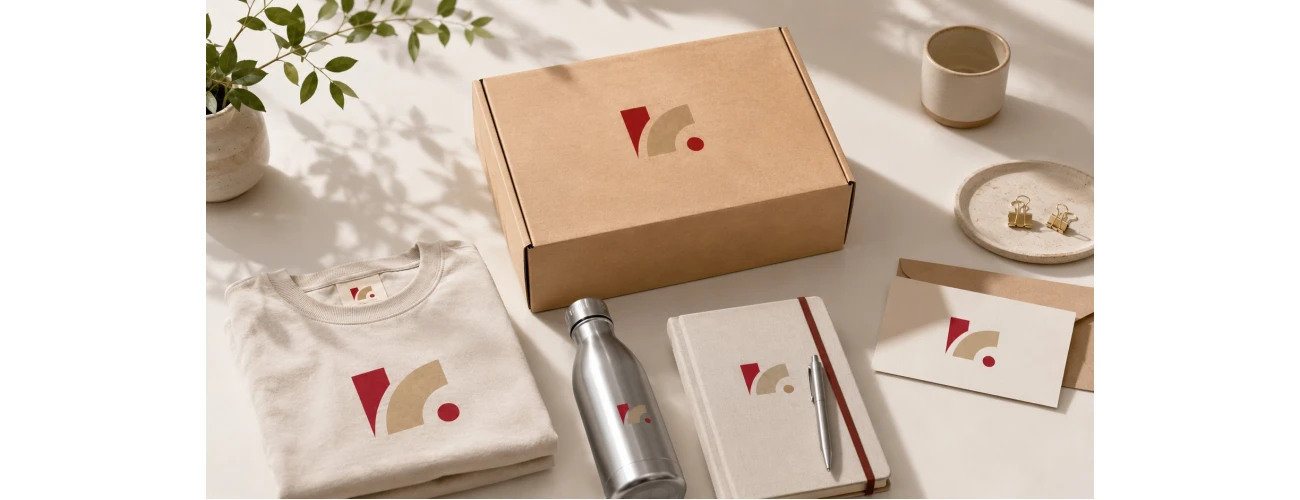
At a glance
- A welcome kit works when it starts from the new employee's role and their actual first day, not from a random list of branded items.
- The items people actually use are few and practical: a branded garment, a water bottle or mug, a notebook with a pen, an ID badge or lanyard and, where needed, a backpack or laptop bag.
- The difference between a kit that's remembered and one that's forgotten is consistency: the same colours, the same logo and a welcome box that holds everything together.
- It's worth treating it as a repeatable supply you can reorder, so every new joiner receives the same standard without reorganising everything each time.
Which welcome kit should you put together for each setting?
- Office and administrative roles → a notebook, a pen, a mug or water bottle and a lightweight branded garment, as part of a coordinated custom clothing range.
- Remote and hybrid teams → a water bottle, desk accessories and promotional products that are useful both at home and in the office.
- Frontline staff, retail and events → a workwear garment, a hard-wearing water bottle and a backpack or laptop bag, built for everyday use.
The welcome kit — also known as an employee welcome pack — is one of the few employer-branding tools a new employee physically handles on their first day. Precisely for that reason it's often thrown together in a hurry, with items chosen because they're left over from a trade show or because they're cheap, rather than because they're genuinely useful to the person receiving them.
A well-considered welcome kit makes a person feel expected and part of a well-run organisation. An improvised kit signals the opposite: disconnected items, a poorly applied logo, nothing that stays in use after the first week.
The choice should start from a simple question: who receives the kit, and what will they actually use in their first few days? From there you choose the items, then how to personalise them, and finally the box that holds them together. It's the same principle behind a coordinated range: every element makes sense in relation to the others, not as an isolated piece.
What is an employee welcome kit and what is it for?
A welcome kit is the set of items a company gives a new employee, usually on their first day or shortly before. It isn't a generic promotional gift: it's a welcome signal that forms part of onboarding — the process of settling a new hire into the company.
It serves three concrete purposes: making the person feel expected, easing the awkwardness of the first few days by providing useful items straight away, and strengthening brand recognition both internally and externally. A consistent kit, worn and used by staff, also becomes a small vehicle for your image beyond the office.
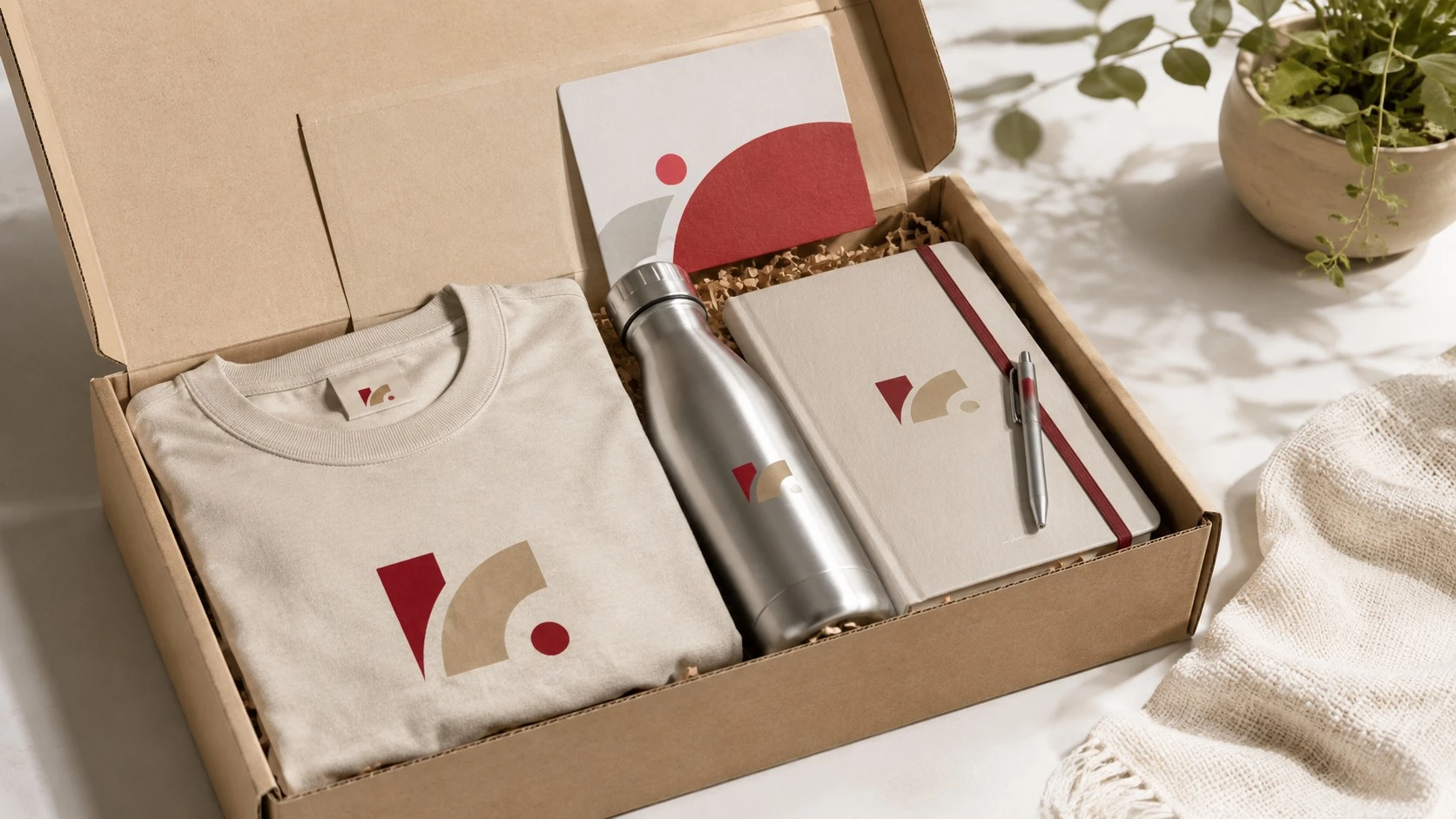
What to include in a welcome kit: the items that actually work
A good welcome kit is made up of a few well-chosen items, not lots of items put together to fill the box. The most-used and most useful elements are:
| Item | What it's for | When to include it |
|---|---|---|
| Branded garment (T-shirt, sweatshirt, polo shirt) | Sense of belonging, recognition | Almost always, tailored to the role |
| Water bottle or mug | Everyday use, sustainability | Almost always; high perceived usefulness |
| Notebook and pen | Practical work from day one | Office roles, training, meetings |
| ID badge or lanyard | Access, internal identity | Companies with premises and access control |
| Backpack or laptop bag | Mobility, remote work, travel | Hybrid, sales and technical roles |
| Welcome card | A human touch, a personal message | Always recommended; low cost |
The most successful items are the ones a person keeps using after the first day: a water bottle that stays on the desk, a notebook that goes to every meeting, a garment that becomes part of everyday wear. Anything that ends up in a drawer is budget poorly spent.
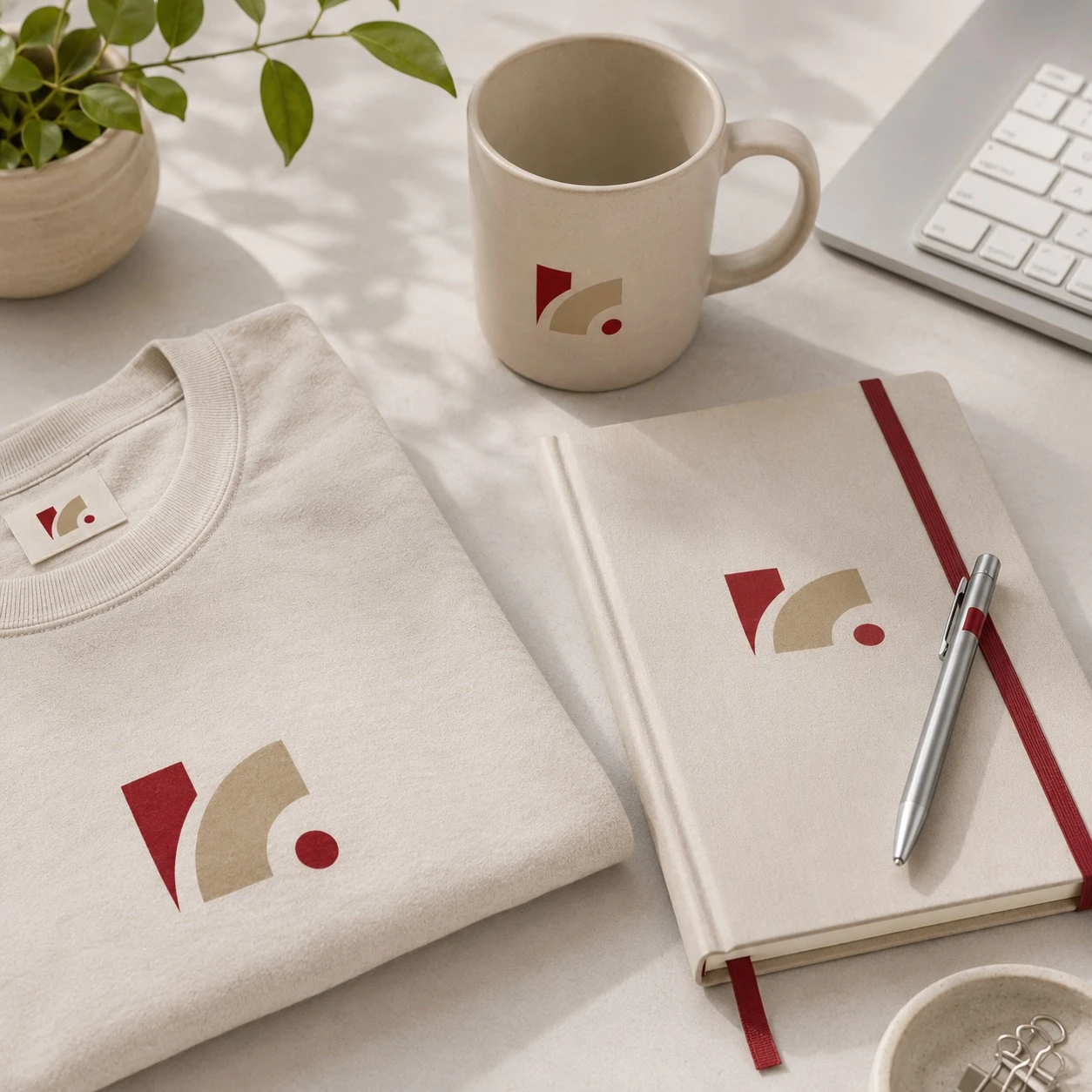
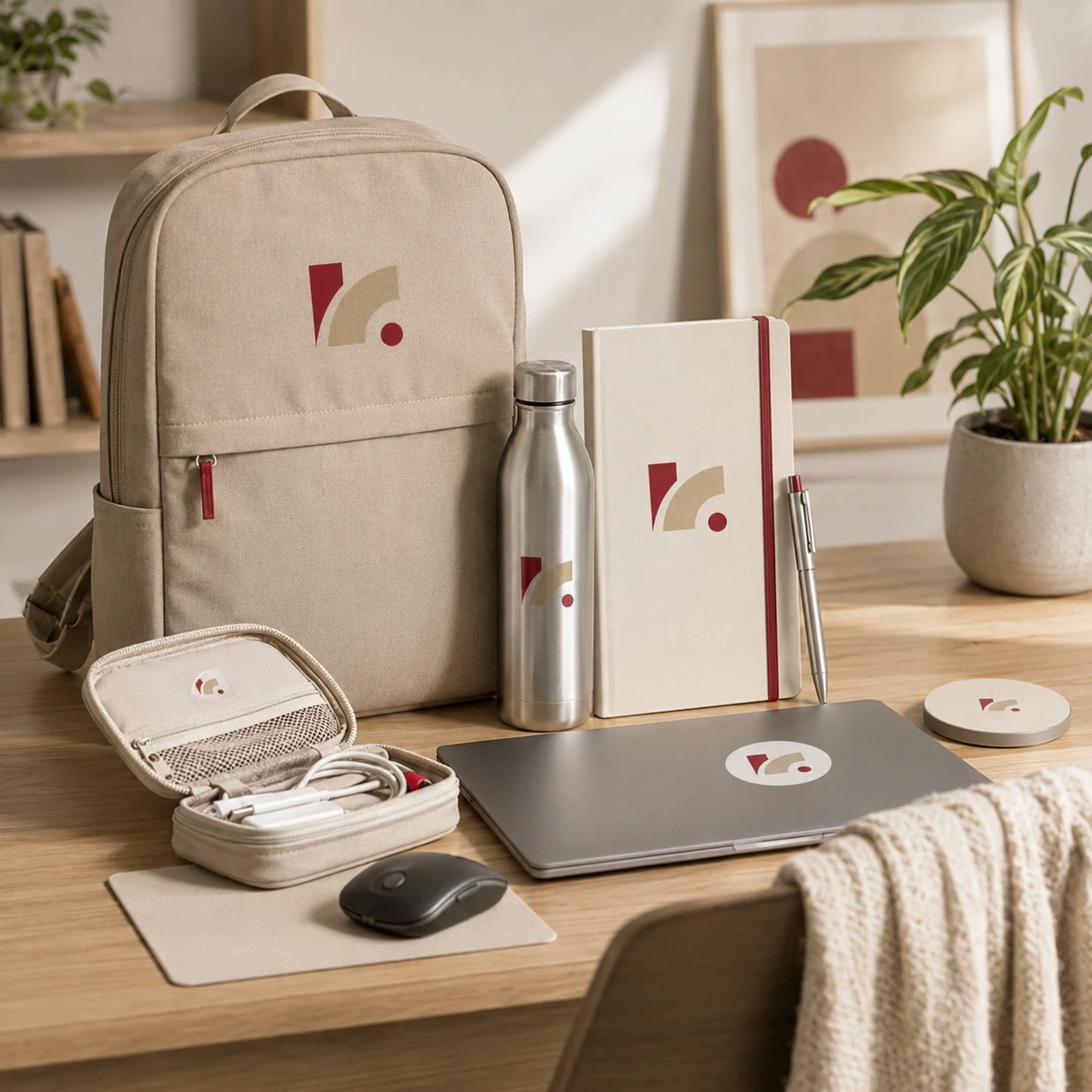
Employee welcome kit examples by company type
There's no one-size-fits-all welcome kit: it changes with the role, the working environment and what a typical first day looks like. These examples can be adapted for companies in the UK, Ireland and English-speaking teams across Europe.
| Type of company | Example of a coordinated kit |
|---|---|
| Offices and professional firms | Notebook, pen, mug, branded T-shirt or polo shirt and a welcome card, in a coordinated box |
| Tech companies and remote teams | Water bottle, desk accessories, sweatshirt and a laptop backpack for those splitting time between home and office |
| Retail and stores | Coordinated staff garment, ID badge, water bottle and notebook for initial training |
| Hospitality and catering | Workwear garment, lanyard, hard-wearing water bottle and a welcome information pack |
| Logistics and events | Sweatshirt or workwear top, backpack or kit bag, water bottle and items designed for use on the move |
The common thread across all these examples is the same: a few useful items, consistent in colour and logo, and a box that brings them together. The items change, not the principle.
Coordinating the kit: why consistency matters more than quantity
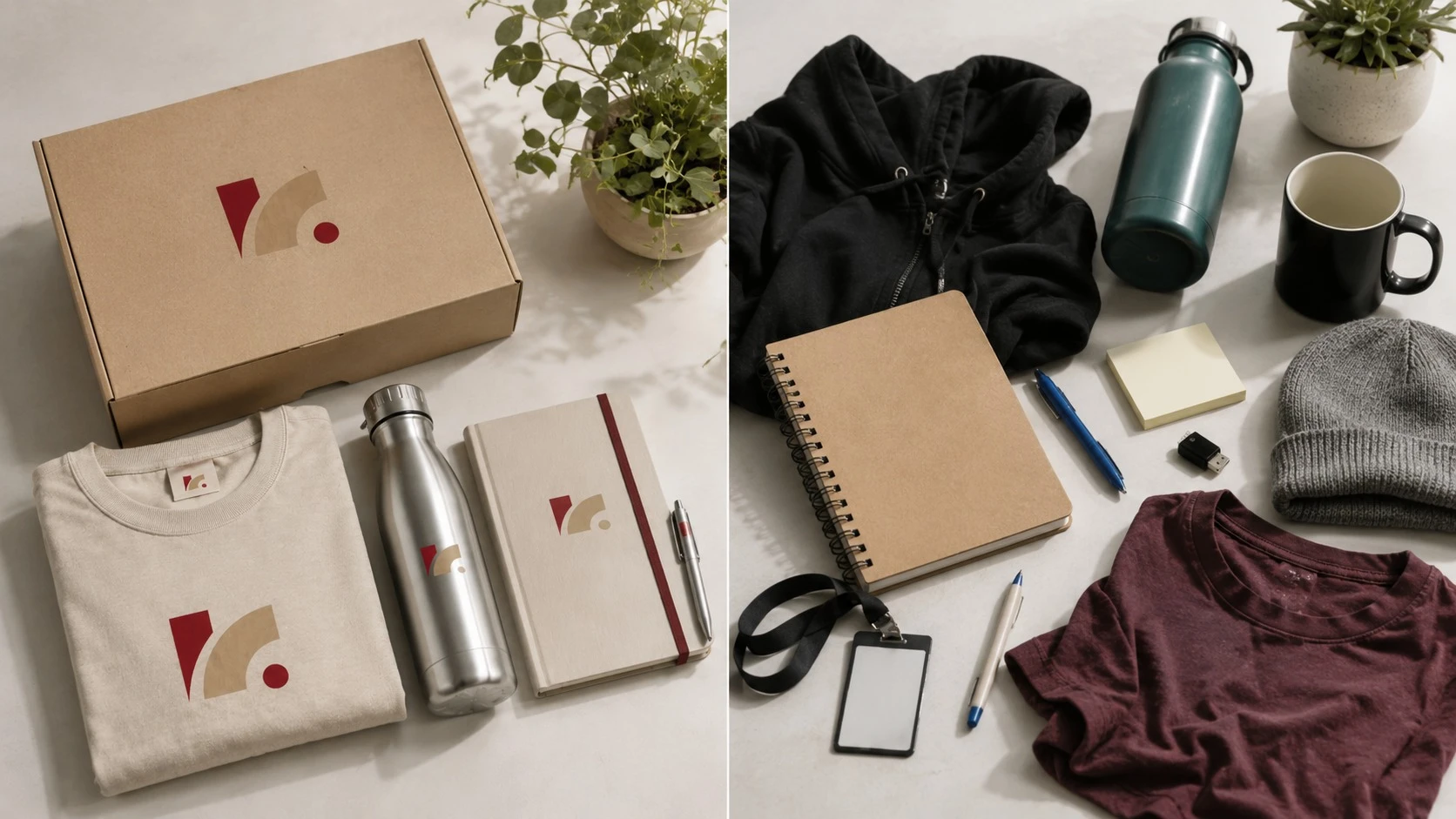
A welcome kit isn't the sum of its items, but the overall effect. Three water bottles in different colours with logos applied in different ways signal disorder; the same items, with a consistent palette and logo, signal an organisation that cares about detail.
Consistency plays out on three levels: the same base colour, the same personalisation technique where possible, and a welcome box that acts as both container and first impression. This is where the welcome kit stops being a collection of odds and ends and becomes part of a consistent brand communication system.
Common mistakes with employee welcome kits
- Filling the box with lots of low-value items instead of a few items chosen for the role.
- Ignoring size and role, handing over garments without asking for sizes or suited to the wrong setting.
- Inconsistent personalisation, with the logo applied at different sizes and positions on each item.
- Forgetting the box, handing over loose items and losing the first-impression effect.
- Treating it as a one-off, with no plan to reorder for future joiners.
Sustainable welcome kits: when they make sense
More and more companies ask for a welcome kit made with sustainable materials. It makes sense when the choice is consistent with the company's positioning and built around items that genuinely stay in use, not as a simple "green" label on products destined to be thrown away.
The most solid choices involve everyday items: a reusable water bottle instead of single-use bottles, a notebook in recycled or certified paper, garments in organic cotton or recycled materials. Where sustainability needs to be documented, it's worth looking for verifiable certifications such as FSC for paper, GOTS for organic cotton and GRS for recycled content, rather than taking them for granted. A credible sustainable kit comes from durability and real usefulness, before any messaging.
How to put together an employee welcome kit in 5 steps
To arrive at a useful, consistent kit, it's best to work in order. Each step narrows down the next choices.
- Define the recipient.
Role, office-based or remote, what a typical first day looks like: this determines which items are genuinely needed. - Choose a few useful items.
A garment, a drinkware item, something to write with and, if needed, something for mobility: better few and used than many and forgotten. - Coordinate colours and logo.
The same palette and the same personalisation logic across every item, for a recognisable overall effect. - Choose the box.
A welcome box or coordinated packaging turns the items into a kit and looks after the first impression. - Plan for reordering.
Set the kit up as a repeatable supply, so every new joiner receives the same standard.
Once these five points are set, quantities, sizes and production times become easier to manage. For the first kits, it's worth ordering a small sample run to check how the logo reproduces and the quality of the items before producing for all new joiners.
What we've seen since 2006 with employee welcome kits
One constant we see is that the most effective welcome kits aren't the most lavish, but the most consistent. Kits made up of a few genuinely useful items, coordinated by colour and logo and presented in a well-made box, stay in use and are remembered. Kits designed only to fill space, on the other hand, are often forgotten after a few days. In companies that treat the welcome kit as part of their brand communication system, rather than as a one-off expense, the welcome given to new joiners is more orderly and more recognisable over time.
The welcome kit as part of a coordinated system
A welcome kit doesn't exist in isolation: it works best when it's consistent with staff clothing, with the promotional products used at trade shows or events, and with the company's packaging. It's the clearest use case for a coordinated range, where clothing, promotional products and packaging all speak the same visual language.
Shop for Shop is an Italian company operating since 2006 as a direct supplier of custom promotional products, clothing and packaging for businesses, staff and events. Putting a welcome kit (or full onboarding pack) together with a single supplier helps keep the items consistent and makes reordering easier over time, with a free digital proof before production to check the logo, its position and legibility. For the box, a custom cardboard box or coordinated packaging supplies complete the kit and look after the first impression.
Frequently asked questions about employee welcome kits
What should you put in an employee welcome kit?
A few useful, coordinated items: a branded garment tailored to the role, a water bottle or mug, a notebook with a pen and, where needed, a backpack or laptop bag. A welcome card and a coordinated box complete the kit and look after the first impression.
How much should a welcome kit cost per employee?
There's no single figure: it depends on the role, the items chosen and the quantities. In general it's better to aim for a few good-quality items that stay in use, rather than lots of cheap items destined to be forgotten. Higher quantities allow more favourable volume discounts.
Should the kit be the same for everyone or tailored by role?
A common base keeps things consistent and recognisable, while some items can vary by role: people who work on the move might receive a backpack or laptop bag, office-based staff a desk set. The key is to keep the palette and logo consistent across the whole kit.
Do you need a dedicated box, or is handing over the items enough?
The box makes a real difference to the first impression: it turns a set of items into a kit and signals order. A coordinated welcome box, even a simple one, is often worth more than one extra item handed over loose.
Can you reorder the same welcome kit for future new employees?
Yes, and it's the most practical choice. Setting the kit up as a repeatable supply lets you give every new joiner the same standard, without redesigning everything for each hire and keeping things consistent over time.
To put your welcome kit together, start with Shop for Shop's promotional products and custom clothing: you can coordinate items, garments and packaging, with a free digital proof before production.
Leave a comment